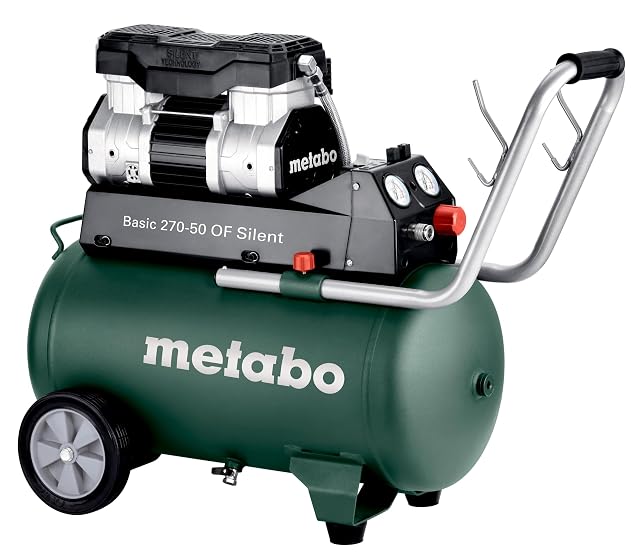
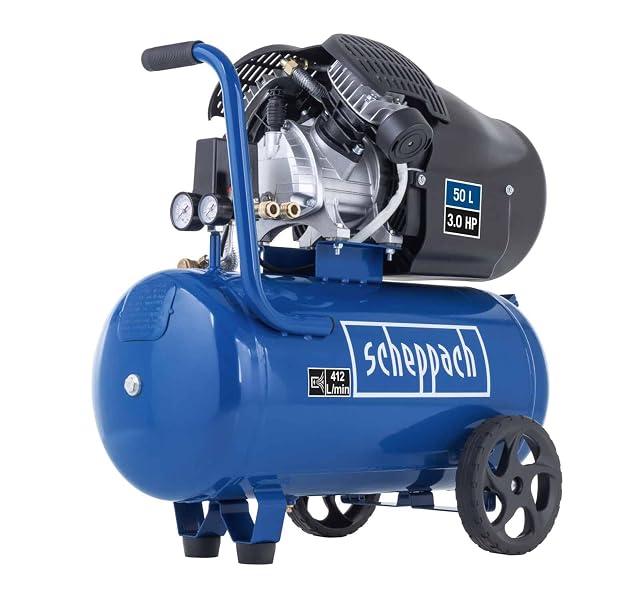
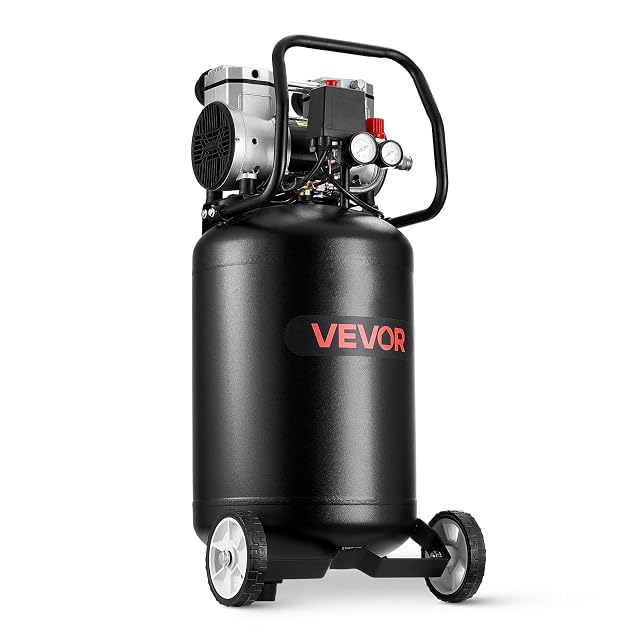
Compare delivered air, not intake
Intake is what the pump sweeps; delivery is what reaches the tool at working pressure, typically 30 to 40% lower. One machine on this site publishes both — 250 l/min intake and 130 l/min delivered — and that ratio is the key to reading everyone else’s single figure.
Match the tool, not the tank
A big tank buys time; the pump decides what you can run continuously. Impact wrenches and nailers use air in bursts and are comfortable on a 50 L machine. Die grinders, orbital sanders and plasma cutters consume continuously and will outpace any 50 L compressor on this site.
Water separation and pipe runs
Air cools as it travels and drops its moisture, so a separator works best some distance from the compressor rather than at the outlet. A long run of pipe with a downward-sloping trap at the far end is the traditional and effective arrangement. For plasma cutting, add a coalescing filter.
Drain the tank
Every compressor tank collects water, and a tank left undrained rusts from the inside — which is a pressure vessel failing quietly. Open the drain at the bottom after each session, or fit an automatic drain. It takes five seconds and it doubles the life of the machine.
The questions welders ask
What size pipe should I use?
Larger than feels necessary. Pressure drop rises steeply with length and falls with diameter, so a long run of narrow hose starves the tool even when the gauge at the compressor looks fine. For a fixed line, 12 mm (0.47 in) bore or more; for a hose reel, avoid coiled hose on high-consumption tools.
Oil-free or lubricated?
Oil-free for portability and no maintenance; lubricated for quieter, longer-lived operation in a fixed workshop. Oil-free pumps can also be transported in any position, which matters if the compressor lives in a car boot. Neither produces dry air on its own — that is what the separator is for.
Last reviewed 2026-08-14