Skip to content

The best plasma cutters for 2026

A plasma cutter turns an afternoon of cutting discs into ten minutes of work, and brings a dependency most buyers underestimate: clean, dry compressed air. We compare clean-cut thickness against the optimistic severance figure, pilot arc behavior on painted steel, and how fast each machine eats tips.

The models we recommend

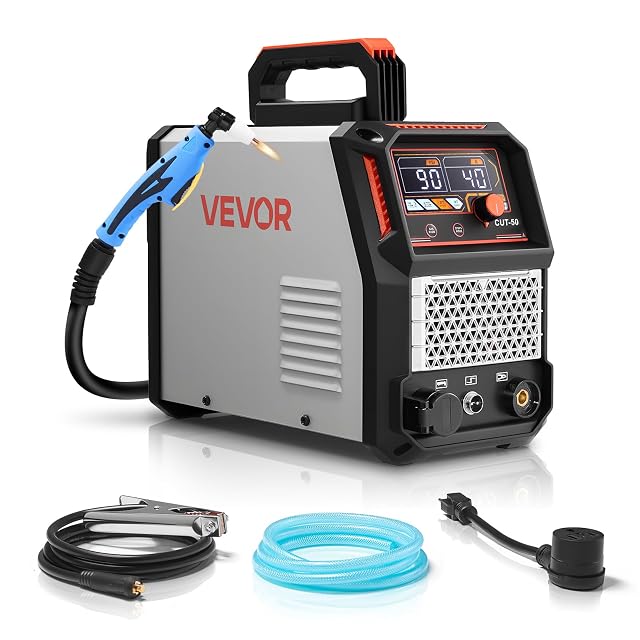
  1. VEVOR CUT-50

    50 A · adjustable pre- and post-flow · €173

    The cheapest plasma cutter here, and one that lets you set the air timings that decide how long a tip lasts.

    Best for: Occasional cutting of thin sheet, where the alternative is an afternoon with a grinder

    7.5/10

    ≈ $185

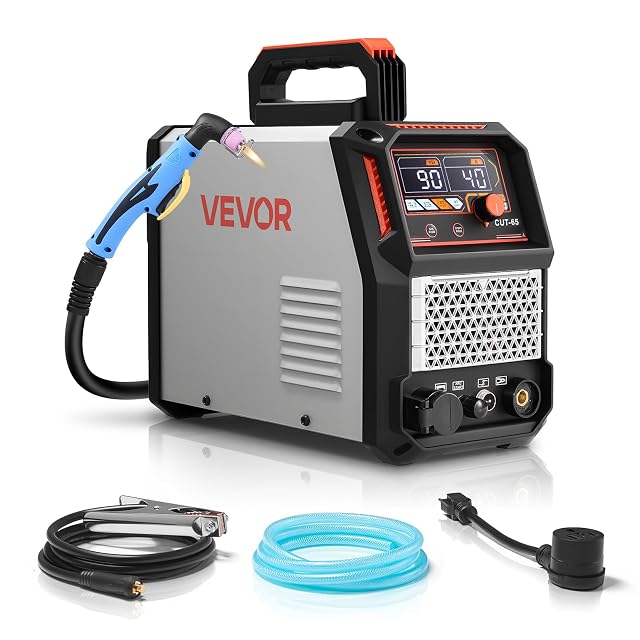
  2. VEVOR CUT-65

    65 A · non-contact pilot arc · €220

    A pilot arc at €220 — which is what lets you cut rust, paint and expanded mesh instead of only clean plate.

    Best for: Scrapping, dismantling and bodywork — material that is never clean

    7.5/10

    ≈ $230

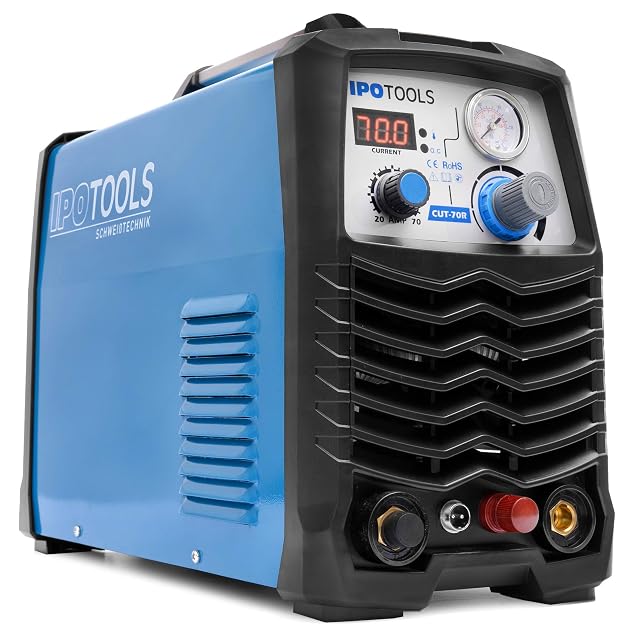
  3. IPOTOOLS CUT-70R Pilot

    70 A · PT-80 torch, 5 m (16 ft) · 25 mm (0.98 in) · €522

    Sold as a working set — a 5 m (16 ft) torch, earth lead, shield and hammer — with a seven-year warranty behind it.

    Best for: A workshop that wants one box, standard consumables and somewhere to send it if it fails

    8.1/10

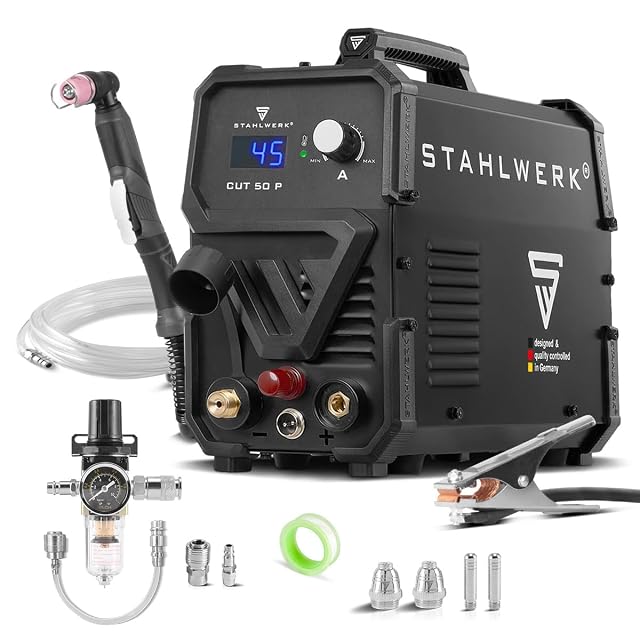
  4. STAHLWERK CUT 50 P

    15–45 A · 15 mm (0.59 in) steel / 8 mm (0.31 in) stainless / 5 mm (0.20 in) aluminum · €330

    The first machine here that publishes its cut thickness for three materials instead of one — which is the whole specification.

    Best for: A workshop cutting steel plate and section up to about 10 mm (0.39 in), cleanly

    8.1/10

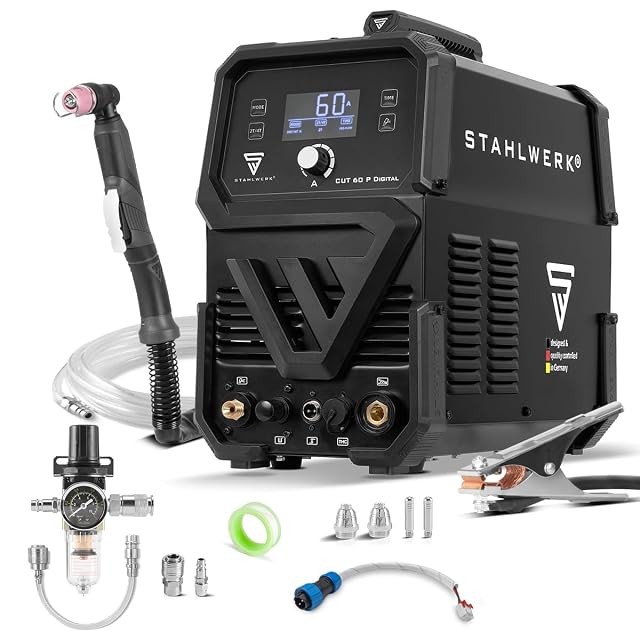
  5. STAHLWERK CUT 60 P Digital

    60 A · 20 mm (0.79 in) steel / 10 mm (0.39 in) stainless · mesh mode · €500

    A dedicated mesh mode, which is the difference between cutting grating and swearing at it.

    Best for: Anyone cutting grating, expanded mesh, perforated sheet or old fencing

    7.5/10

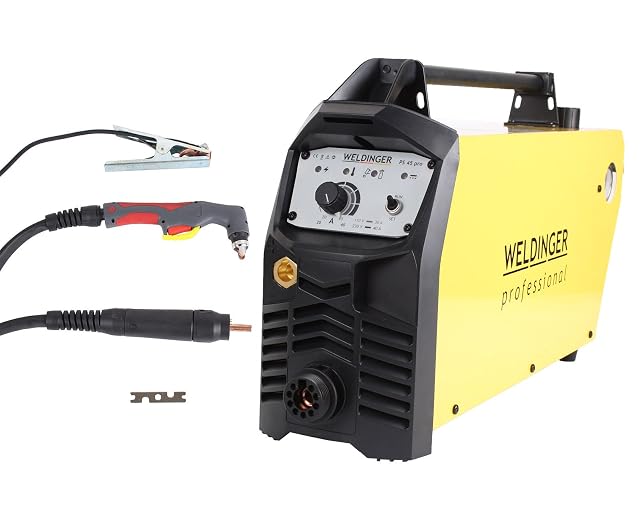
  6. WELDINGER PS 45 professional

    40 A · air filter unit included · 25 mm (0.98 in) severance · €520

    The only machine here that ships with the air treatment unit — the part everyone else leaves you to discover.

    Best for: A first plasma cutter, bought by someone who does not yet know that air quality is the whole game

    7.5/10

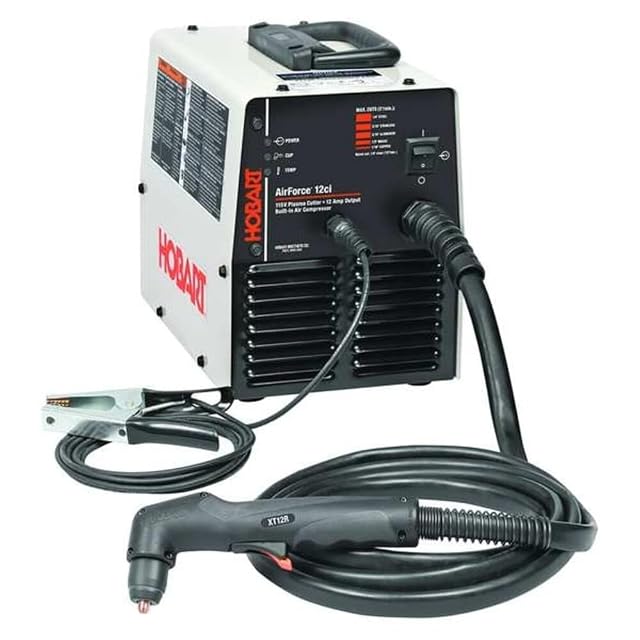
  7. Hobart AirForce 12ci

    120 V · built-in compressor · 27 lb · inverter · pre-set pressure

    A plasma cutter with its own compressor inside — no bottle, no hose, no water trap — and a listing that publishes neither a cut thickness nor an amperage.

    Best for: Cutting thin steel anywhere there is a socket, with nothing else to carry

    ≈ $1085

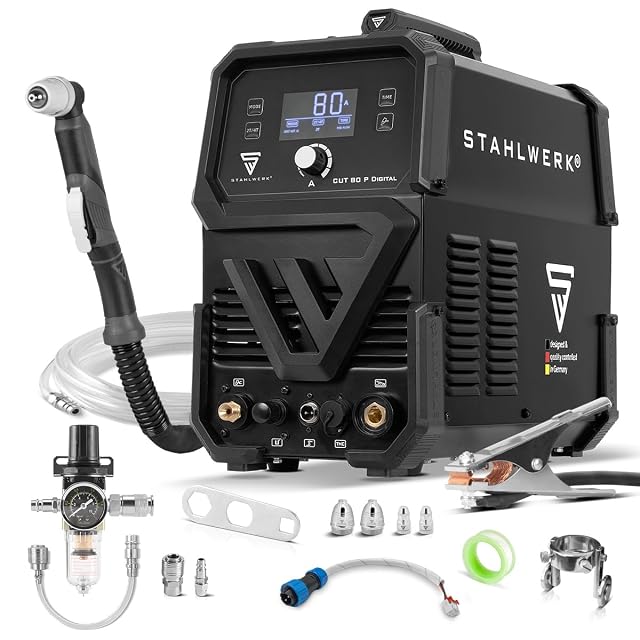
  8. STAHLWERK CUT 80 P Digital

    80 A · 25 mm (0.98 in) steel / 15 mm (0.59 in) stainless / 8 mm (0.31 in) aluminum · €750

    Adjustable pre- and post-flow together with thicknesses for three materials — the fullest specification on this page.

    Best for: Regular cutting in 10 to 18 mm (0.39 to 0.71 in) steel, where the cheaper machines are working at their limit

    8.1/10

Choosing within plasma cutters, by need

Cutting thick material

The advertised cutting thickness decides what the machine actually goes through. Beyond it, it no longer cuts, it gouges.

IPOTOOLS CUT-70R Pilot

A machine that holds the cut

The available current governs both thickness and travel speed, and therefore how clean the resulting edge is.

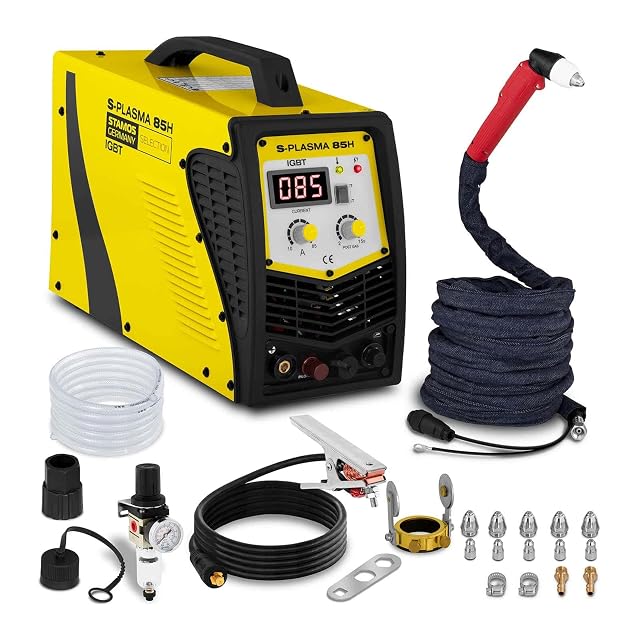
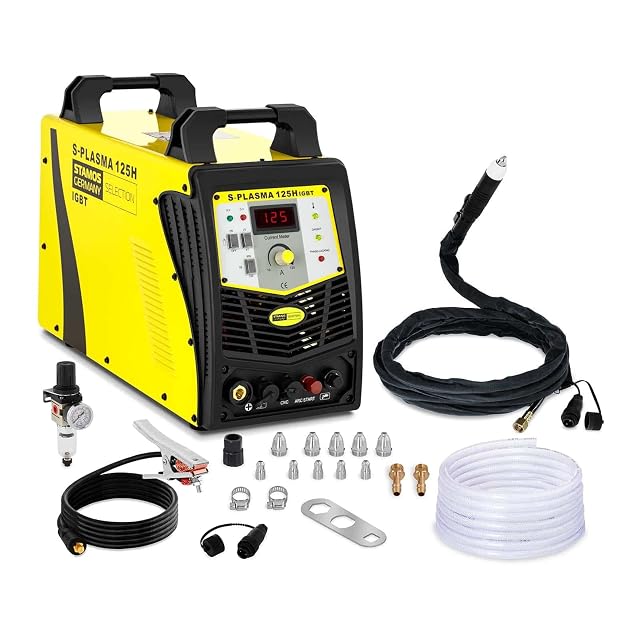
Stamos Welding Group S-PLASMA 125CNC

Feeding it dry, clean air

Moisture and oil in compressed air kill consumables and dirty the cut. A separator filter upstream costs little and extends nozzle life more than any setting.

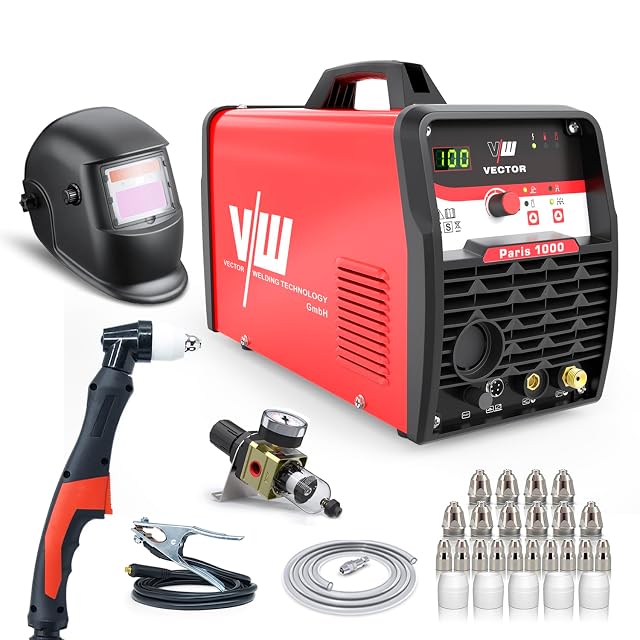
VECTOR WELDING Paris 1000 (100 A, 400 V)

Plasma cutters and who each one is for

Sheet cutting
Plasma cuts faster and cleaner than an angle grinder, without heating the whole piece. That is its decisive advantage.
Shapes and templates
Plasma follows a curve no disc can follow. A template and a guided torch give repeatable cuts.
Workshop with compressed air
Plasma demands dry, clean air at sufficient flow. An undersized or damp compressor ruins the consumables.

The trade-offs of plasma cutters

Advertised thickness against working thickness
The maximum thickness corresponds to a slow, dirty severance cut. The clean cutting thickness is always markedly lower.
Consumables against running cost
Nozzles and electrodes are regular consumables. Damp air or a badly judged travel speed destroys them within a few meters.
Plasma against angle grinder
Plasma is faster, cleaner and needs compressed air and consumables. The grinder cuts anywhere, more slowly and more dirtily.

What keeps coming up about plasma cutters

What thickness can actually be cut?

Markedly less than the advertised maximum if you want a clean edge. The maximum corresponds to a slow, ragged severance cut.

What compressed air is needed?

Dry, filtered and at sufficient flow. Moisture in the air is the leading cause of consumable destruction and irregular cuts.

How fast should I travel?

Fast enough for the sparks to exit below the workpiece, not above. Sparks coming back up signal too fast a travel or insufficient current.

How long do consumables last?

It depends above all on air quality and starting technique. Starting far from the work shortens their life considerably.

Can aluminum and stainless be cut?

Yes: unlike oxy-fuel, plasma cuts every conductive metal. It is one of its great advantages.

Do I need a special table?

A slatted or water table catches the spatter and stops you cutting your own bench. It is strongly recommended.

Does plasma distort the workpiece?

Far less than a torch, because the heated zone is narrow. On thin sheet a slight buckle remains possible.

What protection do you need for plasma cutting?

A helmet with a suitable shade, gloves, covering clothing and ventilation. Plasma throws molten metal downwards, which makes foot protection necessary.

In short, on plasma cutters

The advertised thickness is a severance cut, not a clean one: count on markedly less. Dry, filtered air decides consumable life more than anything else, and the sparks must exit below the work, never above.

Plasma cutters at a glance

  • Current: 40 to 125 A, on 8 of the 11 models.
  • Cut thickness: 15 to 25, on 5 of the 11 models.

Plasma cutters, side by side

There is no table here, and the reason is in the listings. The figure published most often across these 11 products is current, given by 8 of them — short of the four in five a column needs to compare rather than to display gaps. Each product page says what its own maker published.

Where plasma cutters are covered

Sources, and the ranking

Specifications: manufacturer sheets for welding and metalworking machines and the matching Amazon product pages. Prices and availability: Keepa.

Most recent revision in this category: October 7, 2026.

How we assess plasma cutters

Prices quoted in these summaries are dated readings. The live price is shown next to each product.