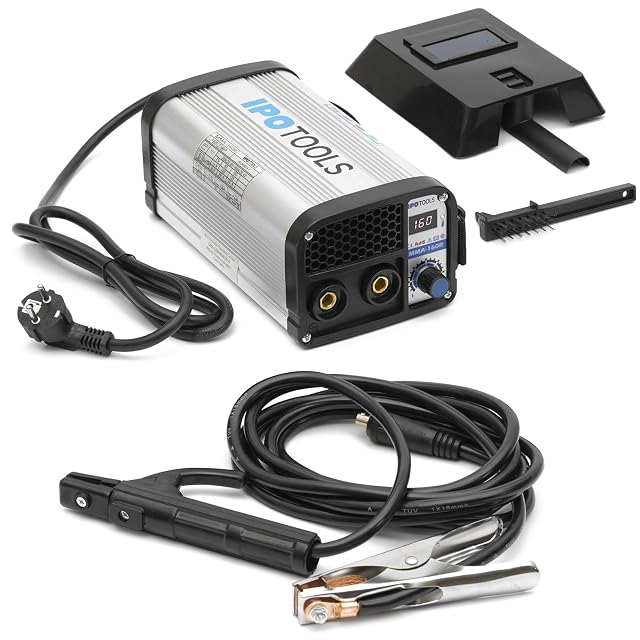
IPOTOOLS MMA-160R
160 A · digital · 7-year warranty · €106
Less current than everything around it, and the only stick machine here with a seven-year term and an address.
Best for: A machine you expect to still own in five years
Outdoors, rust, thick steel
Stick welding is unfashionable and still the right answer outdoors, on rusty steel and on anything thick. There is no gas to blow away and no wire to feed. We compare arc force, hot start and anti-stick behavior — the three settings that decide whether a beginner blames the machine or the electrode.
160 A · digital · 7-year warranty · €106
Less current than everything around it, and the only stick machine here with a seven-year term and an address.
Best for: A machine you expect to still own in five years
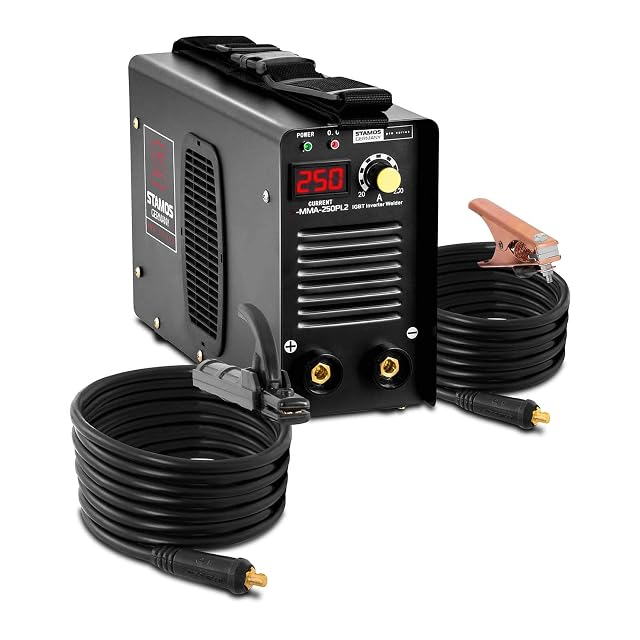
250 A · electrodes to Ø 4 mm (0.16 in) · 8 m (26 ft) leads · €100
Two hundred and fifty amps and eight-meter leads for €100 — the reach matters more than the amperage.
Best for: Working away from the socket: gates, fences, machinery in a field
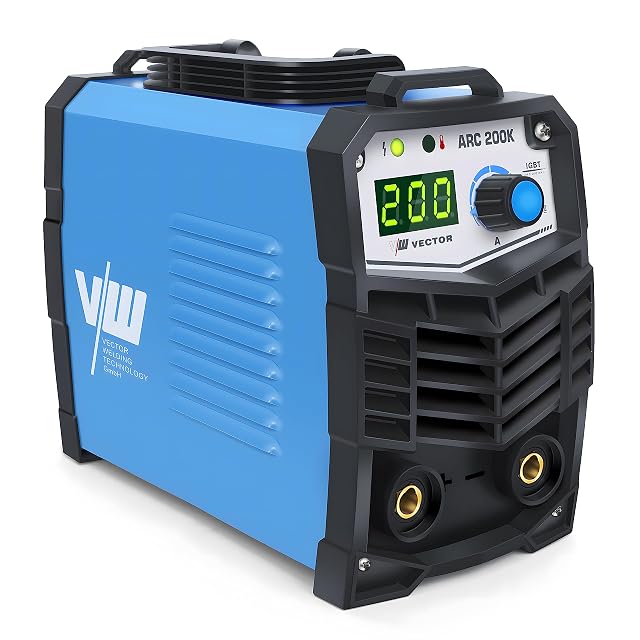
200 A · single-board IGBT · TIG-ready with an optional torch · €100
A plain stick machine that becomes a DC TIG set when you add a torch — which is the cheapest route into TIG on this site.
Best for: Someone who wants stick now and may want TIG later without buying twice
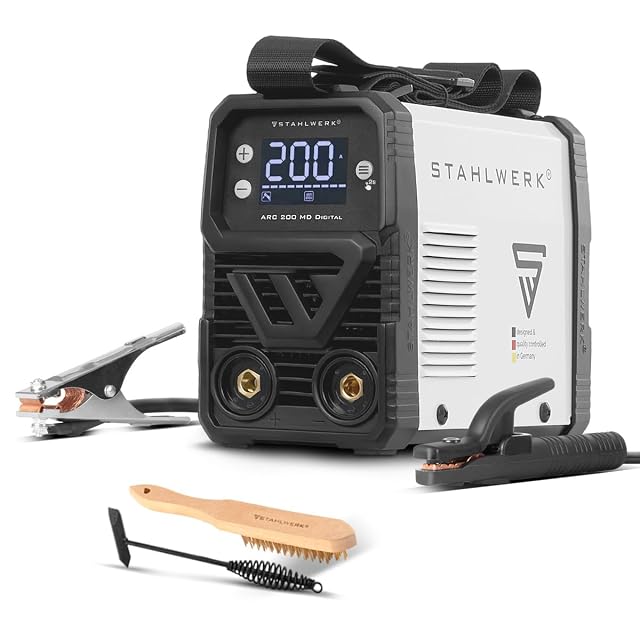
200 A · suggests a current for the thickness · arc force · €140
The only machine here that tells you what current to use — it reads out a recommendation for material up to 10 mm (0.39 in).
Best for: A beginner who would otherwise spend the first evening guessing at settings
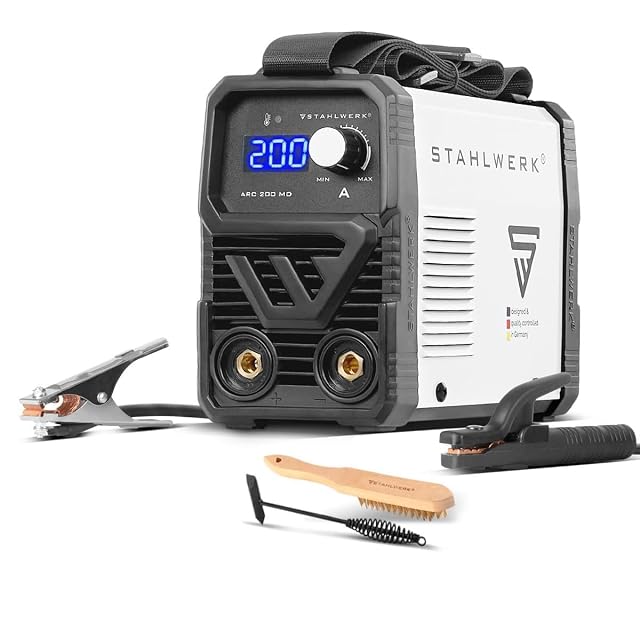
200 A · LED display · hot start · €95
The plainer sibling of the 250 A machine: same maker, same simplicity, a little less of everything.
Best for: A spare machine, or a first one where nothing beyond striking an arc matters yet
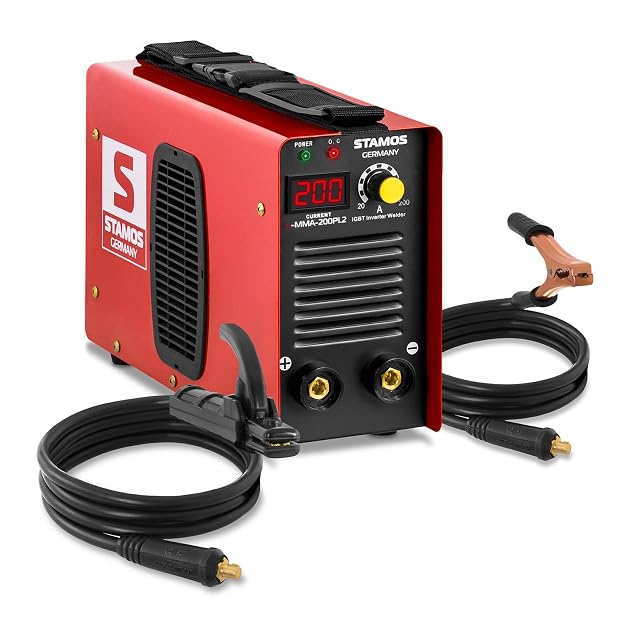
200 A · hot start · overheat protection · €90
Ninety dollars for a 200 A stick inverter — the cheapest way to weld outdoors on steel you have not cleaned.
Best for: Outdoor repairs on rusty, painted or galvanized steel, at the lowest possible entry price
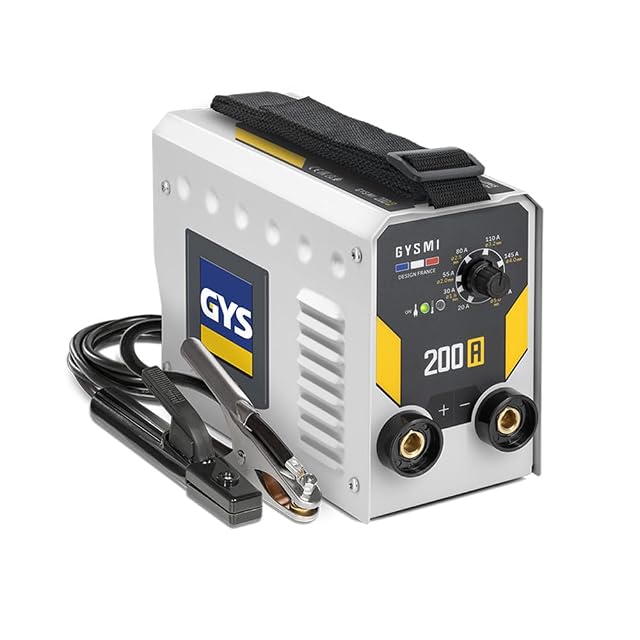
200 A · 230 V · rutile, basic, stainless, cast iron to Ø 4 mm (0.16 in) · €263
The only machine in this batch live on all six markets, and the only one that names the electrode types it is built for.
Best for: Someone who welds cast iron or runs basic electrodes and wants the machine to cope
≈ $405
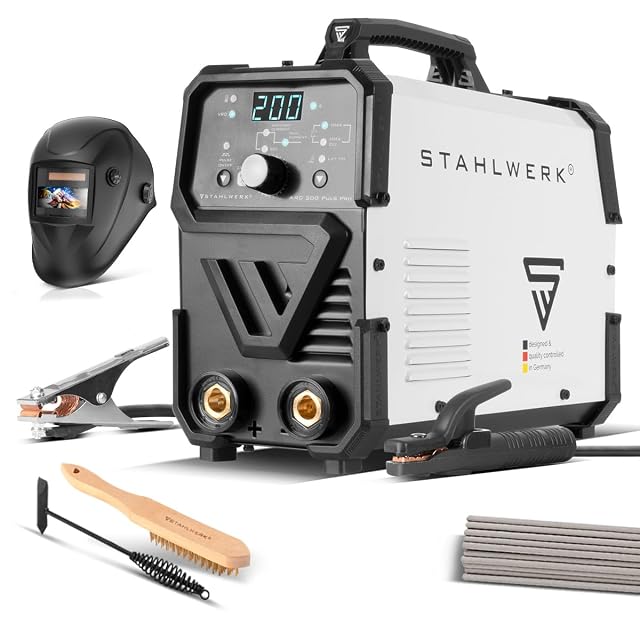
10–200 A · pulse on stick as well as TIG · €260
Pulse on a stick machine is rare and it has one specific use: keeping thin metal from blowing through.
Best for: Repairs on thin or rusted sheet where a steady arc would cut straight through
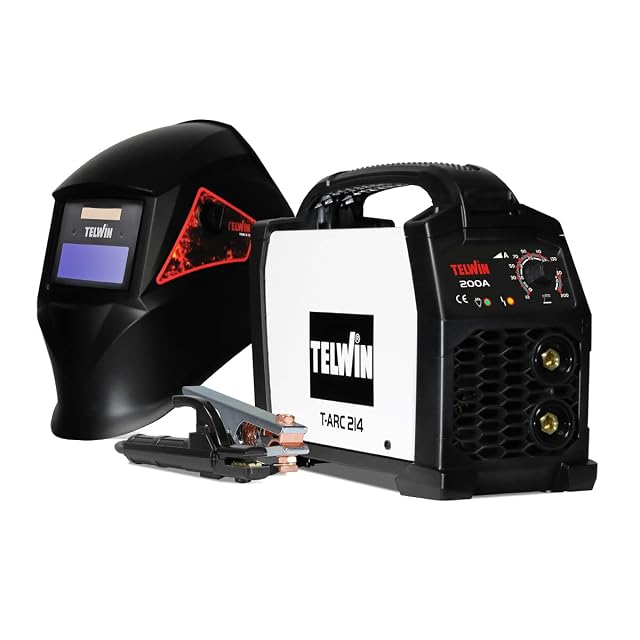
200 A · MMA and DC TIG · helmet included · €353
Sold as a complete kit with an auto-darkening helmet — which is how a first welder should be sold, and almost never is.
Best for: A first purchase where you want to open one box and start, with nothing else to order
The available current decides the usable electrode diameter, and therefore the thickness weldable in one pass.
A stick welder is the simplest of the three processes: no gas, no feeder, a holder and an earth.
A stick set draws heavily as the arc strikes, and a thin lead drops the voltage. The accepted cable section and the stated voltage tolerance say what works far from the board.
It follows the thickness of the work and the available current. An electrode too large for the machine will not strike properly.
Current too low or too heavy a strike. Scratch like a match then lift slightly: that is the movement to acquire.
Imperatively. Basic electrodes absorb moisture and give porous, cracked welds. A sealed tube is enough at home.
The process tolerates rust and paint better than the others, without that being good practice. Paint also gives off harmful fumes.
With a chipping hammer once the bead has cooled, then a wire brush. Welding over unremoved slag traps defects.
Yes, with specific stainless electrodes. The result is less clean than TIG but perfectly sound.
A long lead of too small a section drops the voltage and the machine cuts out. It is a frequent cause of poor operation.
A helmet with a shade suited to the current. Looking at an arc even briefly causes a corneal burn that declares itself hours later.
Stick is the most tolerant process and the easiest to carry, at the price of slag to chip every time. Keep the electrodes dry — damp makes porous welds — and beware of long extension leads, which make the machine cut out.
Four sets in five must state the figure before a column appears. A half-empty column manufactures false gaps.
| Model | Price | Current |
|---|---|---|
| GYSMI 200 A | $405 | 200 A |
| IPOTOOLS MMA-160R | — | 160 A |
| STAHLWERK ARC 200 MD | — | 200 A |
| STAHLWERK ARC 200 MD Digital | — | 200 A, direct current |
| STAHLWERK ARC 200 Puls Pro | — | — |
| Stamos Welding Group S-MMA-200PI.2 | — | 200 A |
| Stamos Welding Group S-MMA-250PI.2 | — | 250 A |
| Telwin T-Arc 214 | — | 200 A |
| VECTOR WELDING ARC 200K | — | 200 A |
Specifications: manufacturer sheets for welding and metalworking machines and the matching Amazon product pages. Prices and availability: Keepa. Every figure in this table names its source.
Most recent revision in this category: August 13, 2026.
Prices quoted in these summaries are dated readings. The live price is shown next to each product.