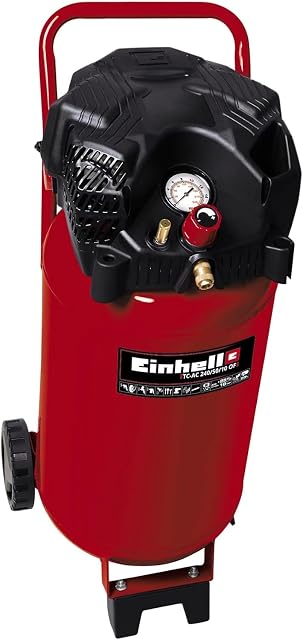
Einhell TC-AC 240/50/10 OF
1,500 W · 50 L · 240 l/min intake · oil-free · €179
Oil-free and upright: nothing to check, nothing to spill, and it can be carried on its side.
Best for: A compressor that moves between garage, driveway and site
≈ $530
The air the workshop runs on
Half the tools in a metal workshop need air, and most compressors are sold on the wrong number. We compare delivered air at working pressure rather than theoretical displacement, tank size against duty, noise — and blast cabinets on visibility, media recovery and dust.
1,500 W · 50 L · 240 l/min intake · oil-free · €179
Oil-free and upright: nothing to check, nothing to spill, and it can be carried on its side.
Best for: A compressor that moves between garage, driveway and site
≈ $530
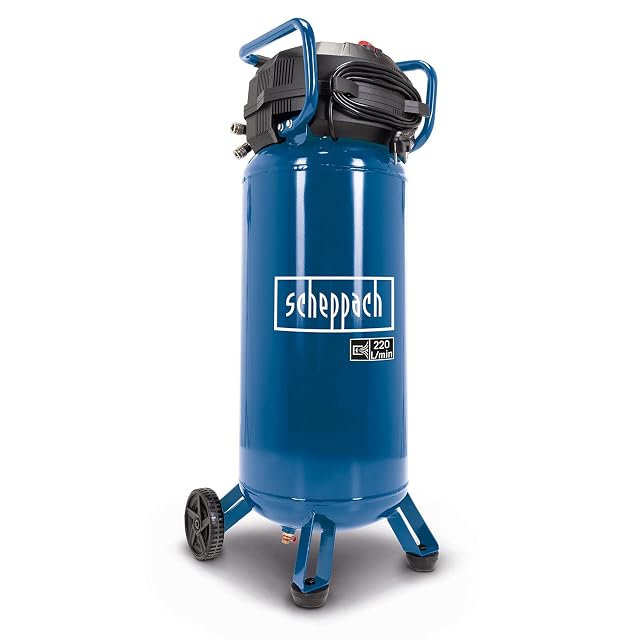
1.5 kW · 50 L · 220 l/min intake · 10 bar · €150
The cheapest 50 liter machine here — and its 220 l/min is intake, not what reaches the tool.
Best for: Impact wrenches, blow guns, tire work and short bursts of spraying
≈ $790
2 hp · 50 L · 113 l/min at 6.2 bar · oil-free · €183
The only compressor here that publishes its output AT a pressure — 113 l/min at 6.2 bar.
Best for: Anyone comparing machines properly, who wants a number that means something
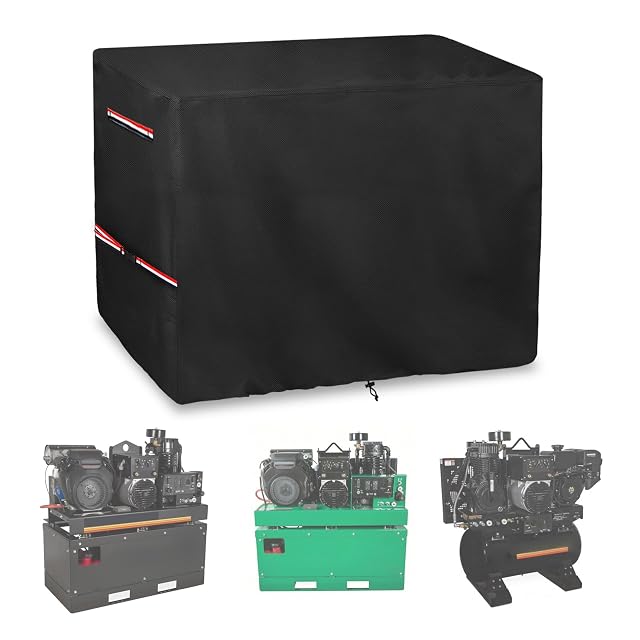
50 × 28 × 47 in · 900D polyester · triple-layer laminate · sealed seams
A tailored waterproof cover for a fixed compressor, published with its dimensions and its fabric weight — the only air-system accessory in this hub that publishes either.
Best for: A compressor standing in an unheated workshop, a lean-to or a yard, where rust is the real enemy
≈ $100
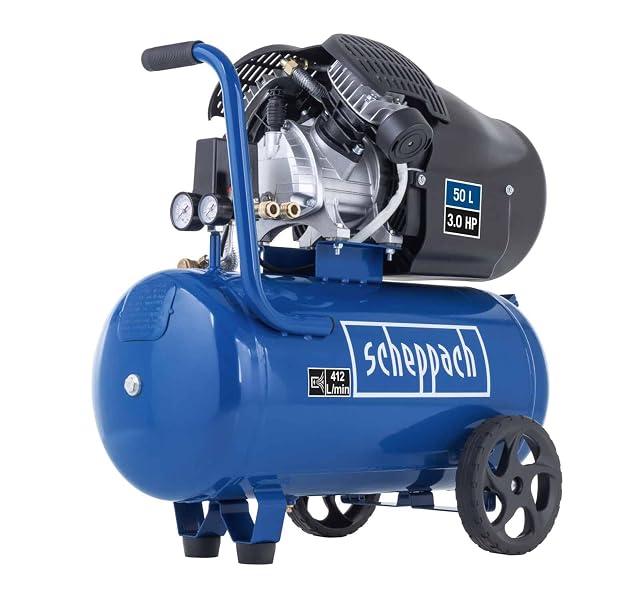
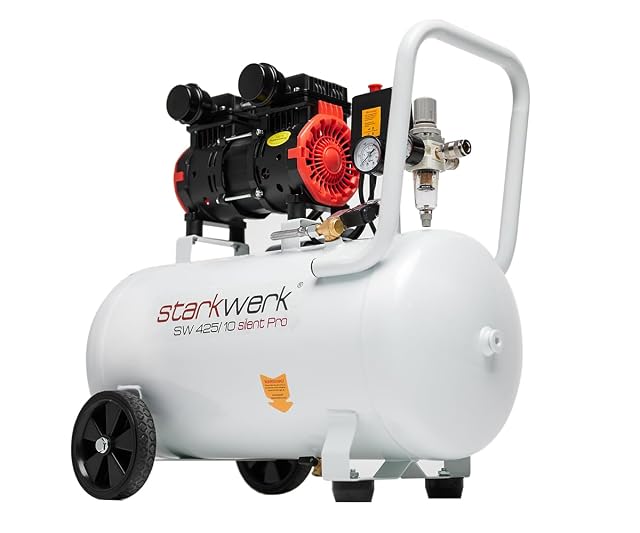
2,200 W · twin cylinder · 412 l/min intake · 50 L · €250
A twin-cylinder pump, which is what puts real air behind continuous tools.
Best for: A workshop that has outgrown intermittent tools and wants to run air continuously
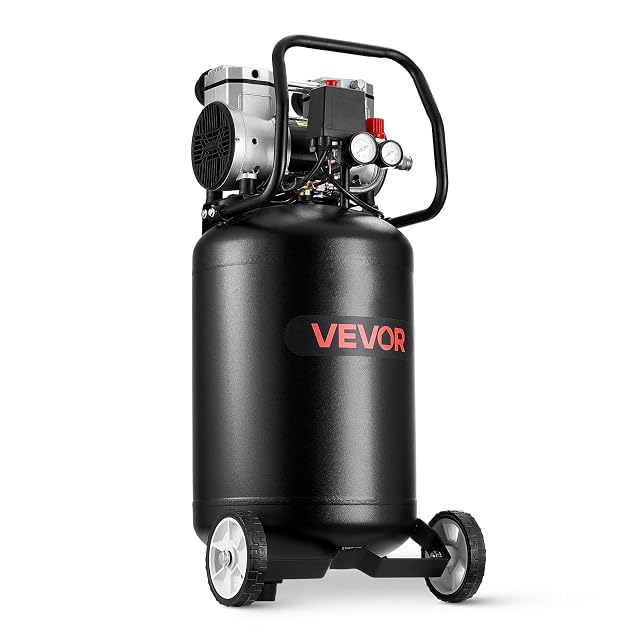
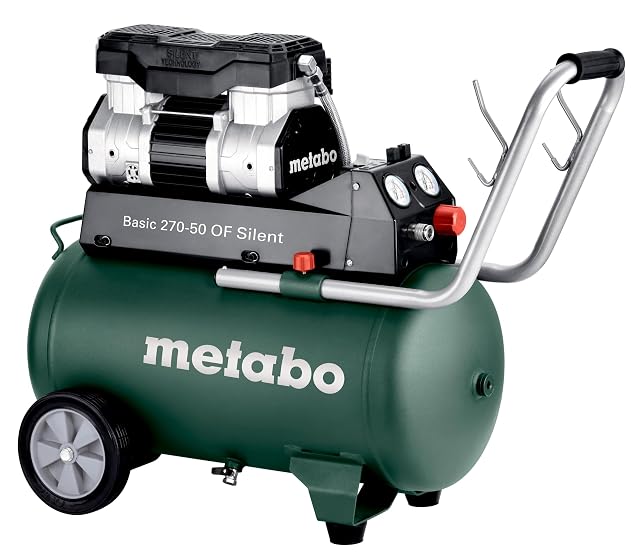
69 dB · oil-free · 10 bar · full copper windings · €250
Sixty-nine decibels — quiet enough to hold a conversation next to, which no other compressor here is.
Best for: A workshop attached to a house, or any space where a normal compressor is intolerable
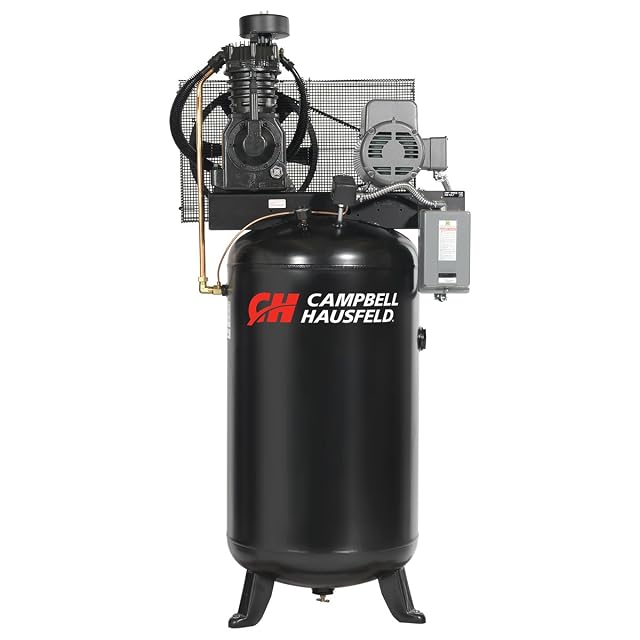
80 gal ASME · 5 HP 230 V · 18.4/17.2/16.4 CFM at 40/90/175 PSI · 15,000 h
A two-stage commercial compressor that publishes its delivery at three pressures — which is exactly what this hub’s buying tip asks for and almost nothing on the market does.
Best for: A workshop running a plasma cutter, a blast cabinet or air tools continuously, with a 230 V single-phase supply
≈ $3470
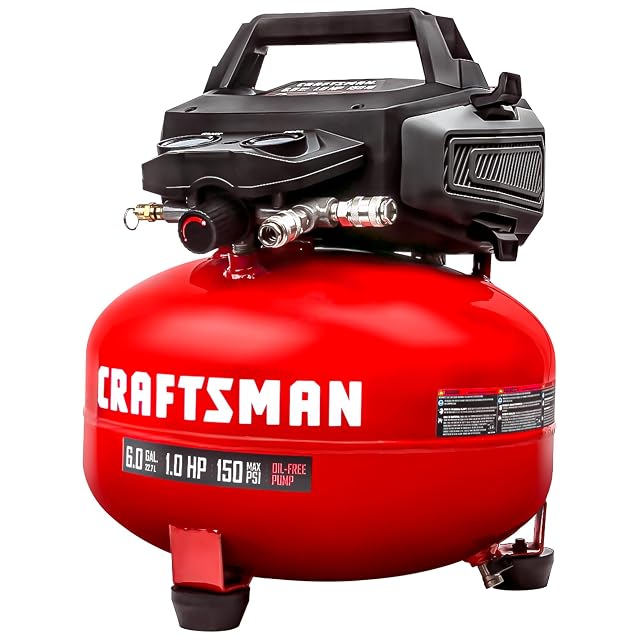
6 gal · 1.0 HP · 150 PSI max · 2.6 SCFM at 90 PSI · 30.8 lb
A six-gallon pancake that publishes what the hub asks for — 2.6 SCFM at 90 PSI — and its own weight at 30.8 lb.
Best for: Nail guns, tires and intermittent air work in a garage, where portability matters more than volume
≈ $160
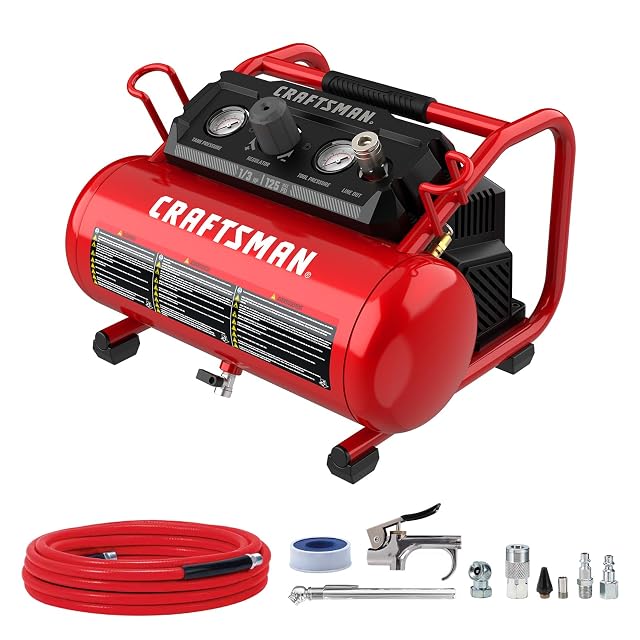
2 gal · 1/3 HP · 125 PSI max · 10-piece accessory kit · no CFM published
A two-gallon oil-free portable whose listing is a single bullet — the accessory list — with no air delivery figure anywhere on the page.
Best for: Tires, blowing down a workbench and a staple gun — not for any air tool that runs continuously
≈ $140
61 dB · 250 l/min intake, 130 l/min delivered · 50 L · 10 bar · €308
The only compressor here that publishes intake AND delivery — and it is the quietest at 61 dB.
Best for: A workshop where the compressor runs near people and the numbers have to be trustworthy
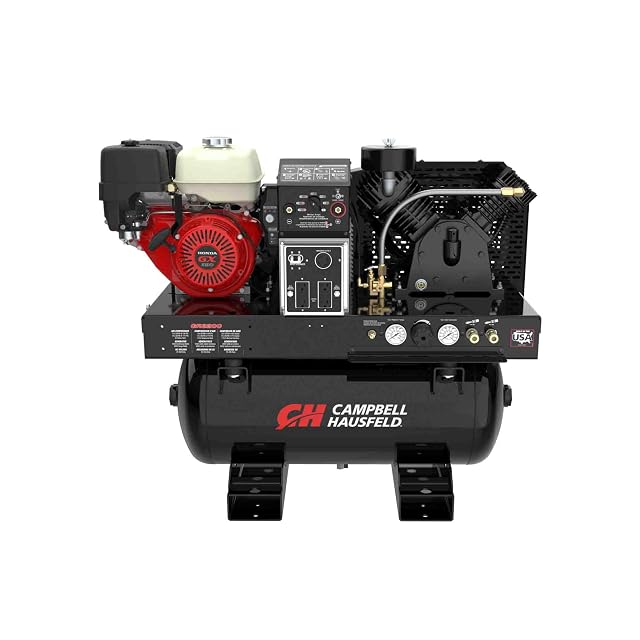
30 gal · 14 CFM at 90 PSI · 175 PSI · 5,000 W · 200 A welder · Honda GX390
A petrol-engined machine that is a 14 CFM compressor, a 5,000 W generator and a 180 A DC stick welder at once — for a truck bed with no mains supply.
Best for: Site and roadside work with no electricity, where one engine has to do three jobs
≈ $6800
Maximum pressure decides what you can run. An air tool that is underfed simply does not work.
Tank volume decides how long you can work between motor restarts. A small tank makes the compressor run non-stop.
A small tank moves around and is enough for inflating, blowing and nailing. Those uses do not demand continuous flow.
Flow, almost always: it is what is lacking when a tool slows. Pressure is only a threshold to reach.
Regularly, through the bottom valve. Water accumulating there corrodes the tank from the inside, which is a real risk on a pressure vessel.
Compressed air condenses as it expands. A water separator, or even a dryer, is essential for painting and plasma.
It signals a tank too small for the tool in use, or a leak in the circuit. The fittings are the first thing to check.
On an oiled model, yes, with the specified oil and a level checked regularly. Oil-free models need none.
It is better to drain it after use: that removes the water and relieves the seals. A tank left full for months corrodes faster.
Belt-driven models are markedly quieter than direct-drive ones. Installing it in a separate room with an air line is the radical solution.
A hose too narrow or too long drops the flow available at the tool. It is a frequent cause of a tool that seems to lack power.
It is flow that is lacking, almost never pressure: a high-pressure, low-flow compressor will not run a sander. Drain the tank regularly — water corrodes it from the inside — and filter the air before any painting or plasma cutting.
There is no table here, and the reason is in the listings. The figure published most often across these 11 products is maximum pressure, given by 6 of them — short of the four in five a column needs to compare rather than to display gaps. Each product page says what its own maker published.
$100 – $140
2 models
Wavecover KYJ-YHC018-3, compressor cover, 50 × 28 × 47 in, CRAFTSMAN CMXECXA0200244A, 2 gallon portable
$790 – $6800
3 models
Scheppach HC51V, Campbell Hausfeld CE7050, 80 gallon two-stage, Campbell Hausfeld GR3200, 3-in-1 compressor, generator and welder
Specifications: manufacturer sheets for welding and metalworking machines and the matching Amazon product pages. Prices and availability: Keepa.
Most recent revision in this category: October 7, 2026.
Prices quoted in these summaries are dated readings. The live price is shown next to each product.