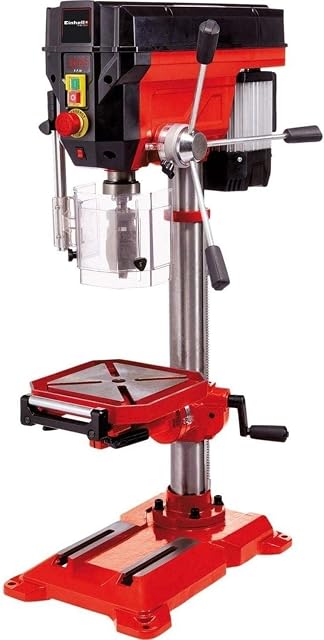
Skip to content

The best drill presses and mag drills for 2026

Drilling steel is a different job from drilling wood: it needs low speed, high torque and constant pressure. We compare bench and pillar drills on spindle runout, the slowest speed available, quill travel and table rigidity — and cover magnetic drills, which take the machine to the work.

The models we recommend

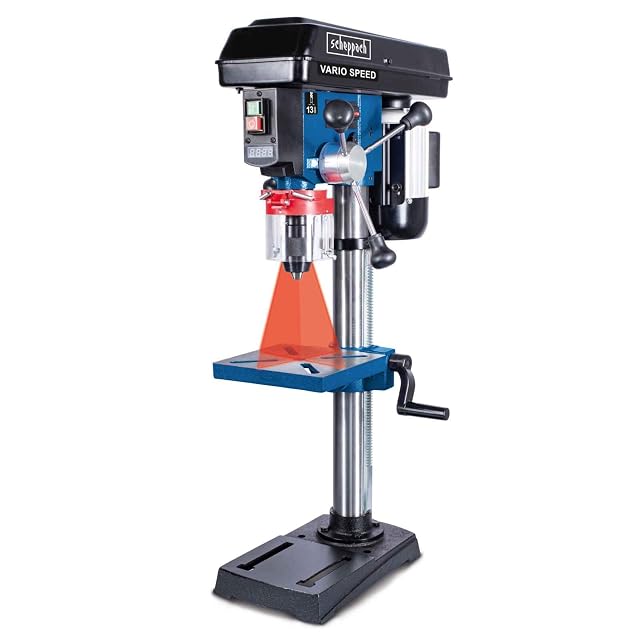
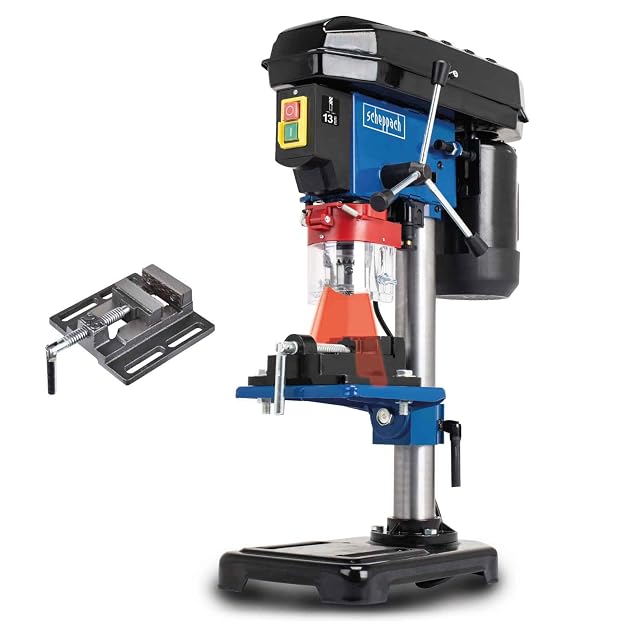
  1. Scheppach DP16VLS

    500 W · 5 speeds · 50 mm (1.97 in) quill travel · vice included · €99

    Ninety-nine euros with a vice in the box — and the quill travel, 50 mm (1.97 in), is the number that limits it.

    Best for: Accurate holes in plate and section up to about 40 mm (1.57 in) thick
    7.5/10

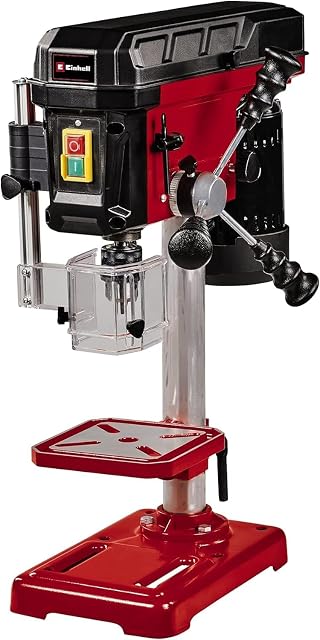
  2. Einhell TC-BD 450

    450 W · 600–2,650 rpm in 5 steps · 50 mm (1.97 in) depth · €115

    A published speed range starting at 600 rpm — low enough for large bits in steel, which many small presses are not.

    Best for: Drilling steel with bits over 8 mm (0.31 in), where speed matters more than power

    6.9/10

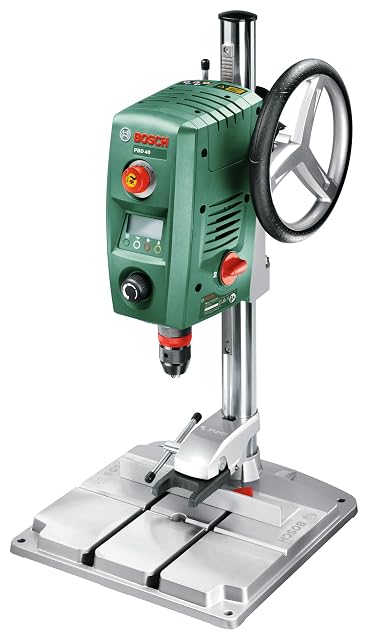
  3. Bosch PBD 40

    710 W · 13 mm (0.51 in) in steel · 90 mm (3.54 in) quill travel · €250

    Ninety millimeters of quill travel — nearly twice the entry machines, and the figure that decides deep holes.

    Best for: Deep holes in solid stock, and anyone tired of repositioning halfway down

    8.1/10

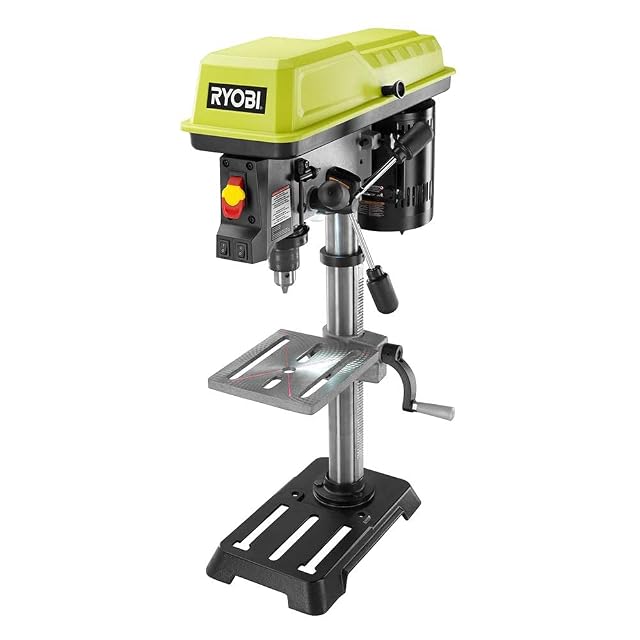
  4. RYOBI DP103L-A, 10 in five-speed bench press

    1/4 HP induction · 5 speeds 620–3,100 rpm · 10 in swing · laser alignment

    A ten-inch bench press with a 620 rpm bottom gear and a laser alignment system — the slowest speed of the two stepped machines on this shelf.

    Best for: A bench where the hole has to land where the line says, in steel up to about 10 mm (0.39 in)

    ≈ $200

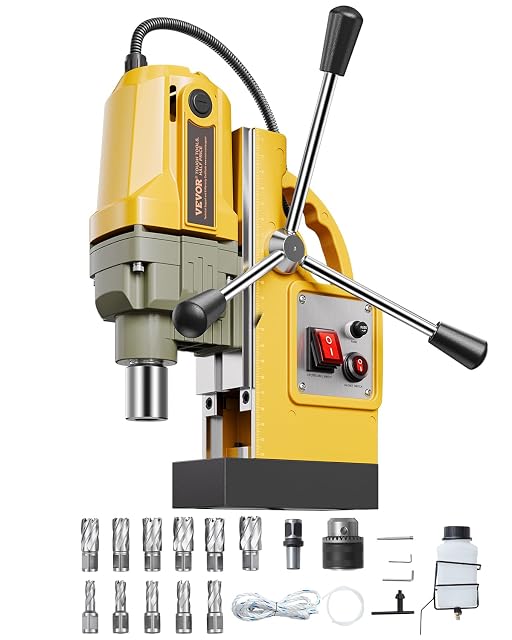
  5. VEVOR Magnetic drill, 1400 W, 40 mm

    1,400 W · 800 rpm fixed · 40 mm (1.57 in) boring · 2,810 lbf magnet · 11 cutters

    A magnetic drill with a 40 mm (1.57 in) cutter capacity and one fixed speed of 800 rpm — which is the opposite of what this hub’s buying tip asks for.

    Best for: Holes in structural steel plate of 10 mm (0.39 in) or more, where the machine has to go to the work

    ≈ $175

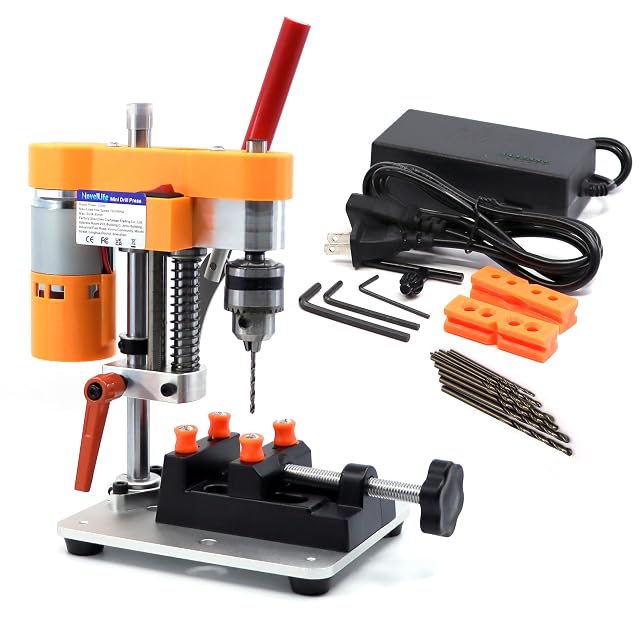
  6. NovelLife B10 mini drill press

    795 DC motor · 7,000 rpm max · 40 mm (1.57 in) stroke · B10 chuck 0.6–6 mm (0.02 to 0.24 in)

    A mini drill press for 0.6 to 6 mm (0.02 to 0.24 in) bits, with a 24 V variable supply and a 40 mm (1.57 in) stroke — the only machine in this hub built for work smaller than a drill chuck normally reaches.

    Best for: Circuit boards, model work and small holes in soft material, where a full-size press cannot grip the bit

    ≈ $80

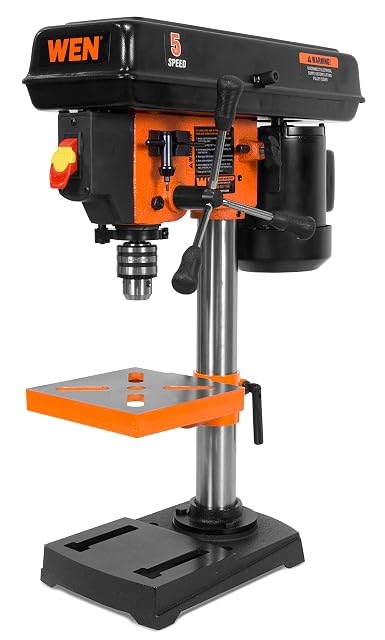
  7. WEN 4206T, 8 in five-speed bench press

    2.3 A induction · 5 speeds 750–3,200 rpm · 8 in swing · 2 in travel

    A cast iron eight-inch bench press whose slowest speed is 750 rpm — right at the limit this hub’s buying tip warns about.

    Best for: Small holes in steel and general bench work, where the machine has to be short enough to live under a shelf

    ≈ $88

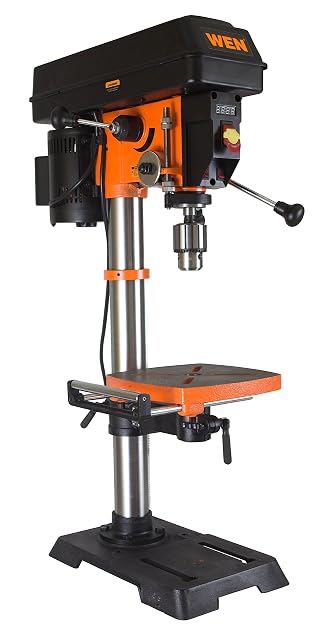
  8. Einhell TE-BD 750 E

    750 W induction motor · tilting, swivelling table · €370

    An induction motor and a table that tilts and swivels — the pillar drill you buy to stop thinking about it.

    Best for: A workshop where the drill press runs daily and angled work is routine

    8.4/10

    ≈ $975

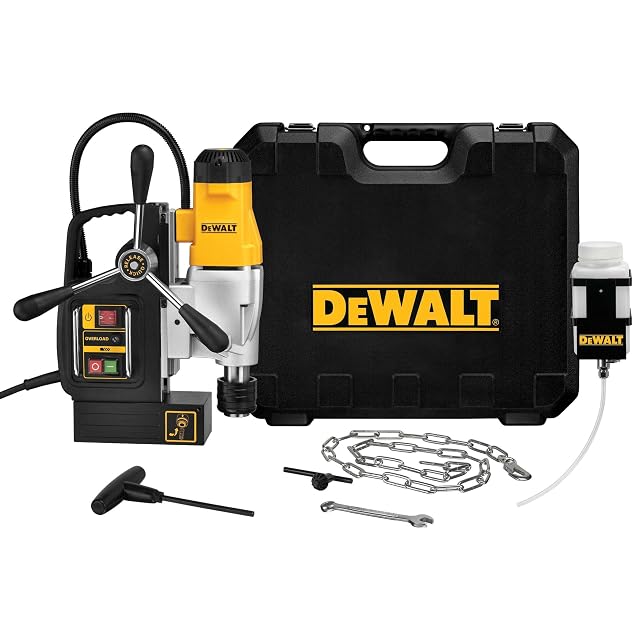
  9. DEWALT DWE1622K, 2 in two-speed magnetic drill

    10 A · 2 speeds · 2 in capacity · 4 in travel · Weldon 3/4 in + 1/2 in chuck

    A two-speed magnetic drill with a 2 in cutter capacity and 4 in of travel, with a tool-free change between a Weldon cutter and a keyed chuck.

    Best for: Structural steel on site, where the cutter size changes and the speed has to change with it

    ≈ $1000

Choosing within drill presses, by need

Drilling large holes in steel

A large-diameter bit demands a great deal of torque at low speed. An undersized machine stalls or burns the bit.

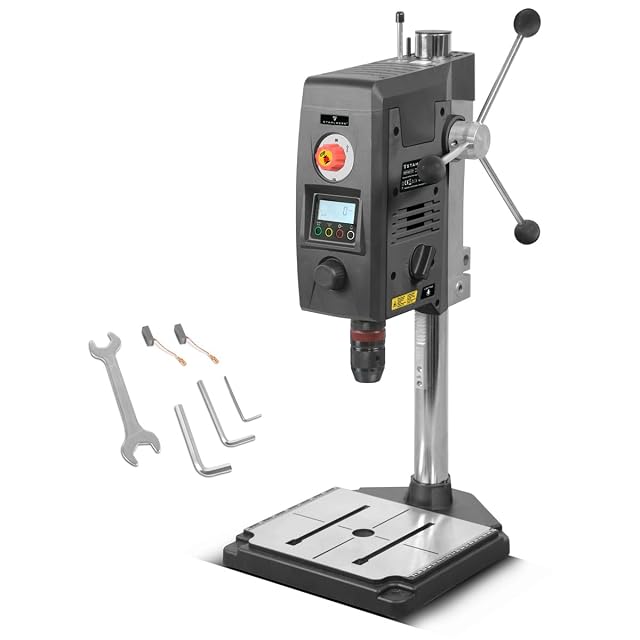
STAHLWERK Bench drill 800 W

Drilling small and accurate

On small diameters, spindle accuracy and table stability count far more than available power.

Einhell TC-BD 450

Holding a square hole year after year

Spindle play and table flatness decide squareness, and both degrade under knocks. A heavy column and a machined table are what keep the hole straight at the hundredth part.

Einhell TE-BD 750 E

Drill presses and who each one is for

Square drilling
That is the machine’s reason for existing: a perpendicular, repeatable hole that a hand drill does not give.
Series of holes
A depth stop and an adjustable table let you drill dozens of parts identically.
Drilling a ten-millimeter plate
Spindle travel and height under the spindle decide what fits. A short column limits you sooner than expected.

The trade-offs of drill presses

Speed against diameter
The larger the bit, the slower it must turn. A machine with few speeds limits the diameters genuinely usable in steel.
Heavy frame against footprint
Mass absorbs vibration and gives a clean hole; it makes the machine impossible to move. A bench model is a compromise.
Spindle travel against rigidity
Long travel lets you go through thick parts and increases overhang. The hole wanders more at full extension.

What keeps coming up about drill presses

What speed for drilling steel?

The slower the larger the bit. A large bit at high speed burns its edge within seconds.

Do I need lubricant?

In steel and stainless, yes: it carries the heat away and hugely extends the bit’s life. In cast iron and brass you drill dry.

Must the workpiece be clamped?

Always, especially sheet. A bit breaking through grabs and spins the piece like a propeller: it is the most frequent injury on this machine.

Why is my hole not round?

A badly ground bit, a bit that wandered at the start, or a badly clamped piece. A center punch mark before drilling solves most cases.

Can I mill with a pillar drill?

No. The bearings do not take lateral loads and the spindle develops permanent play.

How do I drill a large diameter?

By drilling a pilot hole first, then opening it out. Attacking a large diameter directly stalls the machine.

What does spindle travel mean?

The depth you can drill without raising the table. It limits the thickness you can go through in one stroke.

Should I wear gloves?

Never near a rotating spindle: a snagged glove drags the hand in. Goggles compulsory, gloves forbidden.

In short, on drill presses

The larger the bit, the slower it must turn and the more it must be lubricated. Always clamp, especially sheet — a bit breaking through spins the piece like a propeller — and never wear gloves near the spindle.

Drill presses at a glance

  • Power: 450 to 800 W, on 6 of the 12 models.

Drill presses, side by side

There is no table here, and the reason is in the listings. The figure published most often across these 12 products is power, given by 6 of them — short of the four in five a column needs to compare rather than to display gaps. Each product page says what its own maker published.

Where each budget reaches on this shelf

Where drill presses are covered

Sources, and the ranking

Specifications: manufacturer sheets for welding and metalworking machines and the matching Amazon product pages. Prices and availability: Keepa.

Most recent revision in this category: October 7, 2026.

How we assess drill presses

Prices quoted in these summaries are dated readings. The live price is shown next to each product.