Skip to content

The best metal cutting band saws for 2026

The band saw is the quiet way to cut stock, and the one that wastes least material. We compare capacity in round and square section, blade speed range — which is what lets one machine cut both steel and aluminum — mitre ability, and whether the head descends under control or drops.

The models we recommend

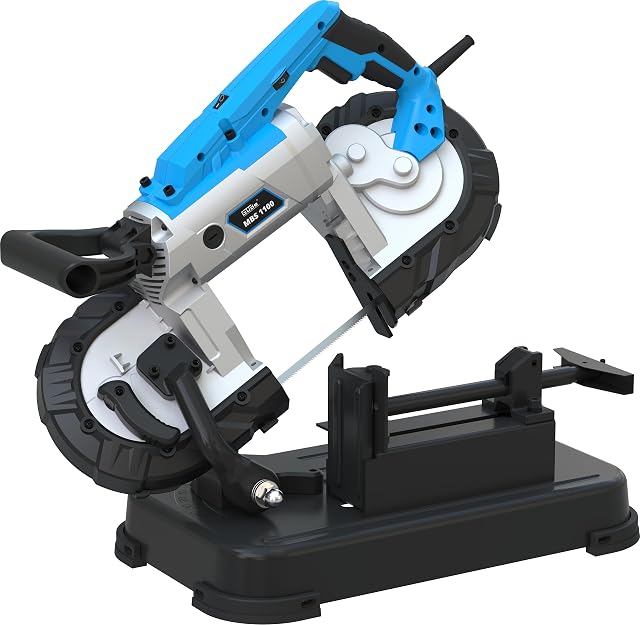
  1. Güde MBS 1100

    1,100 W · removable table, mobile or bench · €158

    A band saw you can lift off its table and carry to the work — rare in a category built around mass.

    Best for: Cutting fixed structures in place — handrail, frame, pipework already installed
    6.9/10

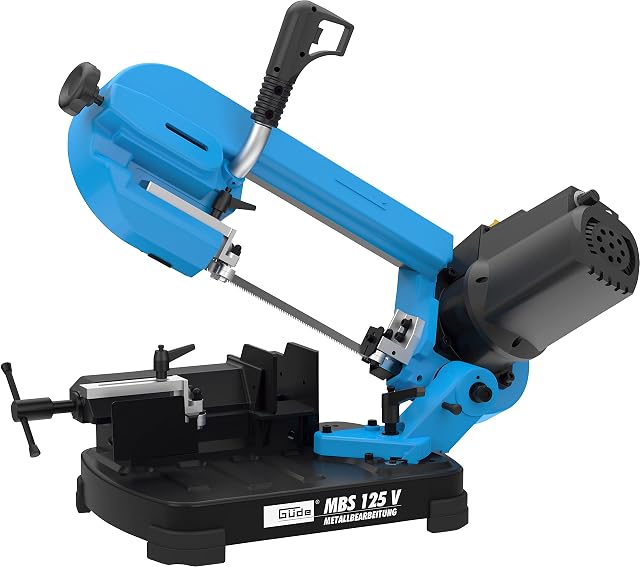
  2. Güde MBS 125 V

    400 W · 38–80 m (125 to 262 ft)/min variable · 0–60° mitre · €329

    Variable band speed and ball-bearing guides — the two things that decide whether a band saw cuts straight.

    Best for: A workshop cutting both steel and aluminum, where one speed would be wrong for one of them

    8.1/10

    ≈ $845

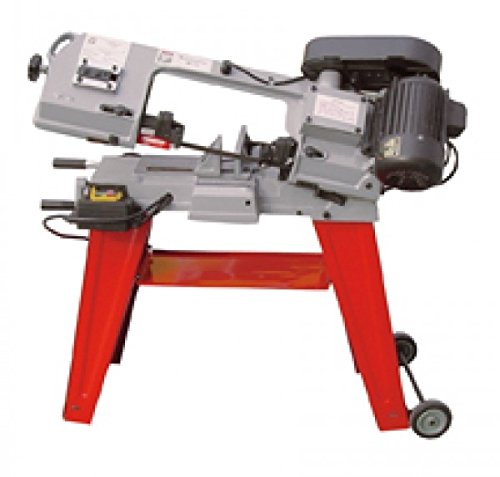
  3. HOLZMANN BS 115N

    540 W · horizontal and vertical · single phase · €396

    A saw that works both ways — horizontal for cutting bar to length, vertical for following a line.

    Best for: A one-machine workshop that cuts bar to length and occasionally needs to follow a curve

    7.5/10

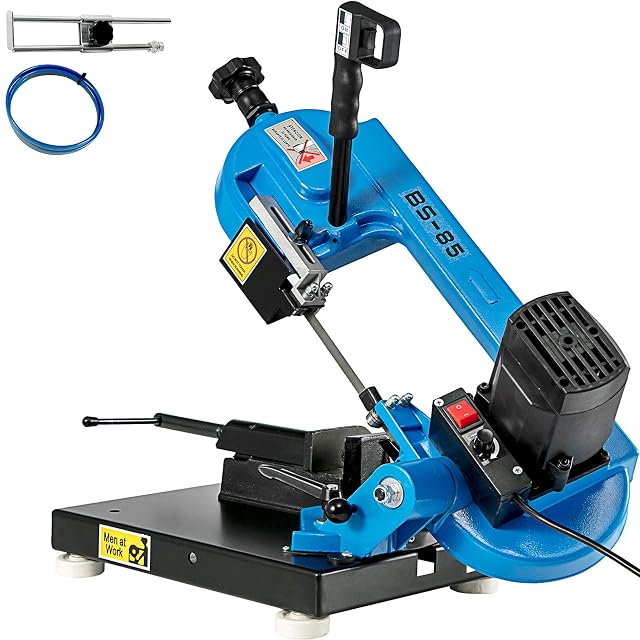
  4. VEVOR BS-85

    1,000 W · vertical · cast aluminum body · €349

    A vertical band saw — you move the work past the blade, which is a different tool from the horizontal ones here.

    Best for: Cutting shapes out of plate, and trimming rather than sizing bar stock

    7.5/10

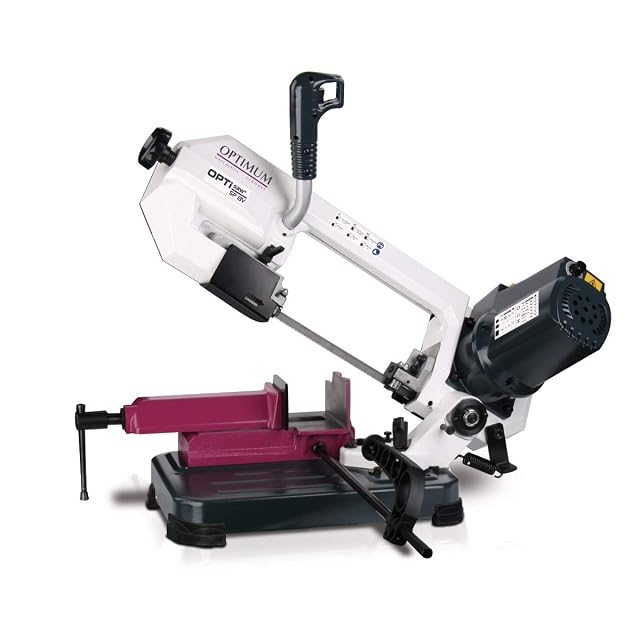
  5. OPTIMUM OPTIsaw SP13V

    Portable mitre band saw · variable speed · 0–60° swivel · €620

    A transportable mitre band saw with a stepless speed control — precision without a factory floor.

    Best for: Accurate mitres in solid bar, in a workshop that cannot house a full-size saw

    8.7/10

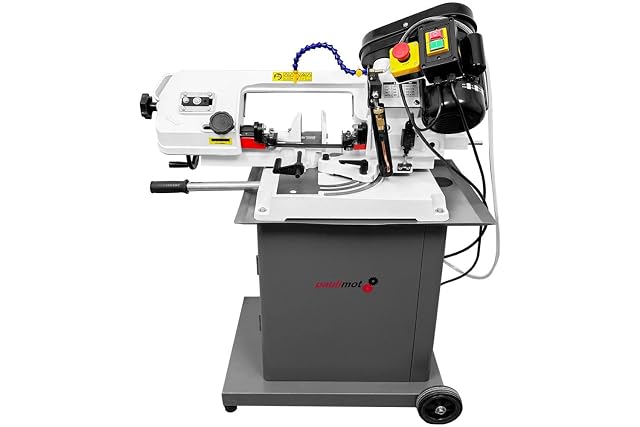
  6. paulimot BS-128K

    Cast body · coolant system · stand included · €724

    Coolant plumbed in and a cast frame — the two things that separate a workshop saw from a hobby one.

    Best for: Cutting the same length twenty times, accurately, without buying bands every month

    8.7/10

Choosing within metal band saws, by need

Cutting large sections

Power decides the ability to hold blade speed through a solid section, where the blade works continuously.

Güde MBS 1100

A discreet workshop machine

A moderate saw cuts slowly, with no noise and no sparks, which makes it usable where a chop saw is not.

Güde MBS 125 V

Changing the blade with no special tooling

A blade is replaced several times a year, and the tensioner decides how long that takes. Machines with quick tension and hand-adjustable guides are back in service in minutes.

OPTIMUM OPTIsaw SP13V

Metal band saws and who each one is for

Clean cutting
The bandsaw leaves a clean edge that needs almost no reworking, unlike an abrasive disc.
Batches of parts
An adjustable stop and an automatic downfeed let you cut to length without watching. It is a considerable time saving.
Shared workshop
No sparks, little noise, little dust: it is the most bearable cutting machine in a constrained environment.

The trade-offs of metal band saws

Cleanliness against speed
The bandsaw cuts markedly more slowly than a chop saw and leaves an edge that needs no reworking. Total time is often comparable.
Blade speed against material
Every metal has its speed range: too fast on stainless and the blade work-hardens within a few cuts. A fixed-speed machine limits the materials.
Bi-metal blade against carbon
Bi-metal lasts far longer on hard metals and costs more. Carbon suits mild steel and wears fast.

What keeps coming up about metal band saws

What blade speed for what metal?

Slow for stainless and hard steels, faster for aluminum and mild steel. Too fast on stainless and the blade work-hardens within a few cuts.

Do I need cutting fluid?

It markedly extends blade life and improves the edge. On a machine with no flood system, a stick lubricant is enough.

How many teeth in engagement?

At least three in the thickness being cut. On a thin-wall tube, too coarse a pitch grabs and breaks teeth.

Why does my cut run off?

Badly set guides, a blade worn on one side, or insufficient tension. Check the guides before changing the blade.

Should a new blade be broken in?

A few cuts at reduced feed refine the edge and markedly extend its life. It is common professional practice.

Does the bandsaw replace a chop saw?

It is slower and leaves a far cleaner edge, with no sparks. In the workshop many keep only the bandsaw.

How do I cut a tube without crushing it?

Clamp it in the vice without excess and use a fine pitch. A tube crushed in the vice gives an oval cut.

Can the blade break?

A blade over-tensioned or badly guided breaks at the weld. The guard must stay in place: a blade that breaks in use is thrown clear.

In short, on metal band saws

The bandsaw cuts more slowly and leaves an edge that needs no reworking — overall the time is often comparable to a chop saw. Three teeth minimum in the thickness, slow speed on stainless, and check the guides before blaming the blade.

Metal band saws at a glance

  • Power: 400 to 1,100 W, on 4 of the 6 models.

Metal band saws, side by side

There is no table here, and the reason is in the listings. The figure published most often across these 6 products is power, given by 4 of them — short of the four in five a column needs to compare rather than to display gaps. Each product page says what its own maker published.

Where metal band saws are covered

Sources, and the ranking

Specifications: manufacturer sheets for welding and metalworking machines and the matching Amazon product pages. Prices and availability: Keepa.

Most recent revision in this category: August 13, 2026.

How we assess metal band saws

Prices quoted in these summaries are dated readings. The live price is shown next to each product.