Skip to content

The best bench lathes and milling machines for 2026

This is where a workshop stops repairing parts and starts making them. We compare bench lathes on swing, distance between centers and spindle bore, mills on travel and column rigidity — and we are explicit about the hidden cost: the tooling standard, which you buy into once and pay for indefinitely.

The models we recommend

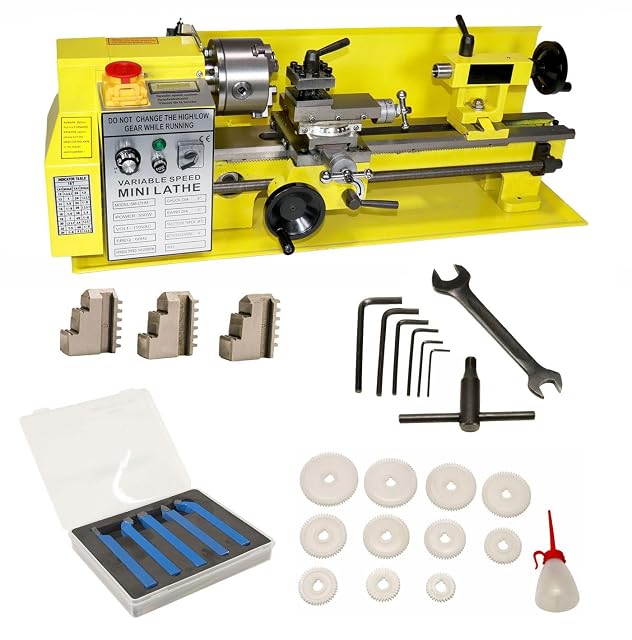
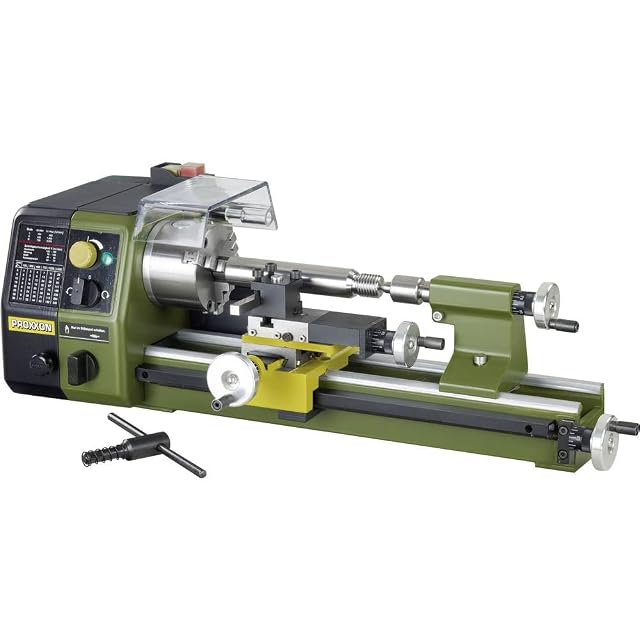
  1. PROXXON FD 150/E

    Two-step belt drive + electronic speed · facing, turning, boring · €529

    A precision lathe small enough for a bench corner — and the cheapest way into turning that is not a toy.

    Best for: Small parts, bushes, spacers and modelmaking, on a bench that also does other things
    7.2/10

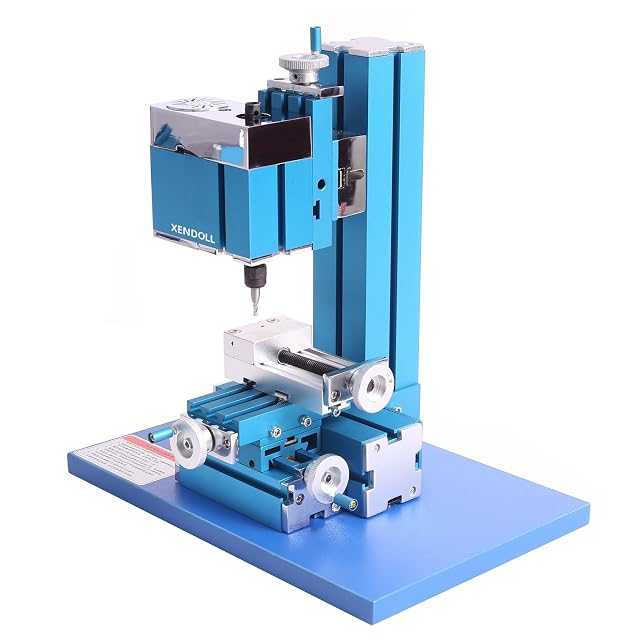
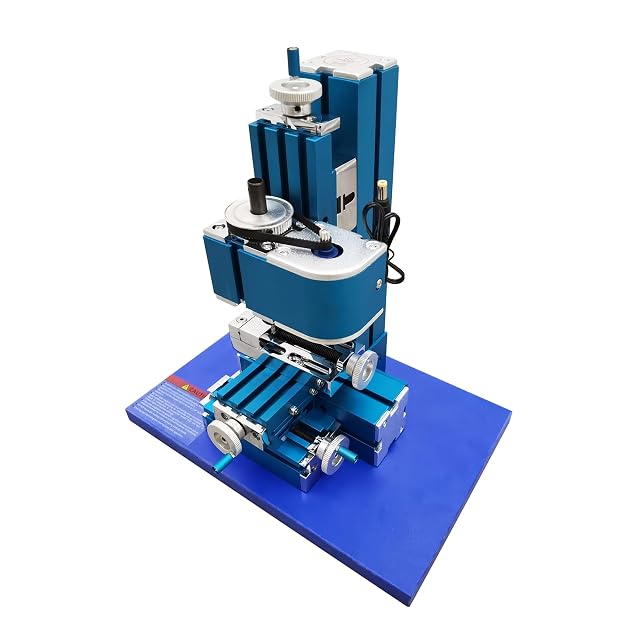
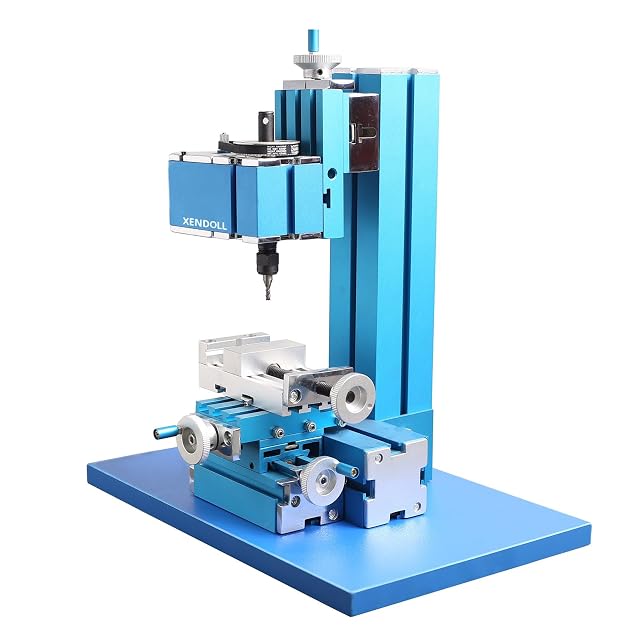
  2. XENDOLL W104MA, 24 W desktop mill

    24 W · 20,000 rpm motor · 3,000 rpm spindle · 0.1 mm (0.004 in)/division

    A 24-watt desktop mill for wood, plastic and soft metal, with a 0.1 mm (0.004 in) handle scale — the cheapest machine in this hub and the smallest increment it can be set to.

    Best for: Model work and teaching, on wood, plastic and pure copper or aluminum

    ≈ $170

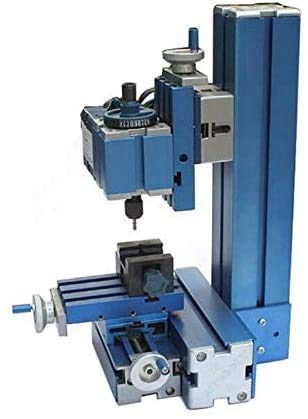
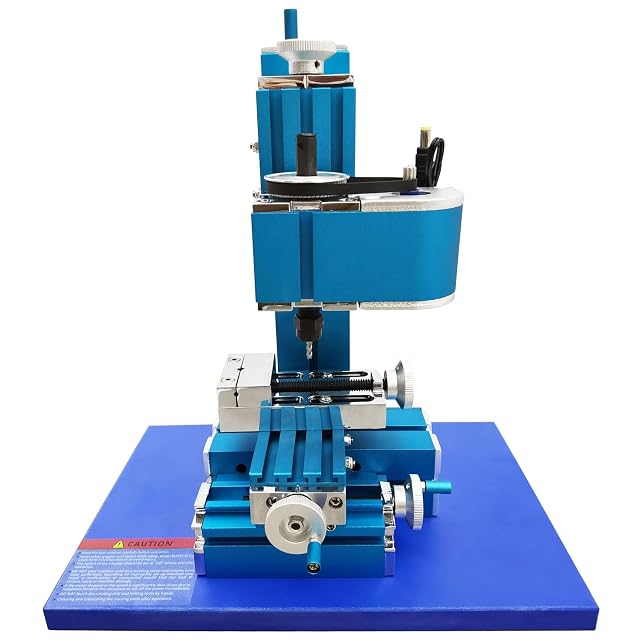
  3. Beacon Pet 2020090101, 12 V mini lathe and mill

    12 V DC · lathe and mill in one · tool-height shims · soft metals only

    A 12-volt combination mini lathe and mill that supplies shims to set the tool height — the one adjustment that decides whether a small lathe cuts or rubs.

    Best for: Teaching turning and milling on one machine, in wood, plastic and pure copper or aluminum

    ≈ $235

  4. XENDOLL W104MB, 36 W desktop mill

    36 W · 20,000 rpm motor · 3,000 rpm spindle · 0.1 mm (0.004 in)/division

    The 36-watt version of the XENDOLL desktop mill, with the same spindle speed, the same handle scale and the same bullets as the 24-watt one.

    Best for: The same model and STEM work as the 24 W machine, with half again the motor

    ≈ $200

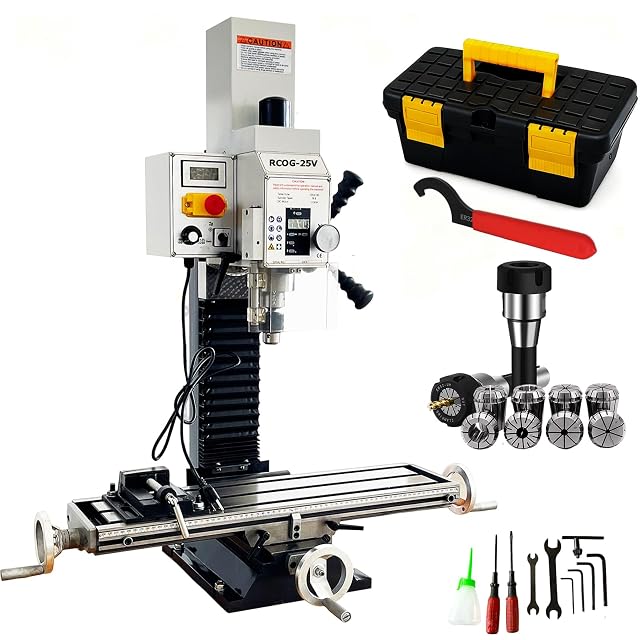
  5. IntXanth Y028417, benchtop mill-drill with LCD

    600 W brushless · 50–1,125 / 100–2,250 rpm · head tilts 45° · LCD depth and speed

    A benchtop mill-drill with two speed ranges, overload protection and an LCD showing both spindle speed and drilling depth in inches or millimeters.

    Best for: A bench where the depth of cut has to be read rather than counted on a dial

    ≈ $1875

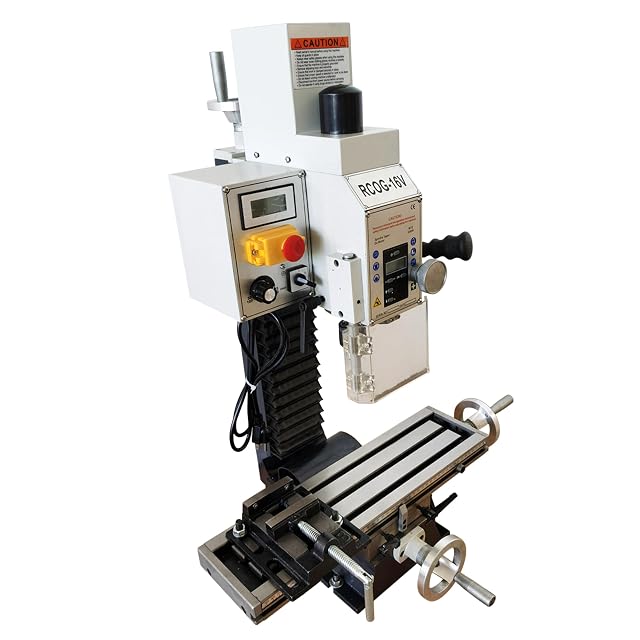
  6. JARYANNIX FT-028371, 24 W mini mill-drill

    24 W · spindle jump < 0.1 mm (0.004 in) · X 45 mm (1.77 in), Y/Z 35 mm (1.38 in) · 0.05 mm (0.002 in)/division · 3.5 kg (7.7 lb)

    The only machine in this hub, either half, that publishes a spindle runout figure — and it publishes eleven other specifications alongside it.

    Best for: Precision model work, where the resolution of the handles and the runout of the spindle are the whole question

    ≈ $210

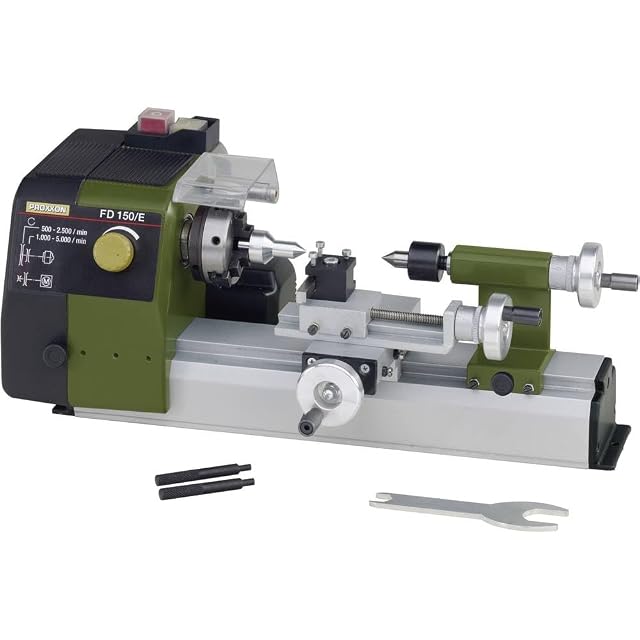
  7. PROXXON PD 250/E

    Up to 250 mm (9.84 in) workpiece length · thread cutting · steel, brass, aluminum · €1,154

    A precision lathe that cuts threads — the operation that separates a lathe from a machine that turns things round.

    Best for: Precision work where you need to make a thread rather than buy one

    8.4/10

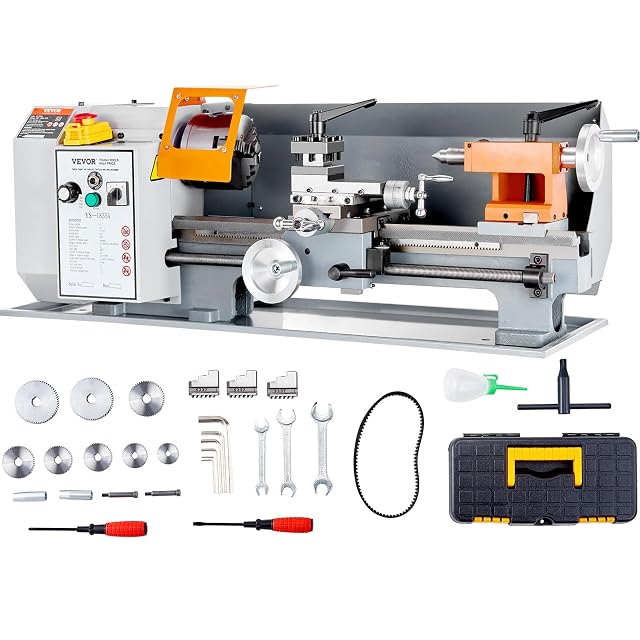
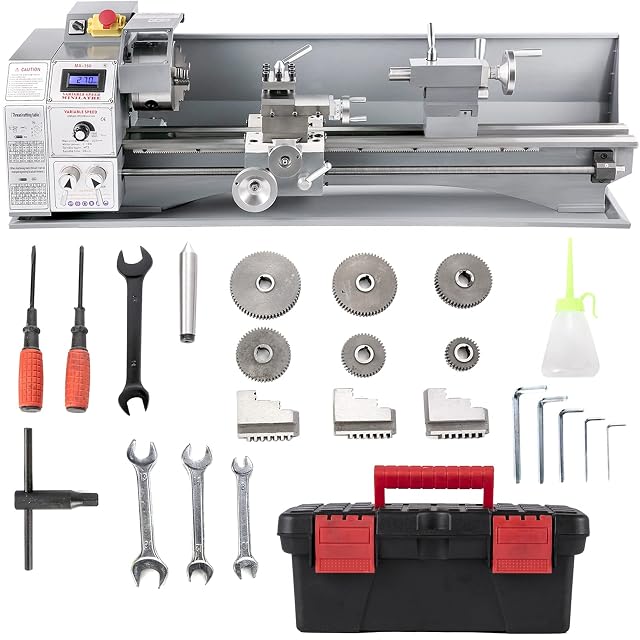
  8. VEVOR 220 × 600 mm brushless

    220 × 600 mm (8.66 × 23.6 in) · 750 W brushless · 125 mm (4.92 in) three-jaw chuck · €1,206

    The largest capacity here — 600 mm (23.6 in) between centers — with a brushless motor and stepless speed.

    Best for: Repair work on shafts and long parts, where capacity decides what you can take on

    8.4/10

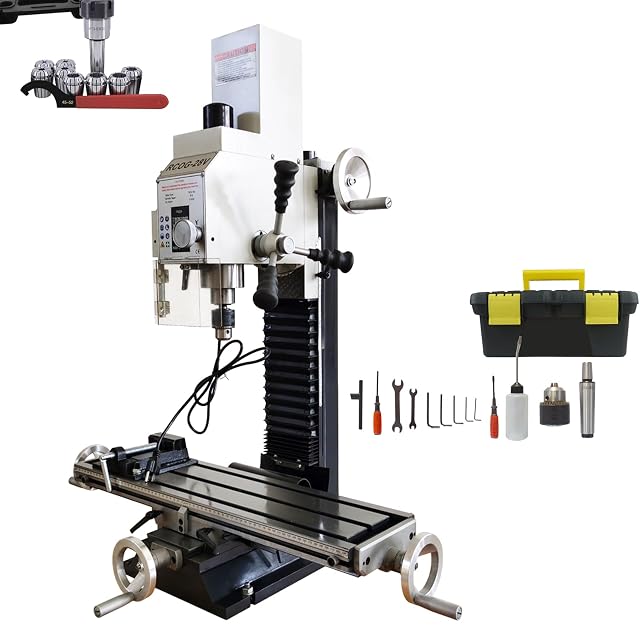
  9. INTBUYING SM028356, 7 × 27-1/2 in mill-drill

    1300 W brushless · 50–2,250 rpm · R8 in the title, MT3-ER32 in the specs · 118 kg (260.1 lb)

    The same mill-drill as its stablemate, with 1300 watts instead of 1.5 horsepower — and a spindle standard its own title and its own specification cannot agree on.

    Best for: The same work as the R8 machine on this shelf, once the seller has confirmed which spindle ships

    ≈ $2230

Choosing within lathes & mills, by need

A machine that genuinely machines

In machining, the mass and rigidity of the frame decide the accessible accuracy. That is what the price buys, before any function.

INTBUYING SM028356, 7 × 27-1/2 in mill-drill

Discovering machining

A bench machine lets you learn the principles on small parts before knowing what you really want.

XENDOLL W104MA, 24 W desktop mill

Fitting into a workshop that already exists

A machining tool sits on a stable base, is wired in and leveled. Weight and footprint decide feasibility before any question of capacity.

VEVOR 220 × 600 mm brushless

Lathes & mills and who each one is for

Small repair parts
Making a shaft, a bush or a spacer that cannot be found is the most frequent use of a workshop lathe.
First chips on a bench lathe
Machining is a trade: cutting speeds, feeds, tool grinding. A modest, well-understood machine does better than a large, badly set one.
Permanent workshop
These machines are heavy, are leveled in place and do not move again. Where they go is decided before buying.

The trade-offs of lathes & mills

Rigidity against footprint
Mass is what gives the surface finish and the accuracy. A light machine chatters and leaves marks, whatever the tooling.
Combined lathe-mill against separate machines
The combination saves space and compromises both functions. Separate machines do better and occupy two places.
Advertised capacity against usable capacity
Length between centers and admissible diameter assume ideal conditions. In practice you work well below.

What keeps coming up about lathes & mills

What can you do with a small lathe?

Shafts, bushes, spacers and threads on short parts. That is already a great deal for repairing what can no longer be found.

Is a combined lathe-mill worth it?

It saves space and does both functions less well than a dedicated machine. Switching from one configuration to the other also costs time.

Do I need cutting fluid?

In steel and stainless, yes: it carries the heat away and improves surface finish. Cast iron is machined dry.

How do I choose the spindle speed?

By workpiece diameter and material: the larger the part, the slower it must turn. Cutting-speed tables give the starting point.

Do I have to grind my own tools?

With high-speed steel tooling, yes, and it is a skill in its own right. Insert tooling lets you start without it.

Are these machines dangerous?

A badly clamped part is ejected at high speed, and a chuck key left in becomes a projectile. Removing the chuck key before any start is the absolute rule.

Does the machine need leveling?

A lathe must be set level and shimmed, or the bed twists and accuracy disappears. It is an installation setting, not a detail.

Can stainless be machined?

Yes, at reduced speed and with a steady feed. Stainless work-hardens as soon as you rub without cutting, and then becomes very hard to recover.

In short, on lathes & mills

In machining, mass makes the accuracy: a light machine chatters whatever the tooling. Remove the chuck key before every start — that is the absolute rule — and shim the machine level, or the bed twists and the accuracy disappears.

Lathes & mills at a glance

    Lathes & mills, side by side

    There is no table here, and the reason is in the listings. The figure published most often across these 13 products is capacity, given by 2 of them — short of the four in five a column needs to compare rather than to display gaps. Each product page says what its own maker published.

    Where each budget reaches on this shelf

    Sources, and the ranking

    Specifications: manufacturer sheets for welding and metalworking machines and the matching Amazon product pages. Prices and availability: Keepa.

    Most recent revision in this category: October 7, 2026.

    How we assess lathes & mills

    Prices quoted in these summaries are dated readings. The live price is shown next to each product.