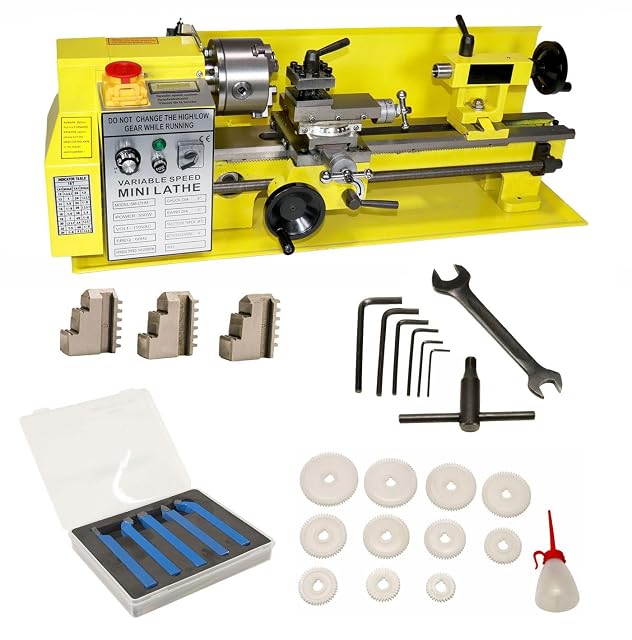
Where we come out The sensible middle: enough mass to cut properly, small enough to live on a bench.
Where the money goes
Into iron. The single biggest difference between a lathe that produces a clean finish and one that chatters is how much the machine weighs and how well it is damped, and cast iron is how that is achieved.
Four ranges, and why
Large diameters need low spindle speed and high torque; small ones need the opposite. Electronic control alone loses torque as it slows; mechanical ranges keep the motor near its best speed while the spindle turns slowly. Four ranges cover the useful span for a machine this size.
Sources
Every figure above comes from the manufacturer’s published specification for this reference. Fields the listing does not publish are left out rather than estimated. Market availability was verified per market on the EAN.
What it handles, and what it will not
Strengths
HT200 cast iron body — mass is what stops chatter on a small lathe
Four ranges rather than one electronic span, so torque survives at low speed
A published capacity, unlike the PROXXON above
Compromises
Not sold on the American store at the time of checking
A poly-V belt is a consumable and a proprietary size
€718 before any tooling
Specifications
Capacity
180 × 360 mm (7.09 × 14.2 in)
Body
HT200 cast iron
Speed
Four ranges, continuously variable within them
Drive
External poly-V belt
Amazon reference
B0CTZHG64F
EAN
0197988401506
The questions welders ask
Does cast iron actually matter?
Yes, more than power. Chatter — the rippled finish and chorus of noise when a cut goes wrong — is vibration between tool and work, and mass is what absorbs it. A cast iron bed and headstock damp what a fabricated steel frame amplifies, which is why every serious lathe in history has been cast.
What does 180 × 360 mm (7.09 × 14.2 in) mean in practice?
Roughly: 180 mm (7.09 in) is the diameter that will swing over the bed, so a disc up to that size can be faced; 360 mm (14.2 in) is the length that fits between centers, so a shaft up to that can be turned. Both figures are outer limits — working comfortably means staying a good margin inside them.
Our score
7.8/ 10
The sensible middle: enough mass to cut properly, small enough to live on a bench.
Price and availability, for welding machines
A reference exists on these Amazon stores: France, Germany, Italy, Spain, United Kingdom. Listed is not the same as in stock — availability changes daily.
Details checked on August 13, 2026.
Who this one is for, among welding machines
A first real metal lathe, where 360 mm (14.2 in) between centers covers most repair work
Consumables confirmed for this machine
Here because the consumable states this machine by name.
Specifications: the manufacturer sheet for welding and metalworking machines and the matching Amazon product page. Prices and availability: Keepa. Every figure on this page names its source.
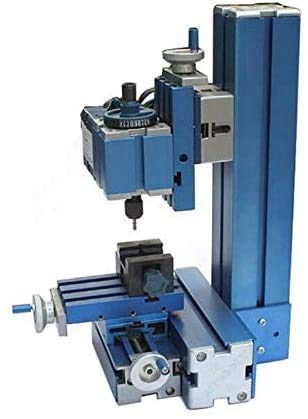
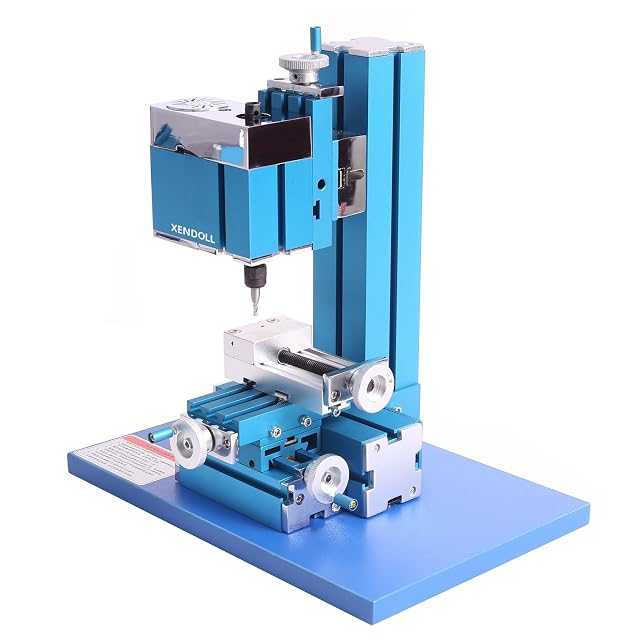
12 V DC · lathe and mill in one · tool-height shims · soft metals only
A 12-volt combination mini lathe and mill that supplies shims to set the tool height — the one adjustment that decides whether a small lathe cuts or rubs.
Best for: Teaching turning and milling on one machine, in wood, plastic and pure copper or aluminum
7 in swing · 14 in centers · 2,500 rpm variable · reversible · DRO
The only real metal lathe in the American half of this hub — 7 by 14 inches, variable to 2,500 rpm, reversible for left-hand threads, with a digital readout and a cutter kit.
Best for: Turning steel parts on a bench, where the tooling has to come with the machine