Beacon Pet 2020090101, 12 V mini lathe and mill review
A 12-volt combination mini lathe and mill that supplies shims to set the tool height — the one adjustment that decides whether a small lathe cuts or rubs.
Where we come out The only lathe-and-mill in one on this shelf, with the right detail about tool height and almost no specification behind it.
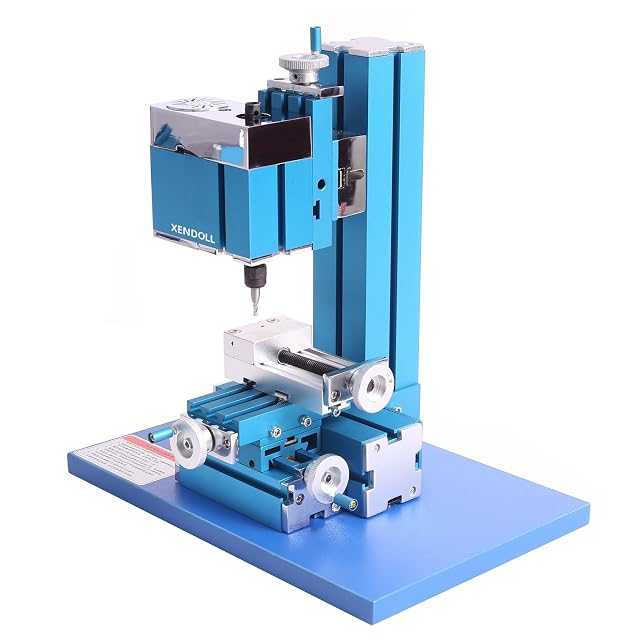
Four machines in the American half of this shelf are 12-volt mini mills. This is the only one that is also a lathe — it turns, drills, bores and threads as well as milling — which for a teaching bench or a model engineer with one square foot of space is a genuine argument.
The detail that shows someone thought about turning is the shims. A lathe tool cuts properly only when its tip is at the center height of the work: above it the tool rubs and pushes the job away, below it the tool digs and chatters. On a small machine the tool sits in a slot and the height is made up with packing, so supplying shims and saying what they are for is worth more than any of the adjectives on the page. No other machine on this shelf mentions it.
What the listing does not do is publish a single number. No wattage, no spindle speed, no travel, no runout, no capacity. The materials are stated twice — wood, plastic, pure copper, pure aluminum, not alloys — and the advice to reduce the feed rate on harder material is sound. But the JARYANNIX machine on this shelf publishes twelve specifications for ten dollars less, and the two XENDOLL mills publish their motor and spindle speeds. Here the material list is the specification.
Availability
Read on the day this page was built: $237 at the American Amazon shop.
Read from Keepa on the day this page was last revised; stock and price both move without notice.
Prices quoted in this text were read on 2026-10-07. The live price is at the top of the page.
What it handles, and what it will not
Strengths
Turns, drills, bores and threads as well as milling — the only combination machine in this hub
Supplies shims to set the turning tool to center height, which is the adjustment small lathes live or die on
Names the metal parts individually: headstock, intermediate block, connecting block, vice, sliders and hand wheel
A 12 V DC transformer, which is as safe as a bench machine gets
Explicitly aimed at teaching, with adult supervision stated for children
Compromises
Soft metal only: pure copper and pure aluminum, with alloys excluded twice on the page
No power rating, no spindle speed, no axis travel and no runout published
A combination lathe and mill compromises both: the cross slide is the lathe’s and the mill’s at once
Among the most expensive of the 12 V class on this shelf while publishing the least of it
The description is decorated with flower characters and addressed partly to parents
Specifications
Amazon reference
B08H4QFP7S
EAN
6920837147492
The questions welders ask
Why do shims for tool height matter?
Because a lathe tool cuts correctly only at center height. Set the tip above center and the tool rubs and pushes the work away; below center and it digs in and chatters. On a full-size lathe a quick-change tool post sets the height; on a small machine the tool sits in a slot and the height is made up with shims — so supplying them, and saying so, is a more useful detail than another adjective. No other machine on this shelf mentions it.
Is a combination lathe and mill a good idea?
For teaching, yes; for work, it is a compromise. The two operations want different things from the same slide: a lathe turns the work and feeds the tool along it, a mill holds the work still and spins the cutter. One machine doing both shares the cross slide between them, which means more setup and less rigidity in each role. At this scale, where nothing is rigid anyway, the convenience of one machine is worth more than the loss.
What can it actually cut?
Wood, plastic and soft metal, and the listing says it twice: pure copper and pure aluminum, not alloys, and with a smaller feed rate on harder material. There is no power figure to judge it by — unlike the JARYANNIX and XENDOLL machines on this shelf, which publish 24 and 36 watts — so the material list is the only guide the page gives.
The two nearest machines on price
Same shelf, nearest price — what else that money puts on the bench.
Teaching turning and milling on one machine, in wood, plastic and pure copper or aluminum
Sources
Specifications: the manufacturer sheet for welding and metalworking machines and the matching Amazon product page. Prices and availability: Keepa. Every figure on this page names its source.
7 in swing · 14 in centers · 2,500 rpm variable · reversible · DRO
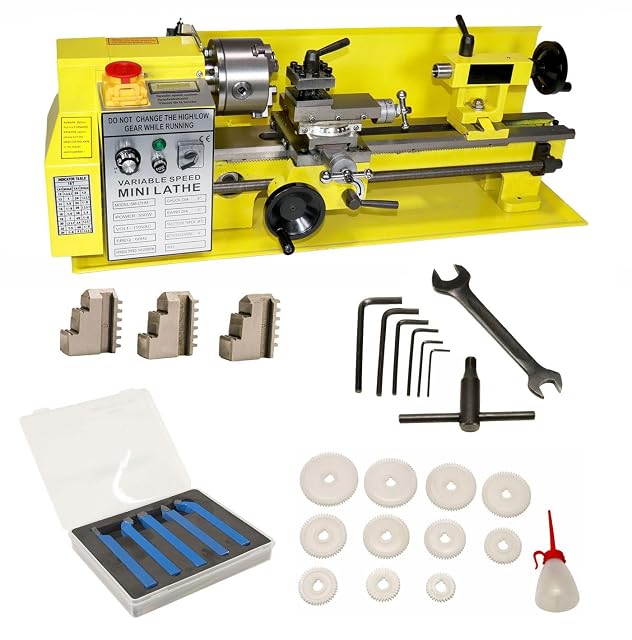
The only real metal lathe in the American half of this hub — 7 by 14 inches, variable to 2,500 rpm, reversible for left-hand threads, with a digital readout and a cutter kit.
Best for: Turning steel parts on a bench, where the tooling has to come with the machine
24 W · 20,000 rpm motor · 3,000 rpm spindle · 0.1 mm (0.004 in)/division
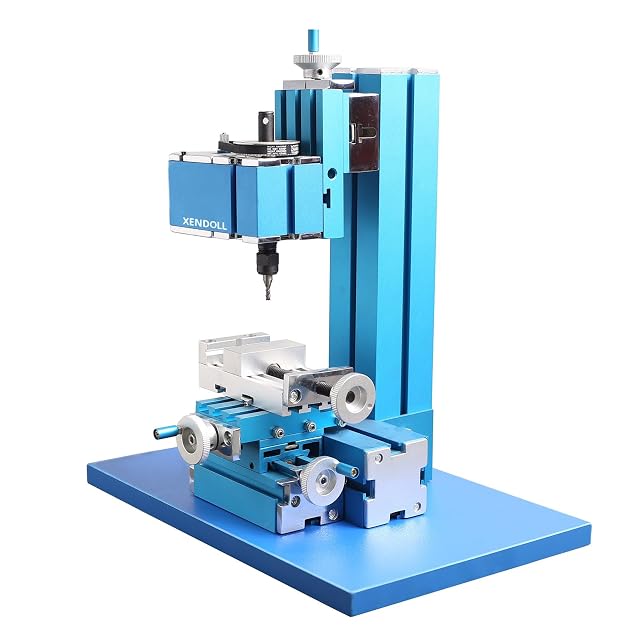
A 24-watt desktop mill for wood, plastic and soft metal, with a 0.1 mm (0.004 in) handle scale — the cheapest machine in this hub and the smallest increment it can be set to.
Best for: Model work and teaching, on wood, plastic and pure copper or aluminum