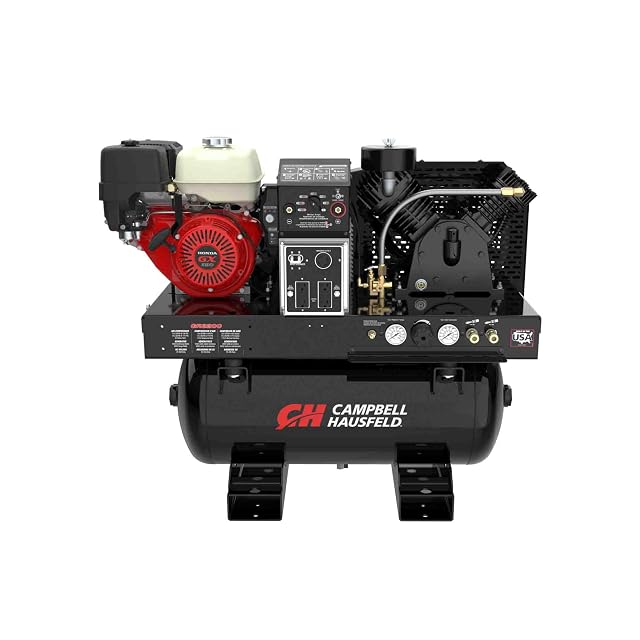
A two-stage commercial compressor that publishes its delivery at three pressures — which is exactly what this hub’s buying tip asks for and almost nothing on the market does.
Where we come out The only compressor in this hub that publishes its delivery across the whole pressure range — and the only one on this shelf that will actually run a blast cabinet.
This hub’s buying tip asks for one thing and almost no maker provides it: the air delivered at working pressure rather than the displacement the pump sweeps. This listing provides it three times over — 18.4 CFM at 40 PSI, 17.2 at 90 and 16.4 at 175 — which is not a figure but a curve, and the flatness of that curve is the whole argument for a two-stage pump.
What follows from it is the only machine on this shelf that will run the tools this site is about. A blast cabinet nozzle consumes 7 to 15 CFM continuously and a plasma torch 3 to 5; the portable compressors here deliver 2.6 CFM and an unstated amount respectively. Seventeen cubic feet a minute with eighty gallons behind it is a workshop air supply rather than a tire inflator, and the pump is rated for more than 15,000 hours rather than by a duty-cycle percentage.
The engineering detail is published to the same standard: a cast-iron oil-lubricated two-stage pump, a ductile-iron balanced crankshaft, Viton high-temperature O-rings, a fully enclosed belt guard, an ASME-coded vertical tank, and a 5 HP NEMA motor with its starter mounted and wired. What that costs is a 230 V single-phase circuit, 244 kg (537.9 lb) of machine standing 2.1 m (7 ft) tall, and the oil maintenance an oil-lubricated pump brings — including the carryover question if the same air is ever used for paint. No noise figure is published, and a 5 HP two-stage pump does not need one to be loud.
Availability
Read on the day this page was built: $3472 at the American Amazon shop.
Read from Keepa on the day this page was last revised; stock and price both move without notice.
Prices quoted in this text were read on 2026-10-07. The live price is at the top of the page.
What it handles, and what it will not
Strengths
Publishes delivery at three pressures — 18.4 CFM at 40 PSI, 17.2 at 90 and 16.4 at 175 — which is the figure this hub says to buy on
A two-stage cast-iron oil-lubricated pump, rated for more than 15,000 hours
An 80-gallon vertical ASME tank, so the floor space is a footprint rather than a sprawl
A 5 HP NEMA industrial motor on 230 V single phase, with the starter mounted and wired
Publishes the real engineering detail: Viton high-temperature O-rings, a ductile-iron balanced crankshaft, a fully enclosed belt guard
A 175 PSI ceiling, which stores far more usable air in the same tank than a 150 PSI machine
Compromises
Needs a 230 V single-phase circuit — this is not a domestic plug-in machine
244 kg (537.9 lb) in the box and 2.1 m (7 ft) tall: it is installed, not carried
No noise figure published, and a 5 HP two-stage pump is loud
Oil-lubricated means oil checks, oil changes and an oil-carryover question for paint work
The highest-priced machine in the American half of this hub except the 3-in-1
Specifications
Amazon reference
B003TSC4RM
EAN
0045564628406
The questions welders ask
Why is publishing three pressures so unusual?
Because one figure can be chosen to flatter. A compressor delivers more air at low pressure than at high, so a maker quoting a single CFM will usually quote it at 40 PSI; the number that matters is delivery at the pressure your tool actually needs, which is 90 PSI for most air tools and more for some. Publishing 18.4 at 40, 17.2 at 90 and 16.4 at 175 shows the whole curve — and shows how flat it is, which is what a two-stage pump buys. This hub’s buying tip asks for exactly this and almost no listing provides it.
What does two-stage mean in practice?
The air is compressed twice, cooled between the stages, and arrives at high pressure without the pump having to do it all in one squeeze. That is why this machine still delivers 16.4 CFM at 175 PSI where a single-stage pump falls away sharply above 100 — and it is why a two-stage pump runs cooler, lasts longer and is rated in tens of thousands of hours rather than in duty-cycle percentages.
Is 17 CFM enough for a blast cabinet?
For most hobby and trade cabinets, yes, and that is the point of a machine this size. A small blast cabinet nozzle consumes 7 to 15 CFM continuously depending on nozzle size and pressure, and a plasma cutter 3 to 5 — figures that make every portable compressor on this shelf useless for the job. Seventeen CFM at 90 PSI with 80 gallons behind it will run a cabinet without the pump cycling to death, which this hub’s introduction names as the way small compressors fail.
The two nearest machines on price
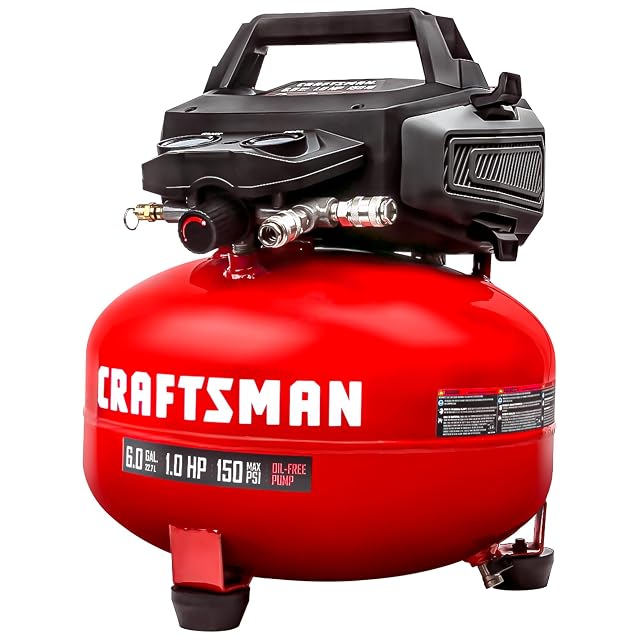
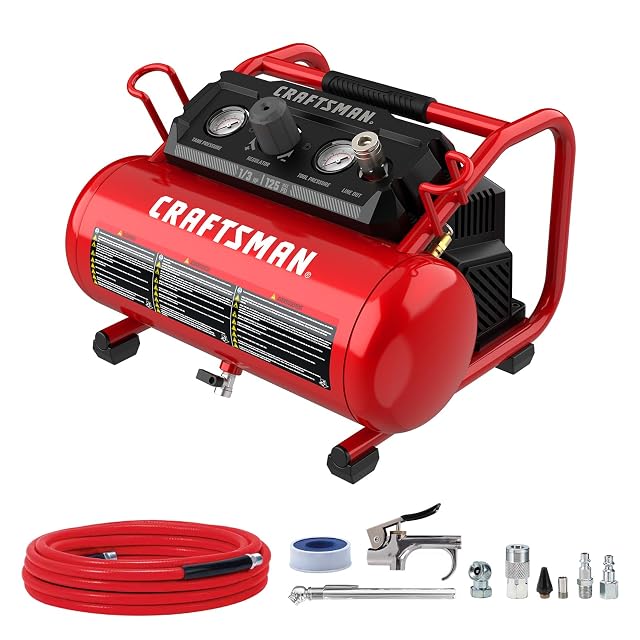
Same shelf, nearest price — what else that money puts on the bench.
A workshop running a plasma cutter, a blast cabinet or air tools continuously, with a 230 V single-phase supply
Sources
Specifications: the manufacturer sheet for welding and metalworking machines and the matching Amazon product page. Prices and availability: Keepa. Every figure on this page names its source.