Skip to content

The best welder under €200

Two hundred euros buys a real machine — the question is which compromise you accept. At this price you choose between a published duty cycle, a real importer, gas capability, and raw amperage. You will not get all four.

Two hundred euros buys a real machine — the question is which compromise you accept. At this price you choose between a published duty cycle, a real importer, gas capability, and raw amperage. You will not get all four.

Which welder suits your metal?

You weld outdoors, with no gas bottle
Gasless flux-cored, or stick. Any breeze carries the shielding gas away before it does its job, and a gas MIG becomes unusable the moment there is a draft.
You work in a shop, on thin sheet
A MIG that can run gas. The bead is cleaner, spatter is far lower, and the low end of the dial is finer than on flux-cored.
You repair thick steel now and again
Stick. Nothing to carry but a packet of electrodes, and nothing to maintain between jobs.
You don’t yet know what you will be welding
A MIG that takes both gas and flux-cored wire. It is the only one of the three that closes no doors, and gas capability cannot be added later.

Picking by the metal

Gates, trailers, repairs

Two to five millimeters of steel, usually outdoors and in an awkward position. Flux-cored and stick cope; gas MIG needs shelter.

Bodywork and thin sheet

Below about a millimeter and a half, the heat goes through before the pool forms. This is gas MIG territory at low settings, and the one place where flux-cored is a real handicap.

Shop fixtures

Jigs, brackets, carts: short beads on clean, clamped steel. Almost any machine in this bracket will do; comfort comes from fine adjustment, not amperage.

Learning

The most forgiving process is stick on thick steel: the pool is visible, the pace is slow, and mistakes show up in the bead immediately.

What matters at the arc

Duty cycle, and at what current
A duty cycle means nothing without the current and the temperature it was measured at — EN 60974-1 defines it over a ten-minute cycle. "60%" on its own tells you nothing. A machine claiming two hundred amps that does not publish its duty cycle at two hundred amps probably cannot hold them for long.
Gas capability
Some wire feeders in this bracket have no gas solenoid at all: flux-cored is all they will ever do. That is a decision made at purchase, not an accessory bought later.
The torch connection
A standard Euro connector opens the whole consumables market. A proprietary connector ties you to one importer for the life of the machine — and the day they stop importing, the machine stops.
How finely it adjusts
Two detented dials, or continuous control? On thin sheet, one step too far and you blow through. This separates machines in this bracket far more than maximum current does.
An address for service
A two-year warranty with no European address to send the machine to is worth little more than the postage one way.

Which figure for which metal

What you weldThe process that suitsWhat to check
3–6 mm (0.12 to 0.24 in) steel, outdoorsFlux-cored or stickDuty cycle at the current you will actually use
1–3 mm (0.04 to 0.12 in) steel, in the shopGas MIGA gas solenoid and a standard torch connector
Sheet under 1.5 mm (0.06 in)Gas MIG, low settingsFine adjustment rather than coarse steps
Thick steel, occasional repairStickCurrent held over time, not just printed on the case

Where it goes wrong at the bench

Buying on headline amps
The maximum current of a cheap machine is often a peak, not a working figure. What decides your actual work is the duty cycle at the current you will use.
Forgetting the cost of gas
A bottle, a regulator and a deposit are a real share of the budget. Two hundred euros for a gas MIG is not two hundred euros of total spend.
Treating the bundled helmet as protection
Helmets thrown in with a kit rarely match those sold on their own. It is the first thing to replace, before any comfort accessory.
Welding over paint or galvanizing
Galvanizing gives off zinc fumes, paint gives off compounds no domestic extraction will handle. You grind it back first, across the whole heated area, not just along the joint.

By the welder you are

The occasional DIYer
A few beads a year on ordinary steel. Stick or flux-cored avoids the bottle, and the machine sits for months asking nothing.
The restorer
Gate, trailer, shop furniture: the work comes back regularly and changes thickness. A MIG that runs both gas and flux-cored covers the widest range.
The beginner who means to improve
Choose on fine adjustment and torch connector rather than amperage: that is what decides whether you keep the machine once you can actually weld.

Consumables, duty cycle and working life

A machine in this bracket lasts if three things are watched: cooling airways kept clean, torch consumables kept fresh, and the earth clamp kept tight. No service life can be stated in advance — it depends on use, on how dusty the shop is, and on whether the duty cycle is respected.

  • Blow out the vents and the inside with dry air, unplugged, after any dusty work.
  • Change the contact tip as soon as the wire snatches or the arc turns ragged: it is the fastest-wearing consumable.
  • Check the earth clamp bites bare metal; a poor earth gives an unstable arc that gets blamed on the machine.
  • Let it cool before putting it away: the fan is still working after the bead ends.

Safety

Welding brings together three risks that do not offset one another: arc radiation, fume and fire. Welding fume is classified a Group 1 carcinogen by the International Agency for Research on Cancer; it is the least visible risk and the most often postponed.

  • A helmet to EN 175 with an EN 379 filter, at a shade suited to the current in use.
  • Extract at source, or failing that work in cross-ventilation — never in a closed room.
  • Cotton or leather, never synthetics: they melt onto skin instead of burning.
  • Clear solvents and oily rags out of the area, and go back and look at the weld a while after stopping.

What we chose, and on what basis

The questions welders ask

What gets cut at this price?

Usually the duty cycle and the documentation. Machines here claim 160 to 200 A and mostly do not say for how long, which means short bursts. Torch fitments are often proprietary, so consumables come from one importer. And a warranty may exist without an address to send anything to.

Is it better to buy used?

Sometimes, and with a caution: a used professional machine at €200 is usually a better welder than a new hobby one, but welding machines are bought by people who work them hard, and an inverter with a failing board is scrap. Buy used from someone who will let you strike an arc first.

Do I need a gas bottle to start?

Not if you go gasless flux-cored or stick. Yes for gas MIG, and then it belongs in the budget: bottle, regulator and deposit sit on top of the machine price. At this level of spend that is often what tips the decision.

Flux-cored or solid wire — which one?

Flux-cored carries its shielding in the flux: it works outdoors, dirties the bead and needs chipping. Solid wire needs gas, gives a cleaner bead and does better on thin sheet. Many machines take both, provided you swap the polarity.

How thick a steel can this budget weld?

That depends on the process and the number of passes more than on the machine. In a single pass these sets aim at ordinary steel a few millimeters thick; beyond that you bevel and weld in several passes, which stays possible as long as the duty cycle is respected.

Is an inverter more fragile than a transformer?

An inverter is lighter, more finely adjustable and more sensitive to dust and damp. A transformer forgives more but is heavy and adjusts coarsely. At this budget the inverter dominates the market, which makes keeping it clean matter all the more.

What is the warranty worth on these machines?

It is worth whatever the address you would send the machine to is worth. Two years quoted with no identifiable European importer usually means carriage at your expense and an open-ended wait. Check who is selling before you check how long.

Should I replace the torch it comes with?

Not straight away, but it is the first worthwhile spend if the machine has a standard connector. A decent torch changes welding comfort more than extra amps do, and it stays with you when the machine changes.

Each welder, and the metal it is meant for

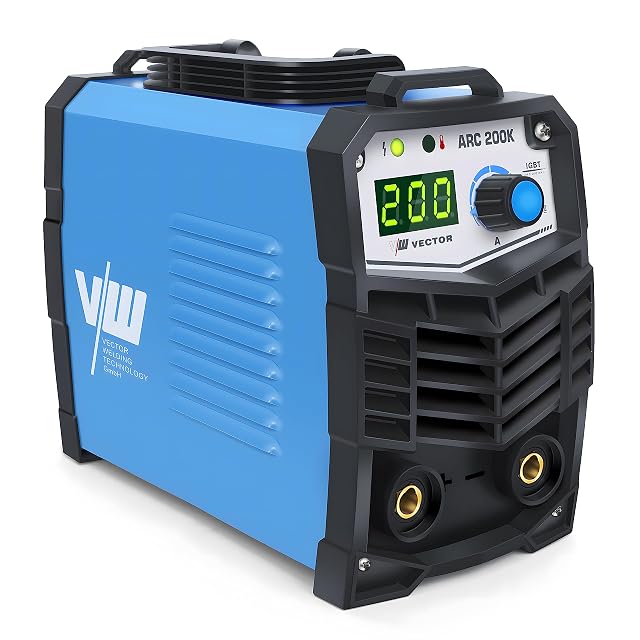
VECTOR WELDING ARC 200K

For work that: Outdoor repairs on rusty, painted or galvanized steel, at the lowest possible entry price
Where it is best: Hot start, which is the feature that decides whether a beginner strikes an arc or glues an electrode to the plate

Where it is worst: No published duty cycle — assume brief bursts at the top of the range

Read the full review →

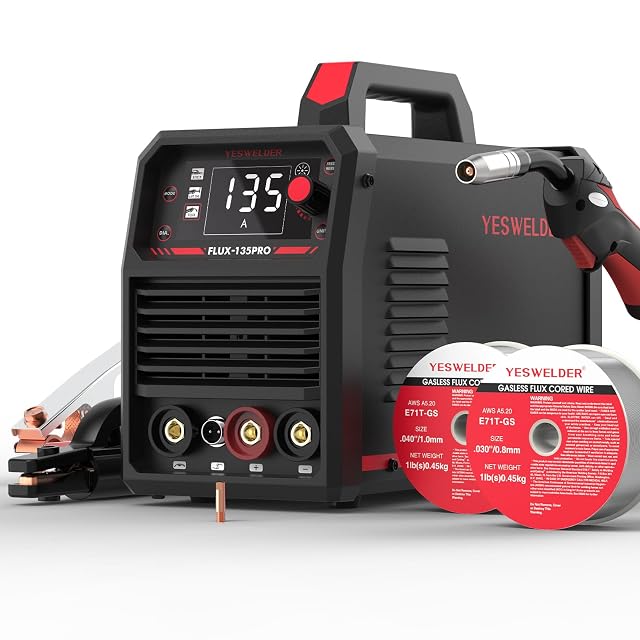
YESWELDER FLUX-135-PRO

For work that: A first machine for someone finding out whether they enjoy welding at all

Where it is best: States a duty cycle, which most machines at three times the price do not

Where it is worst: No EAN published, so the product could not be traced to the French, Italian, Spanish or British stores

Read the full review →

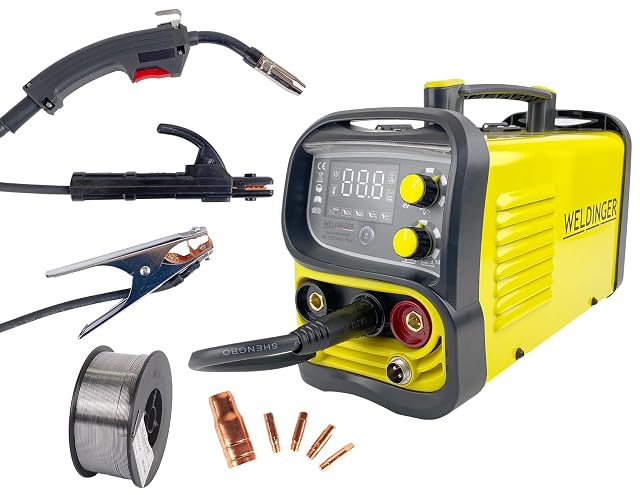
WELDINGER ME 130 mini FLUX

For work that: Repairs away from the bench — gates, trailers, a bracket on a machine that cannot be moved

Where it is best: Arrives ready to weld: wire, four tip sizes and the electrode lead are in the box

Where it is worst: D100 spools only — 1 kg (2.2 lb) at a time, which is the expensive way to buy wire

Read the full review →

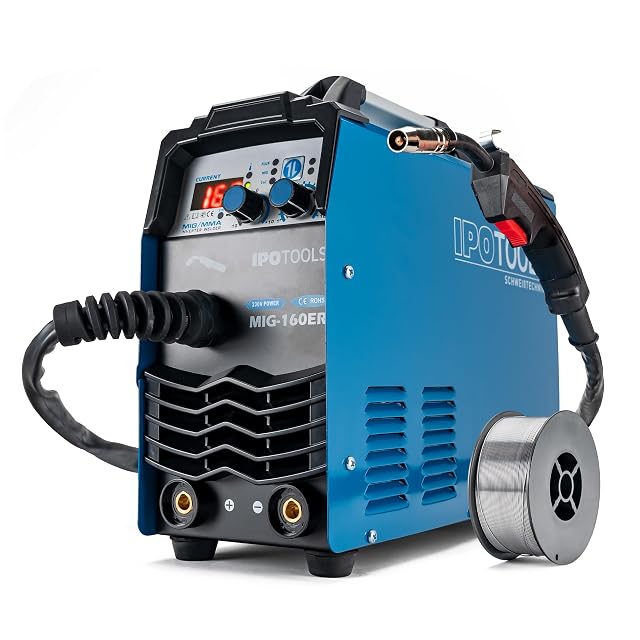
IPOTOOLS MIG-160ER

For work that: A first MIG where the budget is firm and the machine must still be repairable in five years

Where it is best: Seven-year warranty from a named German company with a published address, not an anonymous seller

Where it is worst: No inductance control, so spatter on thin sheet is what it is

Read the full review →

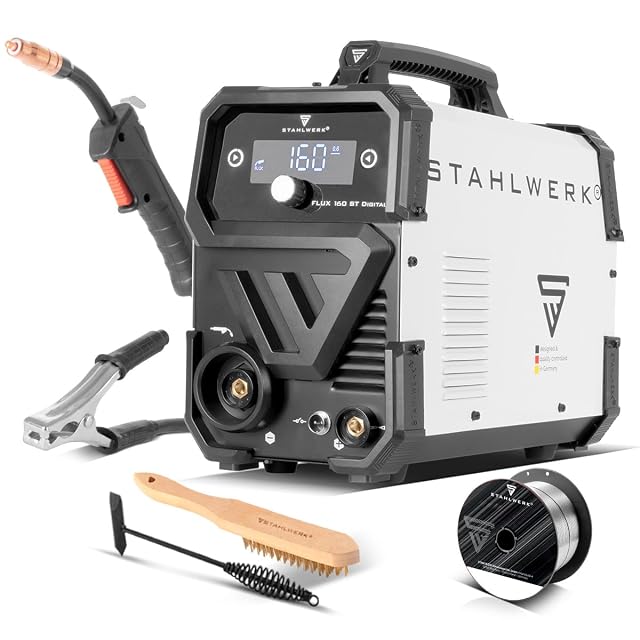
STAHLWERK FLUX 160 ST Digital

For work that: Gates, trailers, fence posts and anything welded where you cannot close a door

Where it is best: No gas bottle to rent, fill, store or carry — the running cost is wire alone

Where it is worst: Gasless only: you cannot fit a bottle later and weld clean MIG with it

Read the full review →

What it will consume

Tips, nozzles, wire and gas from the same aisle, at the price we read. Confirm they suit the machine you choose before ordering: it turns on the torch and the part number, which the product page gives.

The call, in one line

Comparisons that are worth reading

Welder against welder, where the comparison is already written up.

What this selection rests on

The welders here are taken from the catalog of this site. Specifications come from the maker and from the Amazon product page; prices are what Keepa reported for the date shown, and both move. The order rests on declared specifications, on stated strengths against stated limits, and on price. No machine here has struck an arc in our hands, and nothing on this page pretends it has.

Last checked on

Prices quoted in these summaries are dated readings. The live price is shown next to each product.

The tool we use ourselves

Chosen your machine? Now buy it at the right price.

Welders and plasma cutters swing by a hundred dollars or more across the year, and the biggest "discounts" often land at prices the same model sold for six weeks earlier. UniverTrack tracks the real price history across retailers, spots fake reductions, and alerts you when it is genuinely the moment to buy.

Real price historyBuy-now alertsAI buying assistant
Try free for 14 days →
No commitment · Cancel in one click · 5 languages