Skip to content

Shielding gas: bottle, regulator, flow

Shielding gas is the least visible part of a weld and the easiest to get wrong. The three things that matter are the mixture, the flow rate, and whether the system leaks — and the last one costs people a full cylinder more often than any other mistake.

Shielding gas is the least visible part of a weld and the easiest to get wrong. The three things that matter are the mixture, the flow rate, and whether the system leaks — and the last one costs people a full cylinder more often than any other mistake.

Which welder suits your metal?

You MIG-weld steel
An argon–CO₂ mix is the normal route; pure CO₂ penetrates more and spatters more.
You MIG-weld stainless
A stainless-specific mix, not the steel mix: gas composition changes the corrosion resistance of the bead.
You TIG-weld
Pure argon in almost every case. TIG mixes exist, for specific needs.
You weld outdoors
No gas holds in wind. Change process, not flow rate.

Picking by the metal

Everyday shop work

A medium bottle, a two-gauge regulator, and a flow set once for the torch in use.

Frequent moves

A small bottle travels, stores and swaps quickly; it also empties quickly, which makes leak checking pay for itself sooner.

Finish welding

On a visible bead, the steadiness of the gas reads in the pool. That is where an intermittent leak shows before it is heard.

Switching between steel and stainless

Two gases, so two bottles or a serious purge. Residue from the previous mix turns up in the first few centimeters of bead.

What matters at the arc

Regulator or flowmeter
A pressure gauge and a flowmeter do not measure the same thing. Useful flow reads on the flowmeter; remaining contents, on the bottle gauge.
Flow, set for the nozzle
The right flow depends on nozzle diameter and how ventilated the room is. More gas does not shield better: past a point the flow turns turbulent and draws ambient air in.
Deposit, rental or ownership
Rent, deposit, buy: the real cost of gas over several years turns on that choice far more than on the refill price.
The fitting and its seal
Fittings differ by gas and by country. An improvised adapter is the commonest source of leaks, and the least often admitted.

Which figure for which metal

Process and metalUsual gasWhat it changes
MIG on steelArgon–CO₂ mixA compromise between penetration and cleanliness
MIG on steel, penetrationPure CO₂More penetration, more spatter
MIG on stainlessStainless-specific mixCorrosion resistance of the bead
TIG, common metalsPure argonA stable pool and a controllable arc

Where it goes wrong at the bench

Turning the flow up when the bead is porous
Porosity comes more often from a draft, a fouled nozzle or dirty metal. Raising the flow creates turbulence and makes it worse.
Leaving the bottle open between sessions
A slow leak empties a bottle in days without a sound. You close it at the valve, not at the machine.
Never checking for leaks
A little soapy water on the fittings now and then takes a few minutes and saves whole bottles.
Carrying a bottle unsecured
A bottle that topples can shear its valve. It is the most serious accident at this station, and the easiest to avoid.

By the welder you are

The occasional user
A small bottle, a simple regulator, and a leak check every time you come back after a long pause.
The regular workshop
A decent-sized bottle, a flowmeter, and a trolley where it stays strapped permanently.
Alternating steel and stainless
Two bottles rather than a purge at every change: the lost time and the spoiled bead starts add up fast.

Consumables, duty cycle and working life

A gas set-up is maintained at its fittings and its nozzle, never inside the regulator. A gauge that will not return to zero, a perished seal or a fouled nozzle explain almost every shielding fault.

  • Check the fittings with soapy water as soon as a bottle empties faster than usual.
  • Replace a hardened or cracked hose without waiting for an obvious leak.
  • Clean the nozzle and clear the spatter that disturbs the flow.
  • Never grease an oxygen fitting or a regulator: grease and pressurized oxygen do not meet without consequence.

Safety

A pressurized gas bottle is the one object in the workshop that can become a projectile. The gas itself is not toxic in these uses, but it displaces oxygen in a closed room.

  • Secure every bottle upright, in transport and while working.
  • Never weld immediately next to the bottle, and never let spatter reach it.
  • Ventilate: an inert gas building up in a low room replaces the air with no warning at all.
  • Close the valve and bleed the regulator at the end of a session, not just at the end of the day.

What we chose, and on what basis

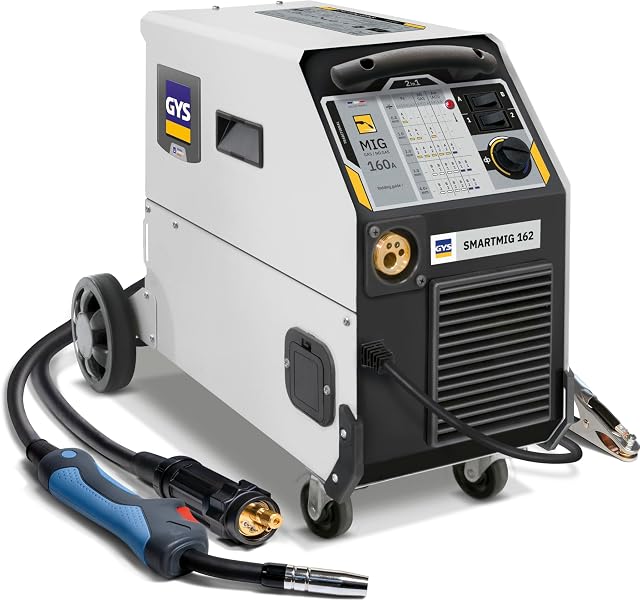
  1. GYS Smartmig 162

    160 A · 230 V single phase · Euro torch connector · €505

    A French-built trolley machine with a Euro connector and a 40 W feed motor — bought for the feed quality rather than for its headline current.

    Best for: Someone who intends to keep the machine ten years and wants standard consumables

    8.1/10

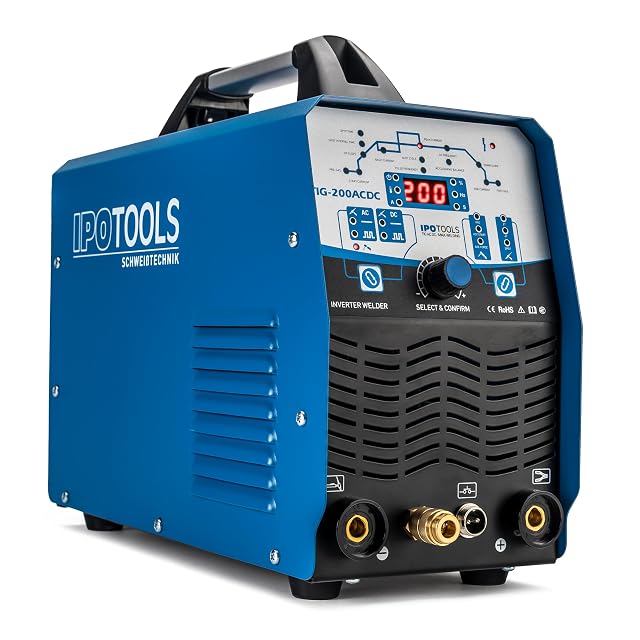
  2. IPOTOOLS TIG-200ACDC

    200 A AC/DC · AC frequency 20–100 Hz · spot 0.01–9.99 s · €459

    The first machine on this page that publishes its AC frequency range and pulse frequencies — the controls aluminum actually needs.

    Best for: Aluminum work where the arc has to be steered, not just switched on

    7.8/10

The questions welders ask

What flow rate should I set?

Around 8 to 12 l/min for MIG with a standard nozzle, often less for TIG with a gas lens. More is not better: beyond a certain flow the shield becomes turbulent and pulls air in, producing porosity that looks exactly like too little gas — which is why people then turn it up further and make it worse.

How do I check for leaks?

Soapy water on every joint, cylinder open, torch closed. Bubbles mean a leak. It takes two minutes and it is the difference between a cylinder lasting months and emptying itself overnight. Do it every time a connection is disturbed.

Can I use pure CO₂ for MIG?

Yes on steel: it penetrates more and costs less, at the price of more spatter and a less even bead. Many machines take it, provided you adjust the settings.

What happens if the gas runs out mid-bead?

The bead turns porous and grey, and the fault shows immediately. It is a structural defect: the area is ground out and redone, not fixed by running over it again.

Rent or buy the bottle?

Rental charges a standing fee but guarantees exchange; buying with a deposit removes the fee but sometimes narrows where you can swap. The sum depends on annual usage, and is worth redoing after a few years.

How long does a bottle last?

It depends on flow, nozzle diameter and above all on real arc time, which is far shorter than people imagine. No honest order of magnitude can be given without those three.

Should I purge the line after changing a bottle?

Yes, briefly: air that entered the hose during the change otherwise produces a few centimeters of porous bead. A few seconds of purge is enough.

Can the regulator ice up?

On CO₂ at high flow, the expansion cools sharply and frost can appear. It is a sign of high flow; reduce it and let the temperature recover rather than heating the regulator.

Each welder, and the metal it is meant for

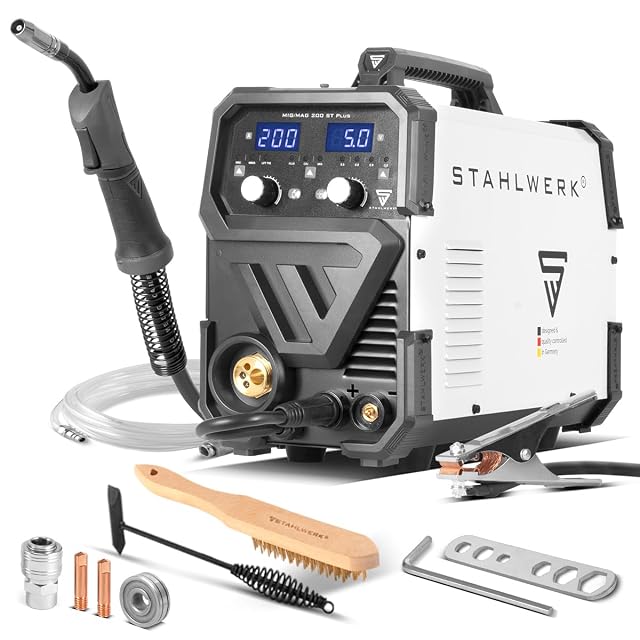
STAHLWERK MIG/MAG 200 ST

For work that: A first serious MIG that will still be adequate after two years of use
Where it is best: Synergic control: you set the material and thickness, the machine sets the wire speed

Where it is worst: The duty cycle is not stated with its temperature in the listing, so 200 A is a ceiling, not a working figure

Read the full review →

GYS Smartmig 162

For work that: Someone who intends to keep the machine ten years and wants standard consumables

Where it is best: Euro central connector: torches, liners and tips are standard parts you can buy anywhere

Where it is worst: Costs roughly double the 160 A inverters, for the same headline current

Read the full review →

IPOTOOLS TIG-200ACDC

For work that: Aluminum work where the arc has to be steered, not just switched on

Where it is best: AC frequency adjustable from 20 to 100 Hz — this is what focuses the arc on aluminum

Where it is worst: €459 — the point at which a TIG machine stops being an impulse purchase

Read the full review →

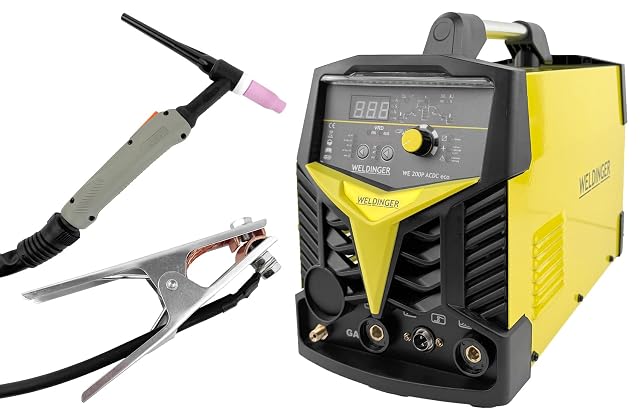
WELDINGER WE 200P ACDC eco

For work that: Thin stainless and aluminum, and anyone who has to carry the machine upstairs

Where it is best: A published lower limit of 10 A — the figure that decides what you can do on foil-thin stainless

Where it is worst: « High duty cycle » is claimed without a number, which is the one place the sheet goes vague

Read the full review →

What it will consume

Tips, nozzles, wire and gas from the same aisle, at the price we read. Confirm they suit the machine you choose before ordering: it turns on the torch and the part number, which the product page gives.

The call, in one line

Comparisons that are worth reading

Welder against welder, where the comparison is already written up.

What this selection rests on

The welders here are taken from the catalog of this site. Specifications come from the maker and from the Amazon product page; prices are what Keepa reported for the date shown, and both move. The order rests on declared specifications, on stated strengths against stated limits, and on price. No machine here has struck an arc in our hands, and nothing on this page pretends it has.

Last checked on

Prices quoted in these summaries are dated readings. The live price is shown next to each product.

The tool we use ourselves

Chosen your machine? Now buy it at the right price.

Welders and plasma cutters swing by a hundred dollars or more across the year, and the biggest "discounts" often land at prices the same model sold for six weeks earlier. UniverTrack tracks the real price history across retailers, spots fake reductions, and alerts you when it is genuinely the moment to buy.

Real price historyBuy-now alertsAI buying assistant
Try free for 14 days →
No commitment · Cancel in one click · 5 languages