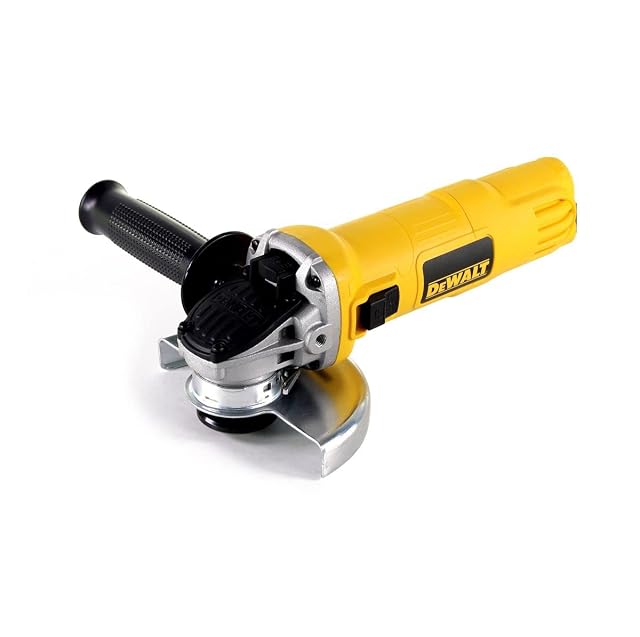
DEWALT DWE4057
800 W · restart protection · soft start · €70
The cheapest machine here with restart protection — the feature that stops a grinder starting by itself.
Best for: Anyone who leaves tools plugged in — which is everyone, eventually
Grinders
Angle grinders are the most-used and most dangerous tool in a metal workshop. Three features change that, and they arrive at three distinct price points: restart protection from about €70, a brake from about €200, and jam detection above that.
Angle grinders are the most-used and most dangerous tool in a metal workshop. Three features change that, and they arrive at three distinct price points: restart protection from about €70, a brake from about €200, and jam detection above that.
The commonest work, and the hardest on discs. The side handle and vibration control matter here more than power.
Thin disc, cutting on the edge, never loaded sideways. This is the use where the brake and kickback detection justify themselves on their own.
Wire cups and flap discs: little effort, but wires do come off. A face shield is not optional.
Take paint, galvanizing and mill scale back over the whole area that will get hot, not just along the joint.
| Feature | What it prevents | How to check it |
|---|---|---|
| Restart protection | The machine starting on its own when power returns | It does not restart by itself: worth confirming once, safely |
| Brake | Residual spin after the trigger is released | The disc should stop within a couple of seconds, not ten |
| Kickback detection | Torque coming back at you when the disc jams | Stated by the maker: it is not something to test on purpose |
| Anti-vibration handle | Fatigue and loss of feeling | Judged in the hand, running free, before you buy |
An angle grinder always gives notice before it fails: bearing noise, a hot housing, loss of speed under load. Nothing here supports quoting a service life — it depends mostly on how much dust it swallows and how long it spends at full load.
An angle grinder combines high rim speed, a brittle disc and a free hand. It is the shop tool that sends most people to hospital.
Prices quoted in this text were read on 2026-08-14. The live price is at the top of the page.
800 W · restart protection · soft start · €70
The cheapest machine here with restart protection — the feature that stops a grinder starting by itself.
Best for: Anyone who leaves tools plugged in — which is everyone, eventually
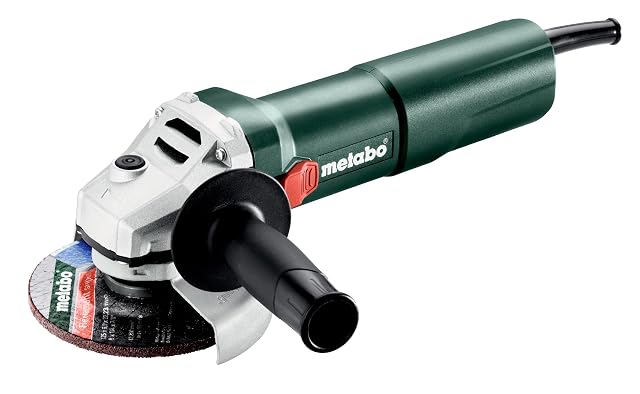
1,100 W · anti-rotation guard · €64
A guard that cannot spin round under load — a small detail that stops sparks arriving where your face is.
Best for: Steady cutting and grinding in the workshop, where the tool stays on the bench between jobs
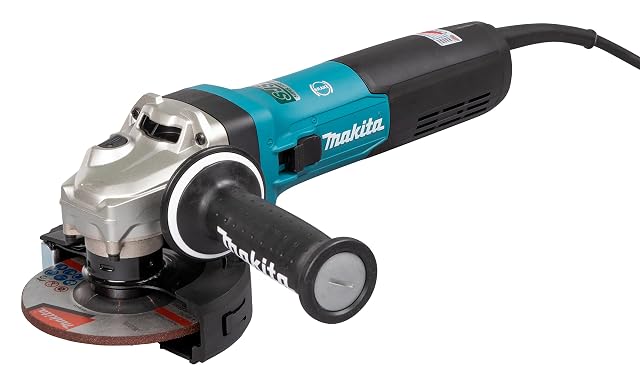
1,900 W · anti-restart · AFT stops the motor on a jam · €207
The machine that cuts its own motor when the disc jams — which is the moment a grinder throws itself out of your hands.
Best for: Daily cutting and grinding, where the jam that throws the tool is a question of when
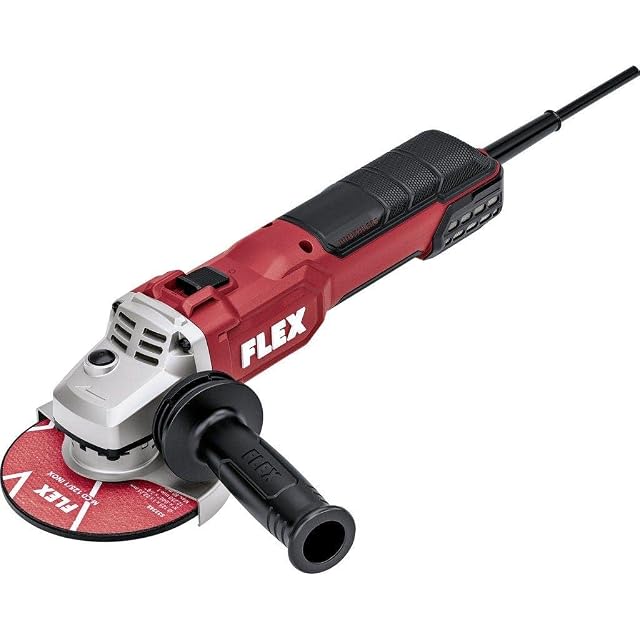
2,000 W · brake stops in 3.5 s · anti-kickback · brushless · €279
The only machine here that publishes how long its brake takes — 3.5 seconds — instead of just claiming to have one.
Best for: Someone using a grinder for hours a day, who wants the disc stopped before the tool is set down
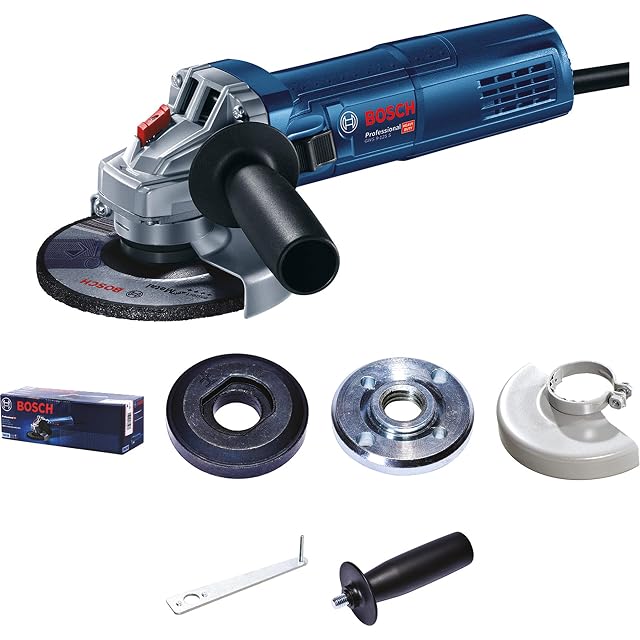
900 W · 2,800–11,000 rpm · speed preselection · €61
Variable speed at €61 — which matters because stainless, paint and thin sheet all want a slower disc than steel.
Best for: Mixed work — stainless, painted steel, thin sheet — where full speed is the wrong answer
Restart protection. A grinder left switched on and plugged in starts by itself when power returns — on a bench, on the floor, or in a hand that was not ready. It appears on machines from around €70 and it is absent from every cheaper machine on this site.
It depends on how you work. The danger with an unbraked grinder is the five to ten seconds after you release the switch, when people set the tool down, reach for the work or let it hang. If you put the tool down between cuts — which is everybody — a brake is the feature that matches how you actually behave.
125 mm (4.92 in) in almost every case: lighter, more manageable, and enough for the vast majority of work. The 230 mm (9.06 in) earns its place when depth of cut demands it, and it asks for an experience of torque you do not have at the start.
Cordless brings freedom of movement and removes the lead, the first thing that costs you your balance at height. Corded keeps the advantage on long, continuous work, where a battery imposes pauses.
Diameter, thickness, bore, maximum permissible speed and a date. The maximum speed must exceed the machine’s, and the date marks the point beyond which the disc must not be used.
No. Toothed wood blades are prohibited on an angle grinder: the speed and the lack of guidance cause violent kickback. It is one of the most serious accident causes in portable power tools.
Yes: between the disc and the operator, so that fragments and sparks go the other way. It is set according to the working position, and that is exactly why it pivots.
Bearing noise, a smell of hot varnish, loss of speed under load, or heavy sparking at the vents. Any one of those is reason enough to have it looked at before picking it up again.
For work that: Anyone who leaves tools plugged in — which is everyone, eventually
Where it is best: Restart protection at €70 — the cheapest on this page to have it
Where it is worst: No brake: the disc still free-spins after release
For work that: Steady cutting and grinding in the workshop, where the tool stays on the bench between jobs
Where it is best: An anti-rotation guard, which is a safety feature disguised as a convenience one
Where it is worst: No brake, no restart protection, no kickback cut-out
For work that: Daily cutting and grinding, where the jam that throws the tool is a question of when
Where it is best: All three safety systems: brake, anti-restart and jam detection
Where it is worst: €207, four times the cheapest machine on this page
For work that: Someone using a grinder for hours a day, who wants the disc stopped before the tool is set down
Where it is best: A published brake time — 3.5 s — which is a measurable claim rather than a word
Where it is worst: €279, the most expensive grinder on this page
For work that: Mixed work — stainless, painted steel, thin sheet — where full speed is the wrong answer
Where it is best: Speed preselection, which almost nothing else under €100 here offers
Where it is worst: Still no brake and no restart protection
Tips, nozzles, wire and gas from the same aisle, at the price we read. Confirm they suit the machine you choose before ordering: it turns on the torch and the part number, which the product page gives.
Welder against welder, where the comparison is already written up.
The welders here are taken from the catalog of this site. Specifications come from the maker and from the Amazon product page; prices are what Keepa reported for the date shown, and both move. The order rests on declared specifications, on stated strengths against stated limits, and on price. No machine here has struck an arc in our hands, and nothing on this page pretends it has.
Last checked on
Welders and plasma cutters swing by a hundred dollars or more across the year, and the biggest "discounts" often land at prices the same model sold for six weeks earlier. UniverTrack tracks the real price history across retailers, spots fake reductions, and alerts you when it is genuinely the moment to buy.