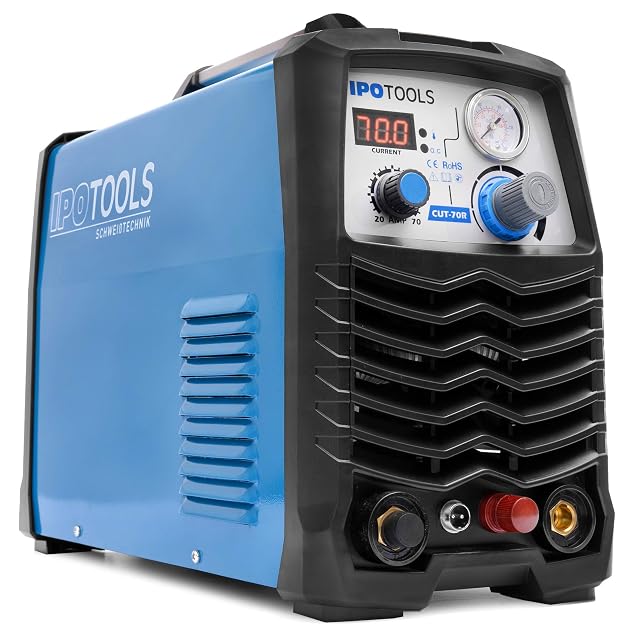
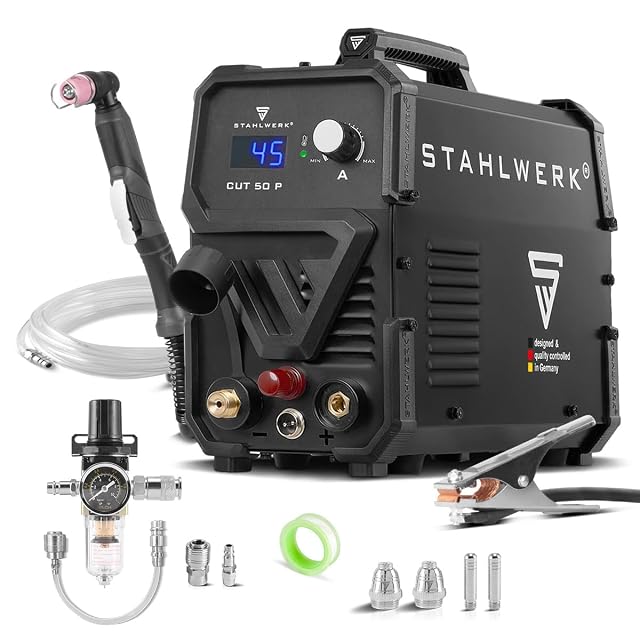
Where we come out The cheapest pilot arc here, and the feature that decides what you can actually cut.
Forty-seven euros more than the CUT-50 above it, for one difference that changes what the machine can do: a non-contact pilot arc.
Why it matters more than the extra amps
A contact-start plasma cutter needs the nozzle touching clean metal to strike. Rust, thick paint or galvanizing interrupt that, and expanded mesh defeats it entirely — every gap breaks the circuit and the arc dies.
A pilot arc strikes inside the torch first, between the electrode and the nozzle, and transfers to the work when it gets close. It starts on dirty material, it bridges gaps, and it will follow a grating or a perforated sheet without stopping. If your cutting is dismantling, scrapping, bodywork or farm repair — where nothing is clean — this is the feature to buy, ahead of any amperage.
The rest is the same machine
Same adjustable pre- and post-flow ranges as its cheaper sibling, same digital display, same silence on the numbers that plasma buyers most need: no cut thickness by material and no duty cycle. Sixty-five amps places it in the same class as machines quoting around 20 mm (0.79 in) in mild steel, but the listing does not say so and we will not say it for them.
One habit worth learning
Do not idle with the pilot lit. The arc that makes the machine convenient is burning between the two consumables you are trying to keep. Strike, transfer, cut, release.
Sources
Current, pilot arc, flow timings and display come from the listing’s published specification. No cut thickness or duty cycle is stated there, and none is invented here. Market availability was verified per market on the EAN.
What it handles, and what it will not
Strengths
Pilot arc: cuts rusty, painted and mesh material that a contact-start machine refuses
€47 more than the 50 A model for a genuinely different capability
Live on all six markets under one reference
Compromises
Again no cut thickness published per material
No duty cycle stated
Pilot arc consumes tips faster if you leave it running between cuts
Specifications
Current
65 A maximum
Arc
Non-contact pilot arc
Pre-flow time
1–6 s, adjustable
Post-flow time
0.1–3 s, adjustable
Display
Digital
Part number
CUT-65
Amazon reference
B0FNKHNHBV
EAN
0197988892656
The questions welders ask
What is a pilot arc and why does it cost more?
It is a small arc struck between the electrode and the nozzle inside the torch, before the main arc transfers to the workpiece. Because the torch does not need electrical contact with the metal, it will start on rust, paint or a gap — and it will cut expanded mesh and grating, where a contact-start machine stalls every time the metal disappears. The extra electronics are what you are paying for.
Does a pilot arc wear consumables faster?
It can, if you hold the trigger with the torch off the work. The pilot arc burns between the electrode and the nozzle, and that is precisely the pair you are trying to preserve. Strike, transfer, cut, release — rather than idling with the arc lit while you reposition.
The two nearest machines on price
Same shelf, nearest price — what else that money puts on the bench.
The cheapest pilot arc here, and the feature that decides what you can actually cut.
Price and availability, for welding machines
A reference exists on these Amazon stores: France, Germany, Italy, Spain, United Kingdom, United States. Listed is not the same as in stock — availability changes daily.
Details checked on August 13, 2026.
Who this one is for, among welding machines
Scrapping, dismantling and bodywork — material that is never clean
Amazon reports what buyers took in the month before this page was last checked: at least 50.
The figure is a floor, rounded by Amazon, and read through Keepa — it says what buyers picked, not what a maker claims.
Sources
Specifications: the manufacturer sheet for welding and metalworking machines and the matching Amazon product page. Prices and availability: Keepa. Every figure on this page names its source.
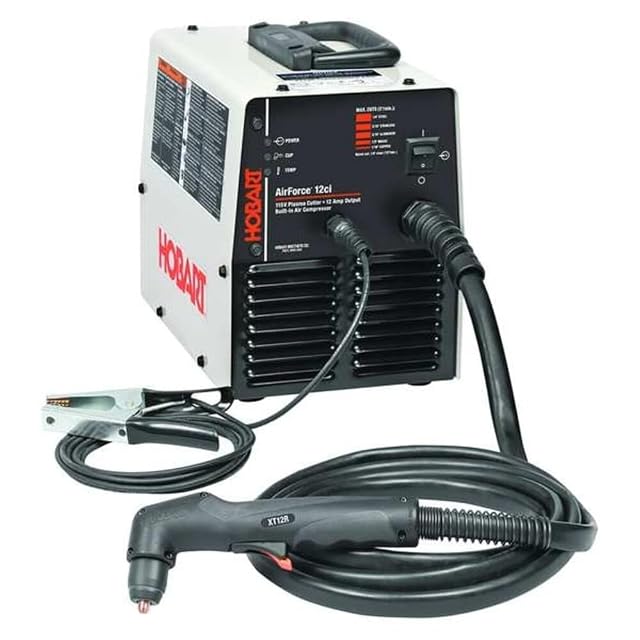
A plasma cutter with its own compressor inside — no bottle, no hose, no water trap — and a listing that publishes neither a cut thickness nor an amperage.
Best for: Cutting thin steel anywhere there is a socket, with nothing else to carry