Skip to content

Buying a plasma cutter: air first, amps second

A plasma cutter is an arc blown through a nozzle by compressed air, and the air is the part most buyers ignore. Get that right and a €200 machine cuts cleanly; get it wrong and a €750 one leaves dross and eats tips.

A plasma cutter is an arc blown through a nozzle by compressed air, and the air is the part most buyers ignore. Get that right and a €200 machine cuts cleanly; get it wrong and a €750 one leaves dross and eats tips.

Which welder suits your metal?

You cut sheet up to a few millimeters
An entry-level machine will do — provided the air feeding it is dry and clean.
You cut shapes rather than straight lines
This is where plasma beats every other method; look at nozzle fineness rather than amperage.
You cut thick material regularly
Read the QUALITY cut thickness, not the severance thickness, which is a maximum with no finish attached.
You have no compressor
That is where the budget starts. A plasma fed on wet air eats consumables and cuts badly, however good the machine.

Picking by the metal

Cutting sheet

Plasma’s natural ground: fast, low distortion, and clean if the travel speed is right.

Shapes and templates

Following a curve is far easier than with a grinder, and the heat-affected zone stays narrow.

Strip-out and demolition

Plasma goes through bolted assemblies and stacked plate where a saw gives up.

Painted or rusty steel

Plasma copes far better than welding does — but the fume it then produces becomes the real subject.

What matters at the arc

Air quality, before anything else
Moisture and oil in the compressed air wreck consumables and degrade the cut. A dryer, or at minimum a properly sized filter-separator, is not an accessory: it is a condition of operation.
Severance thickness or quality cut thickness
Two very different figures. Severance says the machine gets through; quality cut says at what thickness the result is usable without rework. The second one describes your work.
The cost and availability of consumables
Nozzles and electrodes wear continuously. A cheap machine with rare or proprietary consumables costs more in use than a dearer one on common parts.
How the arc is started
High-frequency starting interferes with nearby electronics; contact starting does not. It changes the cut little, and cohabitation in an equipped workshop a great deal.

Which figure for which metal

What you cutWhat decidesWhat to plan for
Thin sheet, shapesNozzle fineness and travel speedDry air, spare consumables
Medium steel, straight linesQuoted quality cut thicknessA guide or a cutting straightedge
Thick steel, severanceMaximum current and duty cycleA pass with the grinder afterwards
Painted or galvanized metalNothing on the machine sideSerious fume extraction

Where it goes wrong at the bench

Feeding it wet air
The first cause of poor cuts and destroyed consumables. A compressor that is never drained sends water down the torch with nothing to indicate it.
Buying on severance thickness
It is always the flattering figure. Getting through a plate is not the same as making something of it: a severance cut leaves an edge that needs reworking entirely.
Dragging the torch
Traveling too slowly widens the kerf, piles dross under the plate and heats the work. The right speed is as much heard as seen.
Forgetting the earth
A work clamp sitting on paint gives temperamental starting that gets blamed on the machine or the consumables.

By the welder you are

The body shop
Thin sheet, shapes, little thickness: nozzle fineness and faultless air matter more than amperage.
The metalworker
Varied thicknesses and cuts on assembled work: quality cut thickness and duty cycle lead the choice.
The breakdown engineer
Severance above all, on metal in place and usually dirty. A portable compressor then becomes the real constraint.

Consumables, duty cycle and working life

A plasma is maintained almost entirely in its torch and its air. A cut that deteriorates points to a worn nozzle, an electrode at the end of its life, or moisture — in that order of frequency. No consumable life can be quoted: it depends on the number of starts more than on cutting time.

  • Drain the compressor tank and the filter-separator before every session.
  • Replace nozzle and electrode together: a pitted electrode destroys a new nozzle in minutes.
  • Clean spatter off the torch head where it disturbs the airflow.
  • Store the torch without tight bends in the lead: it carries air, current and a pilot circuit.

Safety

A plasma arc is more intense than a welding arc at comparable current, and cutting coated metal produces dense fume.

  • Eye protection at the shade suited to the cutting current: welding shades do not always apply.
  • Flame-resistant gloves and clothing: dross is thrown downwards and bounces.
  • Serious extraction as soon as you cut painted, galvanized or stainless material.
  • Check what is UNDERNEATH the plate: the jet goes through and carries on.

Prices quoted in this text were read on 2026-08-14. The live price is at the top of the page.

What we chose, and on what basis

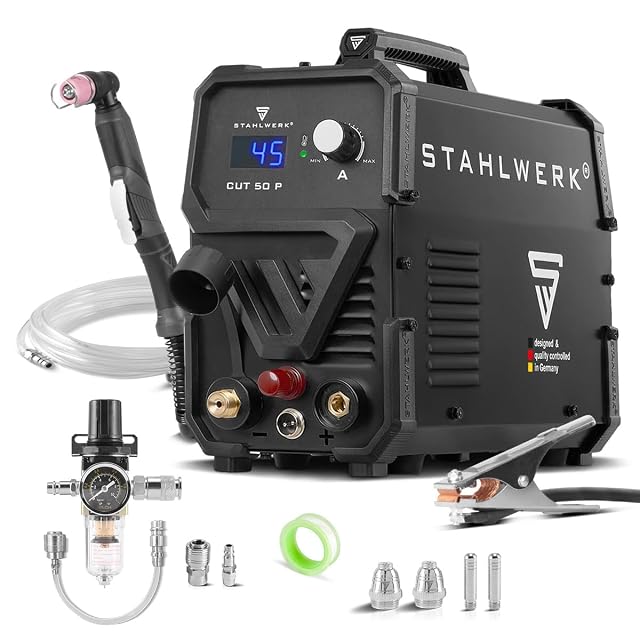
  1. STAHLWERK CUT 50 P

    15–45 A · 15 mm (0.59 in) steel / 8 mm (0.31 in) stainless / 5 mm (0.20 in) aluminum · €330

    The first machine here that publishes its cut thickness for three materials instead of one — which is the whole specification.

    Best for: A workshop cutting steel plate and section up to about 10 mm (0.39 in), cleanly
    8.1/10

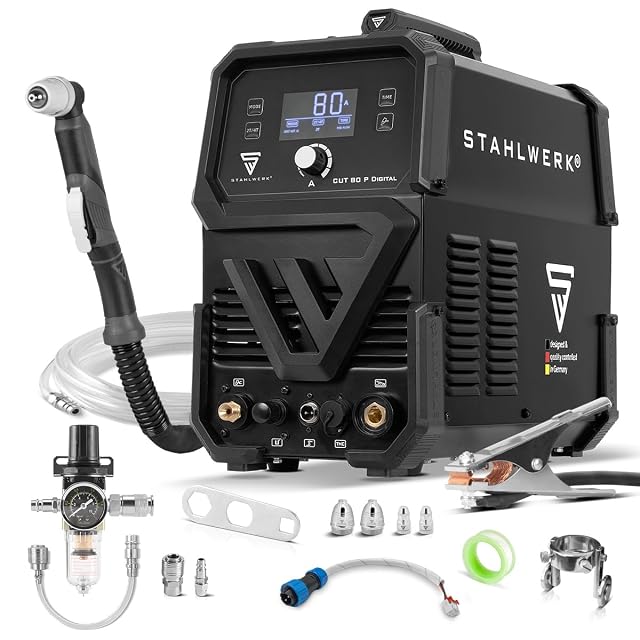
  2. STAHLWERK CUT 80 P Digital

    80 A · 25 mm (0.98 in) steel / 15 mm (0.59 in) stainless / 8 mm (0.31 in) aluminum · €750

    Adjustable pre- and post-flow together with thicknesses for three materials — the fullest specification on this page.

    Best for: Regular cutting in 10 to 18 mm (0.39 to 0.71 in) steel, where the cheaper machines are working at their limit

    8.1/10

The questions welders ask

Severance or clean cut — which figure should I use?

Clean cut, and expect it to be roughly two thirds of the severance figure. Severance is the thickest the machine will part, leaving a ragged edge covered in dross; clean cut is what you can weld or paint afterwards. Buy on the second number and treat the first as a limit rather than a capability.

What air treatment do I need?

A water separator at minimum, and ideally a coalescing filter or small dryer. Moisture in the line makes the arc wander, leaves dross and destroys electrodes and nozzles within an afternoon. One machine on this site arrives with the filter unit fitted; everywhere else it is your first additional purchase.

Can plasma cut aluminum and stainless?

Yes: plasma cuts any conductive metal, unlike oxy-fuel. Edge quality varies with the metal, and both stainless and aluminum usually need dressing before welding.

What air pressure does it need?

The one the machine maker states, at the flow rate they also state: the two go together. A compressor that holds pressure but not flow will let the cut collapse as soon as the torch runs continuously.

Why does my cut leave dross underneath?

Almost always a matter of speed: too slow, and molten metal piles up under the plate. An uneven torch height and worn consumables produce the same effect.

Does plasma distort sheet?

Far less than prolonged abrasive cutting, because the heated zone is narrow and the pass is quick. On very thin sheet, a continuous, even path limits distortion further.

Can I cut on any bench?

No: the jet goes through and keeps going. A slat table or a sacrificial grid protects the support, and nothing flammable should be underneath.

Are consumables interchangeable between brands?

Rarely. Nozzle and electrode geometries are specific to each torch, and an approximate consumable degrades the cut. That is a point to check before buying, not after.

Each welder, and the metal it is meant for

STAHLWERK CUT 50 P

For work that: A workshop cutting steel plate and section up to about 10 mm (0.39 in), cleanly
Where it is best: Three cut thicknesses published, by material — the only honest way to quote a plasma cutter

Where it is worst: 45 A maximum, so 15 mm (0.59 in) is the real ceiling in steel

Read the full review →

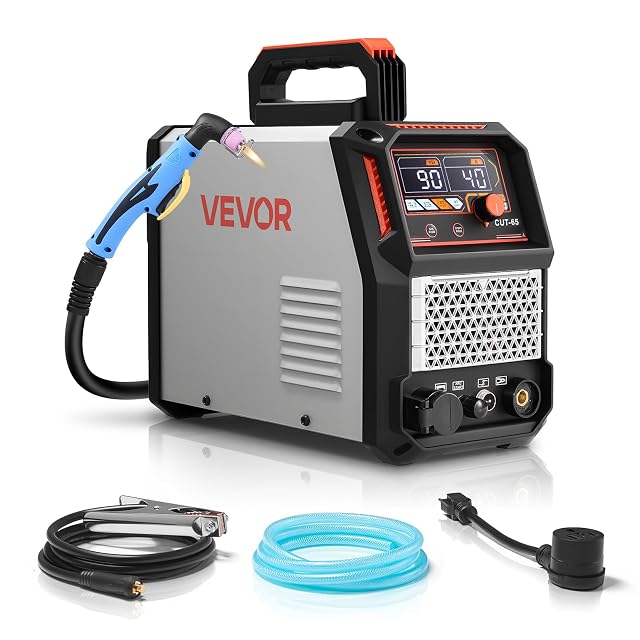
VEVOR CUT-65 · $230

For work that: Scrapping, dismantling and bodywork — material that is never clean

Where it is best: Pilot arc: cuts rusty, painted and mesh material that a contact-start machine refuses

Where it is worst: Again no cut thickness published per material

Read the full review →

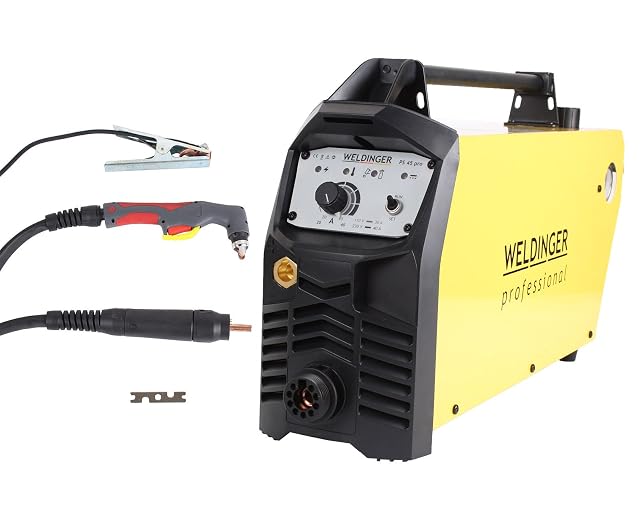
WELDINGER PS 45 professional

For work that: A first plasma cutter, bought by someone who does not yet know that air quality is the whole game

Where it is best: The air filter and regulator are fitted, not an accessory you learn about after the first ruined tip

Where it is worst: Verified on the German and Italian stores only

Read the full review →

STAHLWERK CUT 80 P Digital

For work that: Regular cutting in 10 to 18 mm (0.39 to 0.71 in) steel, where the cheaper machines are working at their limit

Where it is best: Three published thicknesses and adjustable air timings — nothing else here gives both

Where it is worst: €750, and an 80 A machine will test a domestic supply

Read the full review →

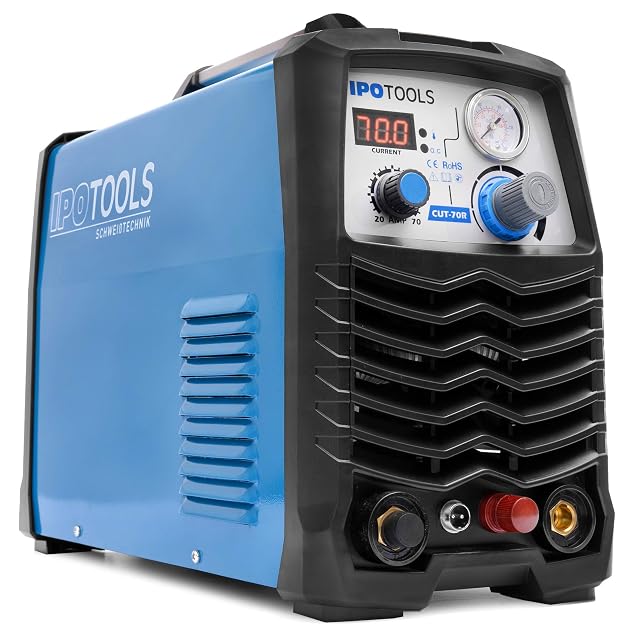
IPOTOOLS CUT-70R Pilot

For work that: A workshop that wants one box, standard consumables and somewhere to send it if it fails

Where it is best: A 5 m (16 ft) PT-80 torch — the standard fitment, so consumables are commodity parts

Where it is worst: Not sold on the British or American stores at the time of checking

Read the full review →

What it will consume

Tips, nozzles, wire and gas from the same aisle, at the price we read. Confirm they suit the machine you choose before ordering: it turns on the torch and the part number, which the product page gives.

The call, in one line

Comparisons that are worth reading

Welder against welder, where the comparison is already written up.

What this selection rests on

The welders here are taken from the catalog of this site. Specifications come from the maker and from the Amazon product page; prices are what Keepa reported for the date shown, and both move. The order rests on declared specifications, on stated strengths against stated limits, and on price. No machine here has struck an arc in our hands, and nothing on this page pretends it has.

Last checked on

The tool we use ourselves

Chosen your machine? Now buy it at the right price.

Welders and plasma cutters swing by a hundred dollars or more across the year, and the biggest "discounts" often land at prices the same model sold for six weeks earlier. UniverTrack tracks the real price history across retailers, spots fake reductions, and alerts you when it is genuinely the moment to buy.

Real price historyBuy-now alertsAI buying assistant
Try free for 14 days →
No commitment · Cancel in one click · 5 languages