Get the hole right
For metric coarse threads, drill diameter equals thread diameter minus pitch: M6 × 1.0 needs 5.0 mm (0.20 in), M8 × 1.25 needs 6.75 mm (0.27 in), M10 × 1.5 needs 8.5 mm (0.33 in). Undersize holes are the commonest cause of broken taps, and full-depth threads are rarely necessary — around 70% engagement is the practical optimum.
Start square
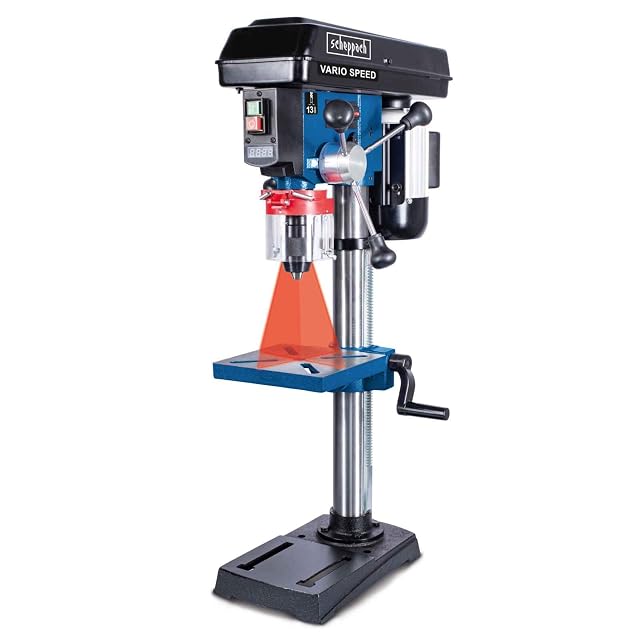
A tap leaning even a few degrees binds on one side. Start the tap in a drill press with the chuck unpowered, turning by hand, so the quill keeps it aligned — or use a tapping guide. Most breakages happen in the first three turns.
Quarter-turn back
Half a turn forward, a quarter back, repeatedly. The back-turn breaks the chip; a long chip jamming in the flute is what snaps a tap. In blind holes, withdraw the tap completely every few turns and clear it.
Fluid, always
Cutting fluid on the tap does as much for chip clearance as for cooling. Tapping dry in steel is asking for a broken tap in a part you have already spent time on.
The questions welders ask
How do I get a broken tap out?
With difficulty. If it is proud, grip it with pliers or a tap extractor. If it is flush or below, the practical options are a carbide burr in a die grinder, spark erosion at a machine shop, or drilling the hole out and fitting a thread insert. Prevention is dramatically cheaper.
Do I need a taper, second and plug tap set?
For blind holes, yes. A taper tap starts easily and cannot cut to the bottom; a plug (bottoming) tap finishes the thread close to the floor of the hole. For through holes a single taper tap is usually enough, which is why cheap sets often contain only that.
Last reviewed 2026-08-14