Why it work-hardens
Austenitic stainless deforms plastically before it cuts. A dull edge, too much speed or too little feed pressure rubs the surface, and that rubbing transforms the top layer into something considerably harder than the bit. Once that has happened, the hole is finished unless you drill through the hardened layer from the other side.
Slow and firm
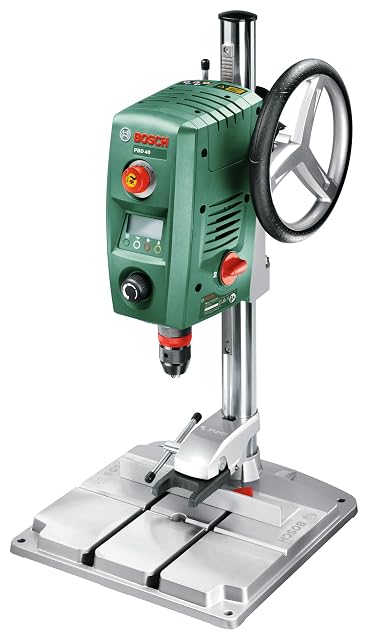
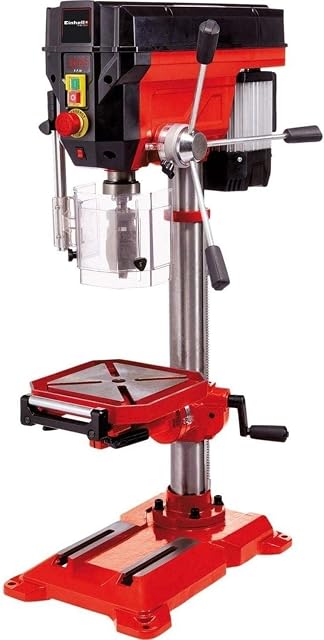
Roughly half the speed you would use in mild steel, and enough pressure that the bit is always making a chip. A continuous curl of swarf means you are cutting; dust and squealing mean you are rubbing. On a press this is easy to feel through the handle; in a hand drill it takes deliberate effort.
Cobalt bits and cutting fluid
Cobalt alloys keep their hardness hotter, which is exactly what stainless demands. Fluid does two jobs: it cools the edge and it flushes the chip. Both matter — a chip that rides round in the flute recuts and generates more heat.
Pilot holes, carefully
A pilot hole helps a large bit, and an oversized pilot lets the main bit’s chisel edge rub in mid-air. Keep the pilot no more than the width of the main bit’s web.
The questions welders ask
What speed for a 6 mm (0.24 in) bit in stainless?
Around 500 to 700 rpm as a starting point, against perhaps 1,200 in mild steel. The principle is surface speed at the cutting edge: bigger bits and harder materials both mean slower. If the swarf comes off blue, you are too fast or too dry.
Are step drills any good for stainless?
Yes, particularly in thin sheet, where a twist bit grabs as it breaks through. A step drill cuts a clean round hole and the cutting edge is supported. What it does not do is drill deep — it is a sheet tool, not a plate tool.
Last reviewed 2026-08-14