Skip to content

STAHLWERK AC/DC WIG 200 ST vs STAHLWERK DC WIG 200 Puls Pro

Aluminum capability at €300, or better pulse control on steel at €440?

One of these welds aluminum and the other does not. The dearer machine spends its money on arc control instead — and for a stainless fabricator that is the better trade.

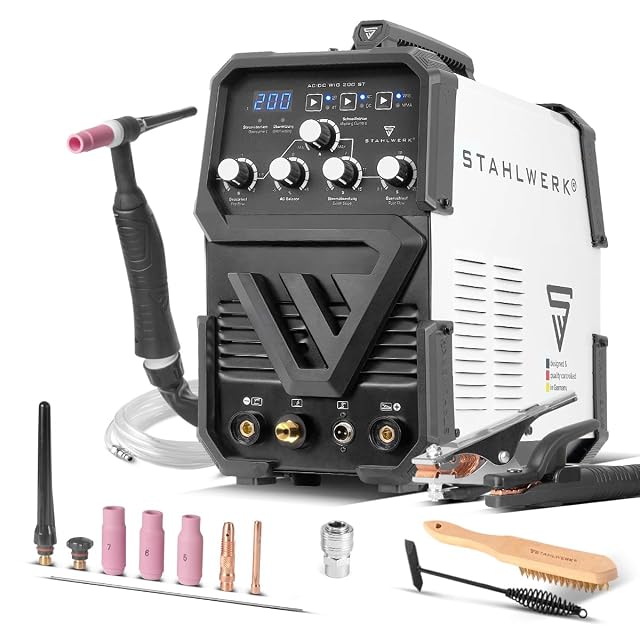
STAHLWERK AC/DC WIG 200 ST TIG welder, product photograph

STAHLWERK AC/DC WIG 200 ST

7.8/10

Wins 3 of 8

Search Amazon

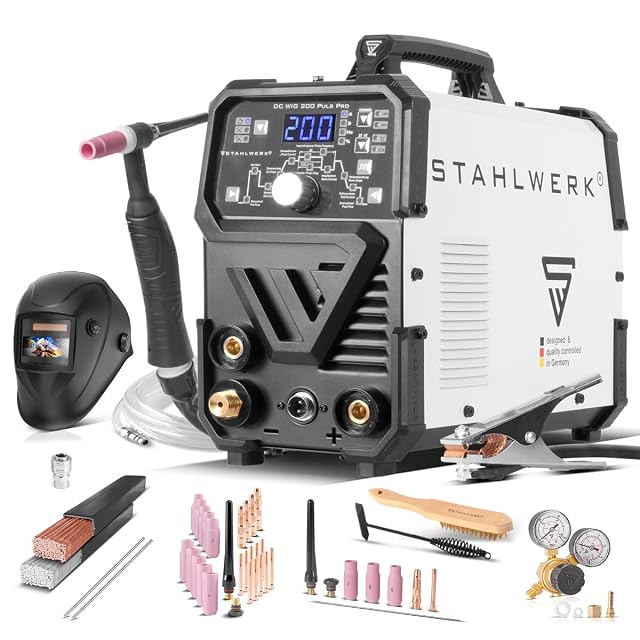
STAHLWERK DC WIG 200 Puls Pro TIG welder, product photograph

STAHLWERK DC WIG 200 Puls Pro

7.8/10

Wins 1 of 8

Search Amazon

Rating against rating

Compared on AC/DC WIG 200 ST DC WIG 200 Puls Pro
Aluminum (AC) Yes No — explicitly stated
Pulse Not published Long and short pulse
Arc start HF, contactless HF, contactless
Trigger modes 2T / 4T 2T / 4T
Gas management Separate pre- and post-flow Not published
Weight 12.7 kg (28 lb) Not published
Price ≈ €300 ≈ €440
Listed on amazon.com No No

A tick marks the better answer on that line only. Counting ticks does not decide the page — the two verdicts below do, because these machines answer different questions.

Which of the two, for which metal

AC/DC WIG 200 ST

No amazon.com listing was found for this one. We hold references for other markets but none for the United States, so it may not be buyable here — which is the first thing to weigh against anything below.

Prefer the AC/DC if aluminum is anywhere in your plans. That capability cannot be added later at any price, and this is the cheapest machine on the site that has it.

DC WIG 200 Puls Pro

No amazon.com listing was found for this one. We hold references for other markets but none for the United States, so it may not be buyable here — which is the first thing to weigh against anything below.

Buy the DC Puls Pro if you weld stainless and steel only. Two pulse regimes — long for penetration, short for heat control — do more for a stainless fabricator than an AC mode they would never use.

The questions welders ask

Why can a DC machine not weld aluminum?

Aluminum carries an oxide skin that melts at roughly three times the temperature of the metal beneath it. Alternating current reverses polarity many times a second, and the reverse half of each cycle breaks that oxide up. On direct current the arc simply sits on the skin. No gas, tungsten or technique substitutes.

What do two pulse settings actually give me?

A choice between depth and heat. Slow pulsing lets the pool freeze slightly between peaks, which holds a bead on thin stainless and produces the stacked-coin appearance; fast pulsing stiffens and narrows the arc, concentrating penetration. Machines with one pulse setting force a compromise between the two.

The complete write-up on each

Prices quoted in these summaries are dated readings. The live price is shown next to each product.