Skip to content

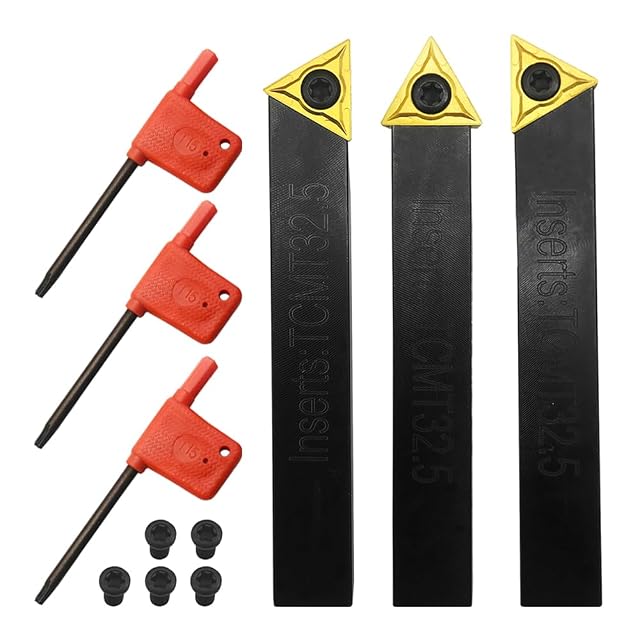
GBJ GBIUO-48EF156, three holders with TCMT inserts

Three holders rather than seven, with the two things this hub’s buying tip asks for both published: a positive rake and a built-in chip breaker.

GBJ three indexable lathe turning tool holders with TCMT inserts

GBJ GBIUO-48EF156, three holders with TCMT inserts

Three holders rather than seven, with the two things this hub’s buying tip asks for both published: a positive rake and a built-in chip breaker.

Amazon reference
B0D4C8H9PX
EAN
0797999724115
  • States a positive rake cutting angle and a built-in chip breaker — exactly what this hub’s buying tip calls for on a small machine
  • Publishes the holder steel, 40CrMo, with a black oxide finish
  • Three holders: no threading, grooving or parting tool

Best for: External turning and facing on a light lathe, where three holders cover the work

≈ $23
Check price on Amazon
Specifications

Amazon reference
B0D4C8H9PX
EAN
0797999724115

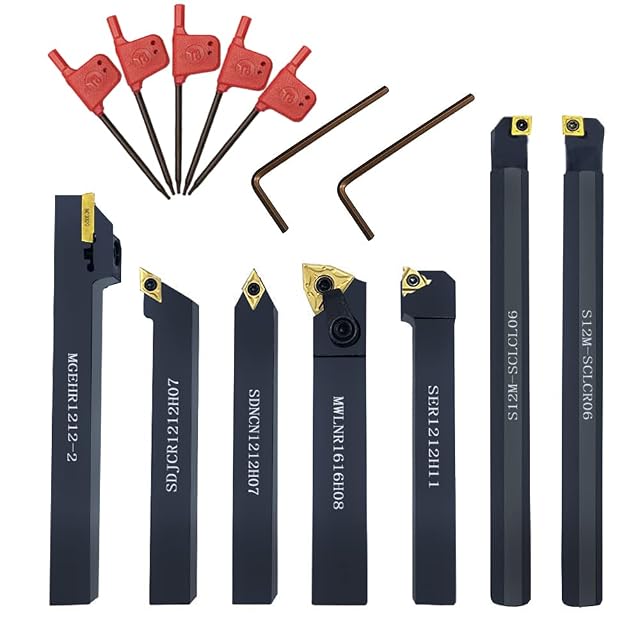
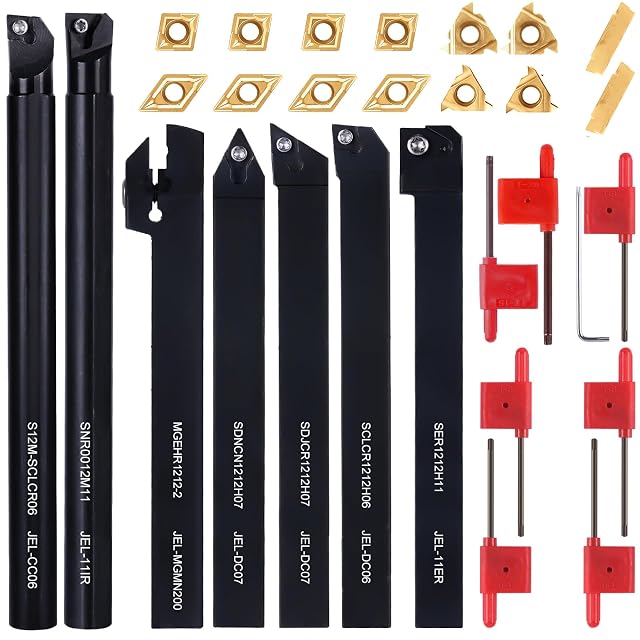
Three holders is a deliberate choice rather than a cheap one. AL-8 and AR-8 are left and right external turning holders and the E-8 covers the third common job, which between them is most of what a bench lathe does to the outside of a part. What you give up is threading, grooving and parting — the seven-piece sets on this shelf cover those, mostly with one insert each.

The two specifications that matter here are both published, and they are the two this hub’s buying tip is about. The inserts have a positive rake cutting angle, which is what lets a light machine cut rather than rub, and a built-in chip breaker, which turns a hot steel ribbon into chips that fall away. At least three of the thirteen listings on this shelf state either; this one states both.

The holder steel is named — 40CrMo, black oxide — rather than being called cemented carbide as it is on three other pages here, and the insert is identified as a TCMT32.51, so a replacement can be ordered from the page. A TCMT is a 60-degree triangle: stronger than the 35-degree rhombus on the Hunricho listing and correspondingly less able to reach into a corner. Two typographic slips in the text are worth a mention only because they are in the title and the first bullet: “Repalcement”, and three “trox” keys.

Availability

Read on the day this page was built: $30 at the American Amazon shop.

Read from Keepa on the day this page was last revised; stock and price both move without notice.

Prices quoted in this text were read on 2026-10-07. The live price is at the top of the page.

The questions welders ask

Why does positive rake matter on a small lathe?

Because a negative-rake insert needs force this hub’s machines do not have. This shelf’s buying tip says it directly: negative geometry requires depth of cut and rigidity a bench machine lacks, so it rubs and chatters instead of cutting. A positive-rake insert with a chip breaker shears a curl of metal at light depth with far less force. Three listings on this shelf state positive rake; the rest say nothing about geometry at all.

What is a chip breaker for?

Turning a ribbon into chips. Without one, steel comes off as a continuous hot spring that wraps round the work, the tool and occasionally the operator; a ground step on the top face of the insert curls the chip tightly until it breaks. On a small lathe, where you are standing close and the guard is minimal, it is a safety feature as much as a cutting one — and it is stated here.

All lathe tooling