Low hydrogen, in the can it has to live in
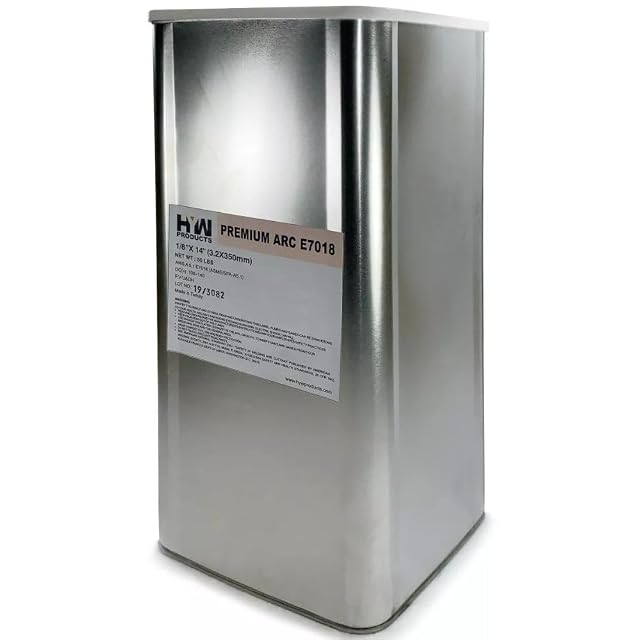
HYW Products E7018, 1/8 in, 50 lb can
The only low-hydrogen rods in this hub, in the only packaging that keeps them that way — fifty pounds in a sealed steel can.
This hub’s buying tip is about this rod. Basic low-hydrogen electrodes absorb moisture from the air, a damp one gives porous, cracked welds, and they belong in a sealed container rather than an open packet — which is why these come in a sealed fifty-pound steel can. It is the only packaging in this hub that answers the problem, and it is the professional format for a reason.
What is in it is the structural rod: E7018 to AWS A5.1-04, 1/8 in by 14 in, all positions, on DC reverse polarity or AC. The 70 means a 70,000 PSI class deposit against the 60,000 of the 60-series rods on this shelf, and the low-hydrogen coating is what keeps dissolved hydrogen out of the weld and prevents the delayed cracking that shows up days after a restrained joint has cooled. The citation of the standard, with its revision, appears on no other rod in this hub.
The honest caveats are quantity and discipline. Fifty pounds is three hundred-odd rods, which most workshops will not finish before the can has been open a long time — and an opened can of 7018 needs a rod oven or an airtight box, neither of which is here. The listing itself is three bullets: a classification, a size and a weight. For a rod this specific that is almost enough, and the one figure missing is the current range for 1/8 in.
Availability
Read on the day this page was built: $190 at the American Amazon shop.
Read from Keepa on the day this page was last revised; stock and price both move without notice.
Prices quoted in this text were read on 2026-10-07. The live price is at the top of the page.
The questions welders ask
Why does the can matter?
Because a low-hydrogen rod stops being low-hydrogen once it has been sitting out. The buying tip at the top of this hub is explicit: basic electrodes absorb moisture from the air, a damp rod gives porous, cracked welds, and they belong in a sealed container or a rod oven rather than an open packet on a shelf. A sealed fifty-pound steel can is how these rods are supplied professionally, and it is the only packaging in this hub that addresses the problem at all. The clock starts when you open it.
What does E7018 give you over E6013?
Strength and toughness, at the cost of convenience. The 70 in E7018 is a 70,000 PSI class deposit against 60,000 for the 60-series rods on this shelf, and the basic low-hydrogen coating gives a weld with far less dissolved hydrogen — which is what prevents delayed cracking in thicker or restrained joints. In exchange it is harder to strike, unforgiving of a long arc, and it has to be kept dry. For structural work it is the right rod; for a gate hinge it is the wrong one.
Is AWS A5.1-04 worth citing?
It is the specification that makes "E7018" mean something. AWS A5.1 defines the classification system for carbon steel covered electrodes — what the digits stand for, what mechanical properties the deposit must meet, and how it is tested. A rod sold as E7018 without naming the standard is using the label; this listing names the standard and the revision, which is the only such citation in this hub.