Maximum current against duty cycle
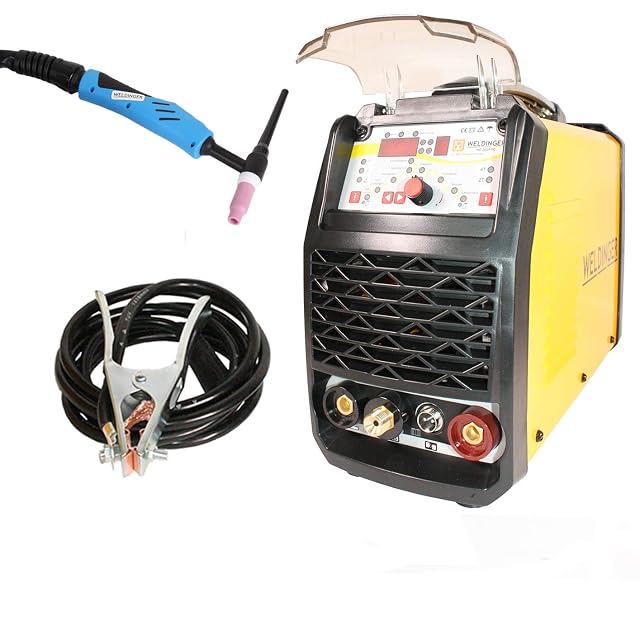
A welder advertised at 200 A tells you what it can reach, not what it can hold. Duty cycle is the percentage of a ten-minute period the machine can weld at a stated current, at a stated ambient temperature — usually 40 °C (104 °F) in the standards, and « at room temperature » when a manufacturer is being generous.
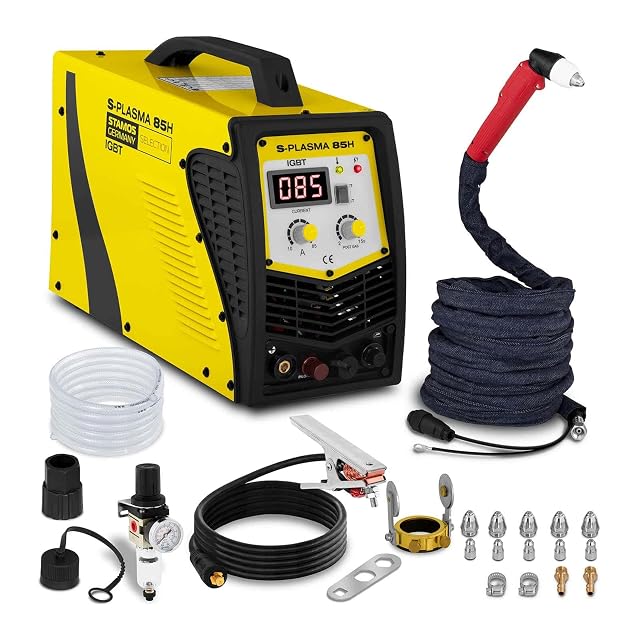
On this site, one stick machine publishes 100% at 155 A and one plasma cutter publishes 85 A at 60%. Everything else publishes a maximum and nothing else. Those two are not better because they are stronger; they are better because you know what you are buying.
Intake against delivered air
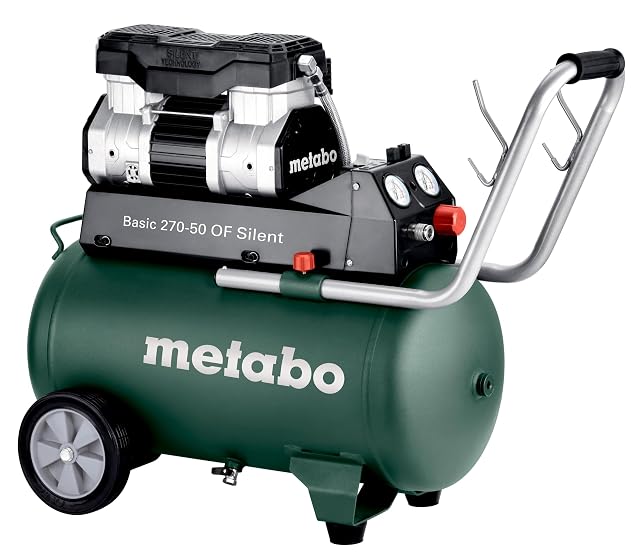
Compressors are quoted on intake — what the pump sweeps — because it is the larger number. Delivery, at a working pressure, is typically 30 to 40% lower and is what actually reaches the tool. One machine on this site publishes both, 250 l/min and 130 l/min, and that ratio is the key to reading every competitor’s single figure.
Severance against clean cut
Plasma cutters quote a thickness the machine will part, leaving a ragged, dross-covered edge. The thickness it will cut cleanly enough to weld is roughly two thirds of that. Some manufacturers publish three figures by material — mild steel, stainless, aluminum — and the spread between them is large: 15 mm (0.59 in), 8 mm (0.31 in) and 5 mm (0.20 in) on one machine here.
The figures nobody publishes
Optical class on a welding helmet. Brake stopping time on an angle grinder. Airflow on a fume extractor. Quill travel on a drill press. Each of those decides how the tool performs, and each is absent from most listings. When you find a manufacturer that publishes one, that is itself information about the manufacturer.
The questions welders ask
If a figure is missing, can I estimate it from a similar machine?
You can guess, and you will be wrong often enough to matter. Duty cycle varies enormously between machines of identical output because it depends on the transformer, the heatsink and the fan. On this site, where a manufacturer publishes nothing we leave the field empty and say so — an estimate presented as a specification is worse than a gap, because it looks like information.
Which single figure tells you the most?
Duty cycle at a stated current and temperature, on any machine that makes heat. It is the figure that converts a headline into working capability, and it is the one most often absent. When it is missing, the honest reading of a maximum current is « briefly ».
Last reviewed 2026-08-14