Skip to content

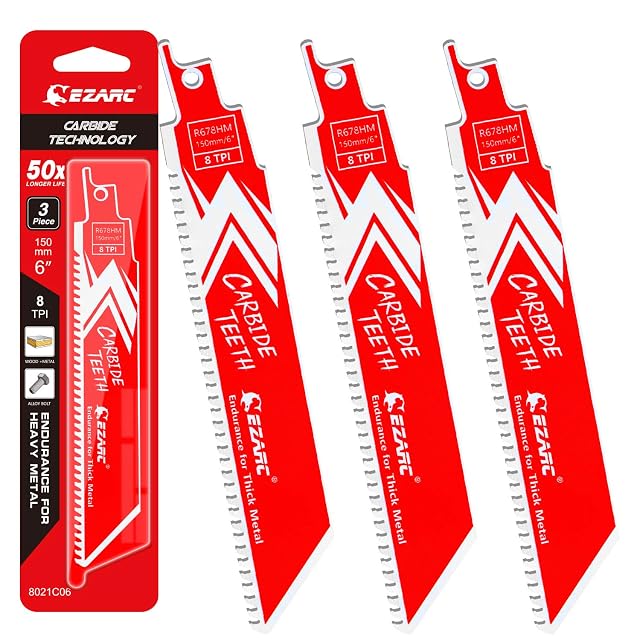
EZARC R678HM, carbide 6 in 8 TPI, 3-pack

The coarse-pitch carbide blade this shelf needs: 8 TPI for solid section, with each tooth ground and welded rather than cut from the body.

EZARC carbide tipped reciprocating saw blade with welded teeth

EZARC R678HM, carbide 6 in 8 TPI, 3-pack

The coarse-pitch carbide blade this shelf needs: 8 TPI for solid section, with each tooth ground and welded rather than cut from the body.

Amazon reference
B08FQQ52T8
EAN
0611553064410
  • An 8 TPI pitch, the only coarse blade on this shelf, which is what solid section needs
  • Carbide teeth, individually precision ground and welded, rather than hardened steel teeth
  • Claims "up to 50x longer life than bi-metal" with no test or condition behind it

Best for: Rebar, car beams and hardened steel, where a bi-metal blade dulls in one cut

≈ $25
Check price on Amazon
Specifications

Amazon reference
B08FQQ52T8
EAN
0611553064410

This is the blade the rest of the shelf is missing. Four of the American recip blades here are 14 TPI, which is a thin-to-medium pitch; this one is 8 TPI with carbide teeth, which is what solid bar, rebar and hardened steel actually want. At 8 teeth to the inch the spacing is about 3.2 mm (0.13 in) and the gullets are big enough to carry chips out of a deep cut instead of packing them.

The teeth are the other half. A bi-metal blade has hardened steel teeth that dull gradually; carbide teeth are separate tips, precision ground and individually welded, and they stay sharp through stainless, high-alloy steel and rebar long after a bi-metal blade has rounded over. EZARC puts it at up to fifty times the life, which is a number with nothing behind it — the direction is right, the multiple is a claim.

What carbide does instead of dulling is chip. A bind, a shock load or a trapped offcut takes a tooth off and it does not come back, which is why a carbide blade is a tool for the material it was bought for and not a general-purpose blade. And at 8 TPI it is the wrong blade for thin-wall tube: this hub’s rule cuts both ways, and a single coarse tooth catching the far wall of a thin section will strip.

Availability

Read on the day this page was built: $24 at the American Amazon shop.

Read from Keepa on the day this page was last revised; stock and price both move without notice.

Prices quoted in this text were read on 2026-10-07. The live price is at the top of the page.

The questions welders ask

When is 8 TPI the right pitch?

On anything solid. This hub’s buying tip is to keep at least three teeth in the cut and to use a coarse pitch on solid bar: at 8 TPI the teeth are about 3.2 mm (0.13 in) apart, so three of them span nearly 10 mm (0.39 in), and the gullets between them are big enough to carry the chips out of a deep cut. On thin-wall tube the same blade is dangerous — a single tooth catching the far wall will strip. The 14 TPI blades on this shelf are the tube blades; this is the bar blade.

Carbide or bi-metal?

Carbide for hard material, bi-metal for everything else. A bi-metal blade has hardened high speed steel teeth welded to a spring steel body and dulls progressively; a carbide blade has separate carbide tips welded on, which stay sharp far longer in stainless, hardened steel and rebar — and chip instantly on a shock load or a bind. EZARC claims up to fifty times the life, which is a figure with no test behind it; the direction is right and the multiple is the maker’s.

All metal saw blades