Skip to content

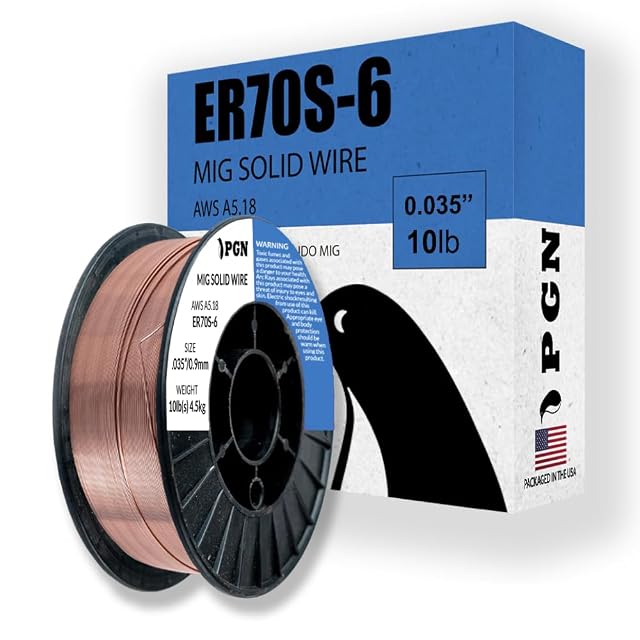
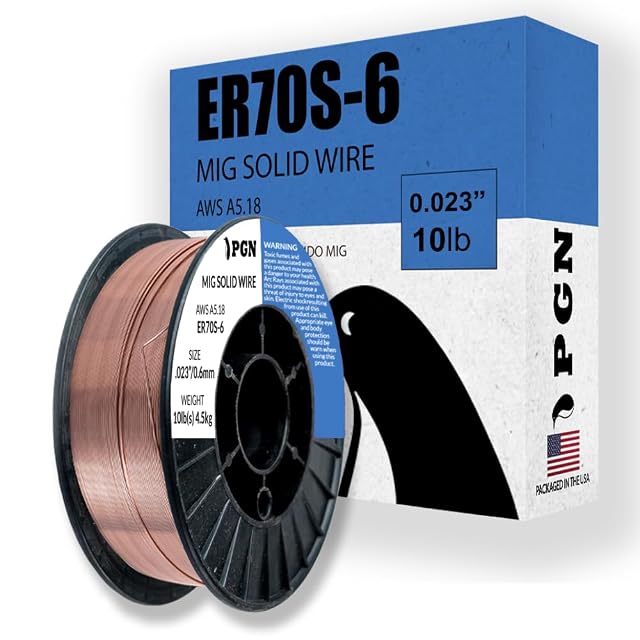
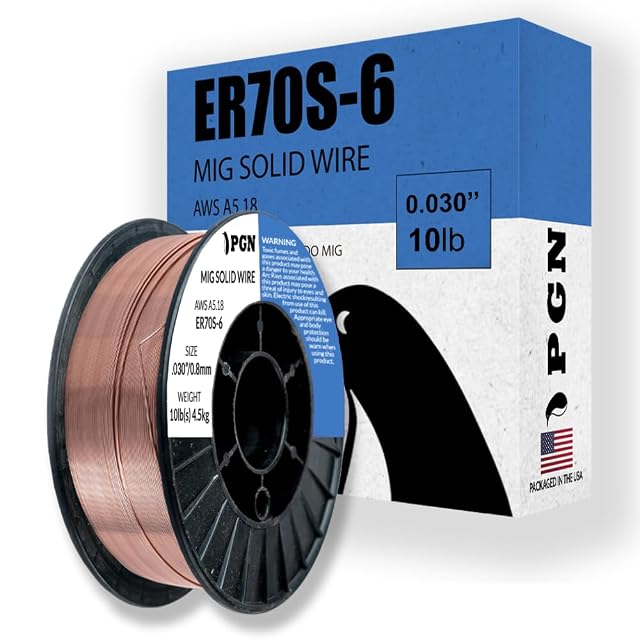
PGN Bearings WW-ER70S6-023-10LB, ER70S-6, 0.023 in, 10 lb

The finest wire in this hub by a clear margin — the 0.6 mm (0.02 in) class this shelf's buying tip says car-body sheet needs, and the only one of its size here.

PGN ER70S-6 solid MIG welding wire, 0.023 inch, on a ten-pound spool

PGN Bearings WW-ER70S6-023-10LB, ER70S-6, 0.023 in, 10 lb

The finest wire in this hub by a clear margin — the 0.6 mm (0.02 in) class this shelf's buying tip says car-body sheet needs, and the only one of its size here.

Amazon reference
B089LVH45M
EAN
0760655019337
  • A 0.023 in diameter — the 0.6 mm (0.02 in) class — which is what this hub’s buying tip says the thin end of the range needs
  • The only wire of this size anywhere in this hub, in either half
  • The highest price per spool on this shelf, for the least metal per meter

Best for: Car-body panel and thin sheet, where a 0.8 mm (0.03 in) wire blows holes

≈ $41
Check price on Amazon
Specifications

Amazon reference
B089LVH45M
EAN
0760655019337

This hub’s buying tip is unusually direct: match the wire diameter to the thinnest metal you weld, because 0.6 mm (0.02 in) gives control on car-body sheet and 1.0 mm (0.04 in) struggles below 2 mm (0.08 in) — and the thin end is where mistakes cost a panel. Until this shelf gained its American half, there was no 0.6 mm (0.02 in)-class wire in the hub at all. This is it: 0.023 in, which is the American designation for the same size.

What it buys is heat control. A finer wire carries less current at a given feed speed, so less energy goes into a panel that is only eight tenths of a millimeter thick. That is the whole difference between a tack that holds and a hole you then have to fill. Ten pounds of 0.023 in wire is also a great many meters, so the spool outlasts its price.

Two things to plan for. A fine wire wants a contact tip bored for it and a liner that will not let it buckle, and neither is mentioned here or included — the tip kits on the torch parts shelf of this site are 0.030 and 0.035 in. And the listing is written as sales copy rather than specification, to the point of a bullet that invites you to color all your clients impressed with the precision and arc control. The specification that matters, 0.023 in on a ten-pound spool of ER70S-6, is in the title.

Availability

Read on the day this page was built: $41 at the American Amazon shop.

Read from Keepa on the day this page was last revised; stock and price both move without notice.

Prices quoted in this text were read on 2026-10-07. The live price is at the top of the page.

The questions welders ask

Why does a fine wire matter so much on sheet?

Because the current follows the wire. A thinner wire carries less current at a given feed speed, which means less heat into the panel — and on 0.8 or 1 mm (0.04 in) car-body steel, heat is what causes burn-through and distortion. This hub’s buying tip puts it plainly: match the diameter to the thinnest metal you weld, not the thickest, because the thin end is where mistakes cost a panel. At 0.023 in this is the only wire in this hub that belongs on a wing or a sill.

Do I need anything else to run it?

Probably, and the listing does not say so. A 0.023 in wire needs a contact tip bored for it — a 0.030 in tip will let it wander and arc inside the tip — and ideally a liner suited to fine wire, because a thin wire buckles in an oversized liner instead of feeding. The torch parts shelf of this site carries 0.030 in tip kits; 0.023 in tips are a separate purchase this page does not mention.

Why is the finest wire the most expensive?

Drawing. Every reduction in diameter is another pass through a die, and a 0.023 in wire has been drawn further, inspected more and is more easily damaged in handling than a 0.035 in one. Ten pounds also goes much further in meters at this size, so the cost per weld is not as high as the cost per spool suggests.

All mig wire