Skip to content

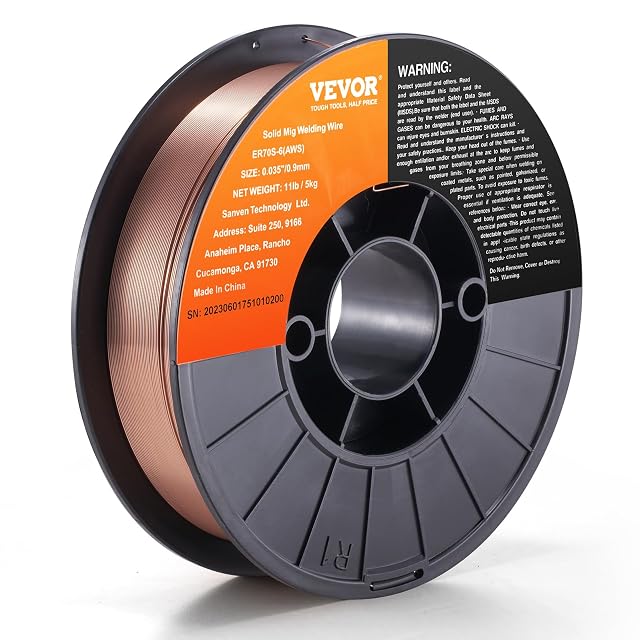
VEVOR ER70S-6, 0.035 in, 11 lb

The coarser of the two VEVOR wires on this shelf, in the larger spool — and the one whose listing drops the tensile figure its own stablemate publishes.

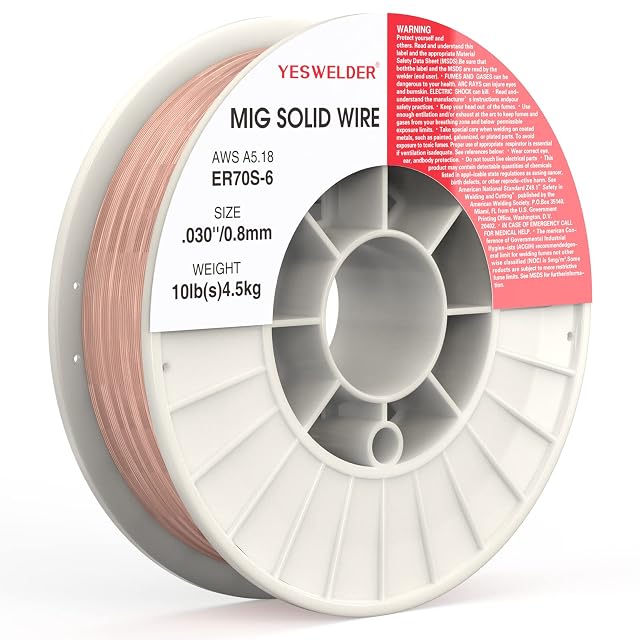
VEVOR ER70S-6 MIG welding wire, 0.035 inch, on an eleven-pound spool

VEVOR ER70S-6, 0.035 in, 11 lb

The coarser of the two VEVOR wires on this shelf, in the larger spool — and the one whose listing drops the tensile figure its own stablemate publishes.

Amazon reference
B0CGCXKFQ2
EAN
0840349946337
  • Eleven pounds rather than ten, for a small increase over the brand’s 0.030 in spool
  • States the deoxidiser argument — higher manganese and silicon for dirty, oily or rusted steel
  • Does not publish the 490 MPa tensile figure that the same maker’s 0.030 in listing gives

Best for: Thicker section and structural work, where 0.035 in lays metal faster than 0.030

≈ $27
Check price on Amazon
Specifications

Amazon reference
B0CGCXKFQ2
EAN
0840349946337

This is the heavier of VEVOR’s two wires on this shelf — 0.035 in on an eleven-pound spool against 0.030 in on ten — and in diameter terms it is the right choice for thick section. A coarser wire carries more current at a given feed rate, deposits more metal per pass, and gets a multi-pass job done in fewer runs.

The deoxidiser argument is made properly again: higher manganese and silicon are what the “-6” in ER70S-6 means, and they are what allow the wire to tolerate oily or lightly rusted steel rather than demanding ground-clean metal. The listing names the work it is for — bridges, shipbuilding, machinery under load and vibration — which is a reasonable description of where 0.035 in belongs.

What is odd is what this page leaves out that the maker’s own 0.030 in page includes. That listing publishes a tensile strength of at least 490 MPa and names both shielding gas options, 100 per cent CO2 or 80/20 argon-CO2. This one publishes neither, while repeating the spool and feeding arguments nearly word for word. The wire is the same classification; the page is simply less informative, and on a shelf where the same classification spans a twofold price range that difference is the only thing a buyer has to go on.

Availability

Read on the day this page was built: $27 at the American Amazon shop.

Read from Keepa on the day this page was last revised; stock and price both move without notice.

Prices quoted in this text were read on 2026-10-07. The live price is at the top of the page.

The questions welders ask

Why does the same maker publish less on this listing?

Nothing on either page explains it. VEVOR’s 0.030 in wire on this shelf states a tensile strength of at least 490 MPa and names both shielding gas options; this 0.035 in listing states neither, while repeating the same deoxidiser and spool arguments almost word for word. The wire is the same classification in a coarser diameter, so the figures ought to apply to both. On this shelf, which listing you read decides how much you know.

When is 0.035 in the right diameter?

From about 3 mm (0.12 in) of steel upwards, and particularly on multi-pass work where deposition rate matters. A coarser wire carries more current for a given feed speed, which means more metal per pass and fewer passes on heavy section. The cost is control at the thin end: this hub’s buying tip is to match the diameter to the thinnest metal you weld, and 0.035 in on 1 mm (0.04 in) panel will blow through before it fuses.

All mig wire