Skip to content

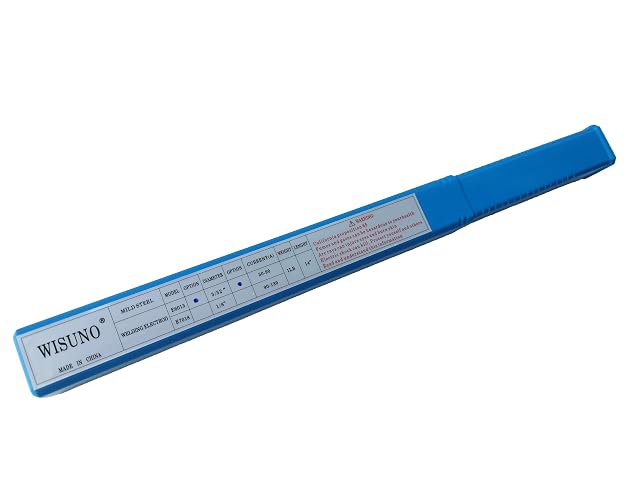
WISUNO E6013, 3/32 in, 1 lb

The cheapest rods on this shelf, and the only listing anywhere in this hub that publishes the current range for each diameter.

WISUNO E6013 stick electrodes in their one-pound pack

WISUNO E6013, 3/32 in, 1 lb

The cheapest rods on this shelf, and the only listing anywhere in this hub that publishes the current range for each diameter.

Amazon reference
B0DDJQZQ8V
EAN
0780745664575
  • Publishes a current table by diameter: 1/16 in at 25-40 A, 5/64 in at 40-60 A, 3/32 in at 50-80 A, 1/8 in at 100-125 A
  • E6013 rutile, which is the forgiving coating this hub recommends for occasional welding
  • One pound is perhaps twenty rods — a format for trying, not for a project

Best for: A first pound of rods, or a small machine whose dial you are still learning

≈ $10
Check price on Amazon

Specifications

Amazon reference
B0DDJQZQ8V
EAN
0780745664575

This hub’s introduction promises the current range each diameter actually wants, and then five published packs do not give it. The cheapest rods on the shelf do: 1/16 in at 25 to 40 A, 5/64 in at 40 to 60, 3/32 in at 50 to 80, 1/8 in at 100 to 125. That table is worth more than anything else on this page, because it is the number that decides whether a rod strikes, runs or sticks.

What is in the pack is an ordinary E6013 — a rutile coating, AC or DC, all positions, one pound of 3/32 in. Rutile is the coating this hub steers occasional welders towards: it lights easily, it forgives an unsteady arc length, and it does not care how long it has been in the drawer. The low-hydrogen alternative further up this shelf is stronger and demands a sealed container.

A pound is around twenty rods, which is a format for finding out rather than for building. What the listing leaves out is the rod length, which decides whether it seats in a short holder, and any mechanical figure — the Hobart packs here publish 60,000 PSI, and the claims about elongation and weld appearance on this page have no test behind them.

Availability

Read on the day this page was built: $10 at the American Amazon shop.

Read from Keepa on the day this page was last revised; stock and price both move without notice.

Prices quoted in this text were read on 2026-10-07. The live price is at the top of the page.
The questions welders ask

Why is a current table worth so much?

Because the hub’s introduction promises exactly that — "the current range each diameter actually wants" — and almost no listing gives it. Set a 3/32 in rod at 120 A and it burns back and sticks; set it at 40 A and it will not strike. The published window here is 50 to 80 A for 3/32 in, and the three other diameters are given too, which means the same table serves whatever size you buy next. None of the five European packs in this hub publishes one.

Is E6013 the right rod to start on?

For occasional welding, yes, and this shelf's buying tip says so: basic low-hydrogen rods are stronger and far fussier, they absorb moisture from the air, and a damp rod gives porous, cracked welds. Rutile rods like E6013 strike easily, run on a cheap AC machine and forgive a wandering hand. The E7018 can further up this shelf is the other kind, and it comes in a sealed steel can for that reason.

All stick electrodes