Einhell TC-BG 150 B
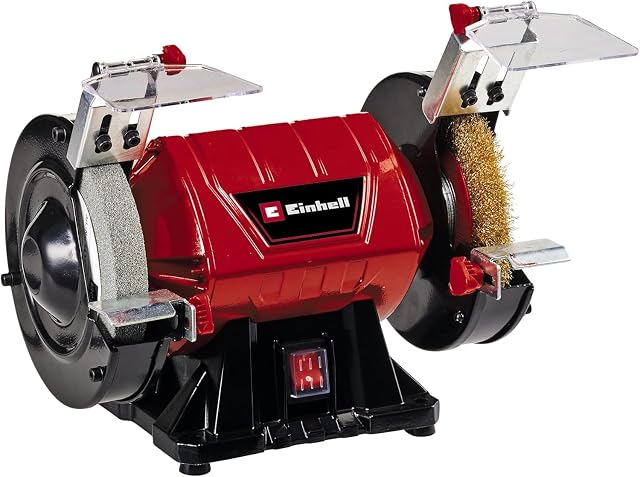
350 W (S6) · brush wheel included · €66
A wire brush wheel on one side, which turns the machine into the fastest way to take rust off small parts.
Best for: Restoration and repair work where everything arrives rusty
≈ $200
Sharpening & dressing · review
An induction motor and sealed bearings in a die-cast housing — the machine built to run rather than to be bought.
Where we come out The one machine here bought for its motor rather than its price.
Two hundred and eight euros, twice what the 200 mm (7.87 in) machines above it cost, for a specification that is entirely about longevity: a 600 W induction motor in a die-cast housing with encapsulated bearings.
Almost every bench grinder under €150 uses a universal motor: brushes, high speed, cheap. They wear, they spark, and they slow under load. An induction motor has no brushes, so there is nothing to replace and no sparking in a room full of abrasive dust. It is quieter — which matters on a machine sitting at chest height a meter from your ears — and it holds its speed as you press the work in, so the wheel keeps cutting at the surface speed it was designed for.
A bench grinder generates fine, hard dust and draws air through itself to cool. Encapsulated ball bearings are the answer to that, and they are the difference between a machine that runs quietly for ten years and one that develops a rumble in its second season.
Thirty-six hundred rpm on a 200 mm (7.87 in) wheel is a high surface speed: fast material removal, and heat that arrives sooner. For shaping and deburring that is exactly right. For finishing a chisel edge, the wet machine earlier on this page remains the safer tool — and the two together are a complete sharpening bench.
Power, motor type, wheel diameter, speed, housing and bearings come from the manufacturer’s published specification. Market availability was verified per market on the EAN.
Prices quoted in this text were read on 2026-08-13. The live price is at the top of the page.
| Power | 600 W induction motor |
|---|---|
| Wheel diameter | 200 mm (7.87 in) |
| No-load speed | 3,600 rpm |
| Housing | Compact die-cast, with encapsulated ball bearings |
| Part number | 060127A400 |
| Amazon reference | B07581QGSW |
| EAN | 3165140893442 |
Three things. There are no carbon brushes, so nothing wears out or sparks near abrasive dust. It runs markedly quieter — a real consideration on a machine that sits at head height on a bench. And it holds its speed under load rather than slowing as you press, which keeps the wheel cutting at its designed surface speed.
It is at the higher end, and it means faster stock removal and faster heating. For deburring, dressing and shaping that is what you want. For finishing an edge on a thin tool it is worth knowing that heat arrives sooner than on a slower machine — which is where the wet grinder on this page earns its place alongside, not instead.
8.7/ 10
The one machine here bought for its motor rather than its price.
A reference exists on these Amazon stores: France, Germany, Italy, Spain, United Kingdom, United States. Listed is not the same as in stock — availability changes daily.
Details checked on August 13, 2026.
Daily workshop use, where the machine runs every day and nobody wants to think about it
Specifications: the manufacturer sheet for welding and metalworking machines and the matching Amazon product page. Prices and availability: Keepa. Every figure on this page names its source.
350 W (S6) · brush wheel included · €66
A wire brush wheel on one side, which turns the machine into the fastest way to take rust off small parts.
Best for: Restoration and repair work where everything arrives rusty
≈ $200
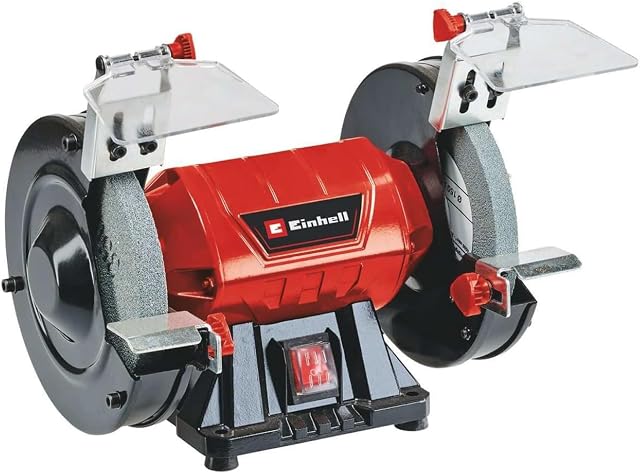
150 mm (5.91 in) wheels · deburring, derusting, resharpening · €46
The plain version of a machine sold in three sizes — buy it knowing what the extra €20 adds.
Best for: An occasional bench grinder where the price is the deciding factor
≈ $160
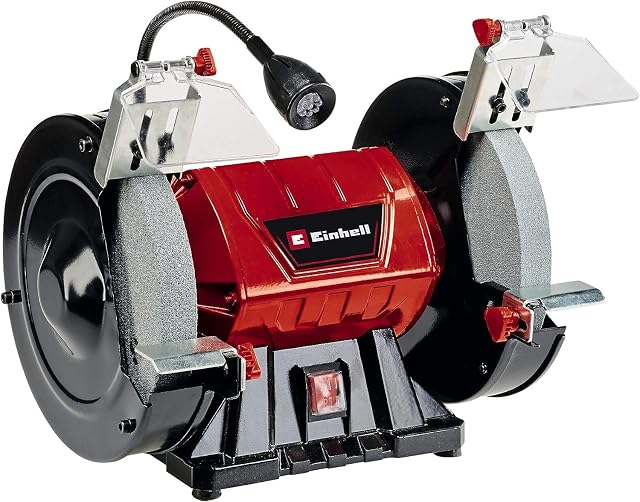
200 mm (7.87 in) wheels · 400 W peak · swivelling LED · €93
The step up to 200 mm (7.87 in) wheels, which grind flatter and stay cool longer than 150 mm (5.91 in) ones.
Best for: Sharpening and shaping where a flat, cool grind matters more than portability
≈ $300