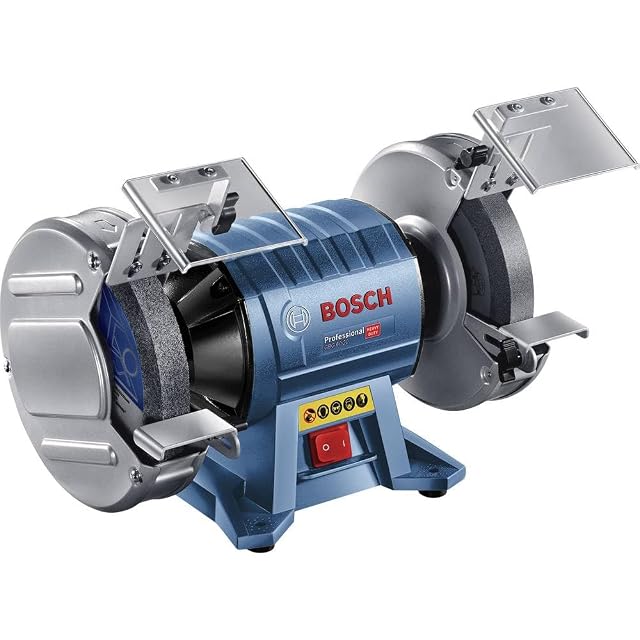
Where we come out The right wheel size for edge tools, with a power figure that describes bursts.
Ninety-three euros for 200 mm (7.87 in) wheels, four rubber feet and a light you can aim. The wheel size is the reason to consider it.
Why the bigger wheel grinds better
Two things change when you go from 150 to 200 mm (5.91 to 7.87 in). The curve of the wheel is shallower, so the hollow ground into a chisel or plane iron is closer to flat — which is what you want on a tool that has to sit on a stone afterwards. And the wheel has more mass, so it takes longer to heat up. Heat is the enemy on thin edges: a chisel that turns blue has been annealed and will not hold an edge until it is reground past the damage.
The costs are real too. Two hundred millimeter wheels are dearer and there are fewer of them on the shelf, particularly in the finer grades.
The power figure, read properly
« 400 W temporary maximum » is a peak. That phrasing is the manufacturer being accurate rather than evasive — the continuous figure is lower, and this remains an intermittent-duty machine like everything else at this price.
Feet against bolts
Rubber feet damp some vibration. Bolting the machine to a heavy bench damps far more, and the Scheppach further up this page has a base drilled to let you do exactly that. If the grinder will live in one place, prefer the machine you can bolt down.
Sources
Wheel diameter, power, feet, lighting and the list of applications come from the manufacturer’s published specification. Market availability was verified per market on the EAN.
What it handles, and what it will not
Strengths
200 mm (7.87 in) wheels: a flatter contact face and more thermal mass
A swivelling light, so you aim it rather than accepting where it points
Live on all six markets under one reference
Compromises
« 400 W temporary maximum » is a peak figure, not a continuous rating
200 mm (7.87 in) wheels cost more and there is less choice than at 150 mm (5.91 in)
Rubber feet damp less than bolting the machine down
Specifications
Wheel diameter
200 mm (7.87 in)
Power
400 W temporary maximum
Feet
Four rubber feet to damp vibration
Lighting
Swivelling LED work light
Uses named by the maker
Strong repairs and shape correction
Amazon reference
B08GM61CZT
EAN
4006825649918
The questions welders ask
Is 200 mm (7.87 in) actually better than 150 mm (5.91 in)?
For two reasons, yes. A larger wheel has a shallower curve, so a chisel or plane iron ground on it comes away with a flatter hollow — closer to the flat face you want. And a bigger wheel carries more mass, so it heats up more slowly, which means less risk of drawing the temper from a thin edge. What you pay for it is wheel cost and a smaller choice on the shelf.
How should I read « 400 W temporary maximum »?
As a peak. It is the wording manufacturers use when the continuous rating is lower, and it is honest as far as it goes. Expect the machine to be comfortable well below that figure and to get hot if you lean on it for a long session — the same intermittent-duty reality as every grinder in this price band.
The two nearest machines on price
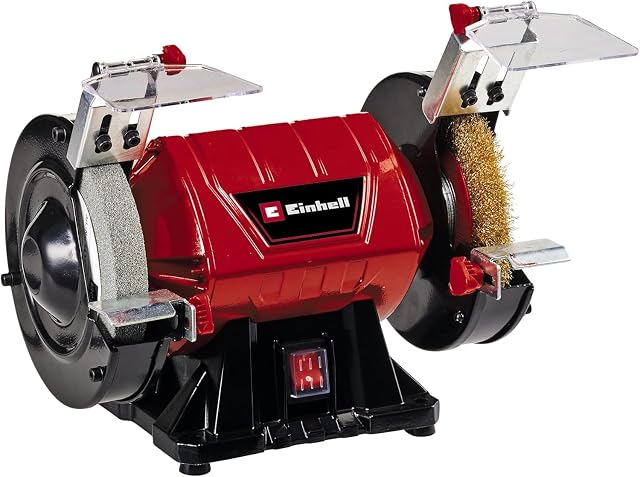
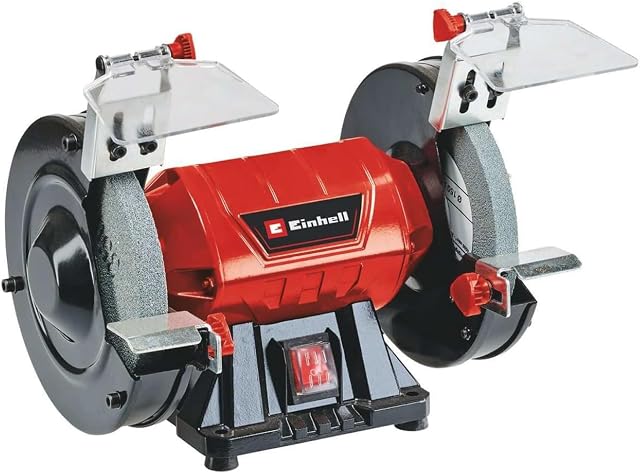
Same shelf, nearest price — what else that money puts on the bench.
The right wheel size for edge tools, with a power figure that describes bursts.
Price and availability, for welding machines
A reference exists on these Amazon stores: France, Germany, Italy, Spain, United Kingdom, United States. Listed is not the same as in stock — availability changes daily.
Details checked on August 13, 2026.
Who this one is for, among welding machines
Sharpening and shaping where a flat, cool grind matters more than portability
Specifications: the manufacturer sheet for welding and metalworking machines and the matching Amazon product page. Prices and availability: Keepa. Every figure on this page names its source.