Skip to content

A sharpening bench: dry, wet or belt

The failure that ruins a cutting edge is heat. Hardened steel softens from around 200 °C (392 °F), and a thin edge on a dry wheel reaches that in seconds. Everything about a sharpening bench is arranged to avoid it.

The failure that ruins a cutting edge is heat. Hardened steel softens from around 200 °C (392 °F), and a thin edge on a dry wheel reaches that in seconds. Everything about a sharpening bench is arranged to avoid it.

Which welder suits your metal?

You sharpen drills and chisels for metal
A dry bench grinder will do, provided you replace the wheel it came with and never overheat the edge.
You sharpen woodworking edge tools
A wet sharpener: water removes any chance of drawing the temper, at the price of speed.
You reshape before sharpening
A belt sander: it removes metal quickly and heats less, because the belt carries the heat away as it travels.
You sharpen a little of everything, rarely
A dry grinder plus a set of hand stones covers the ground without tying up a bench.

Picking by the metal

Sharpening drill bits

The angle and the clearance matter more than the grit. A sharpening jig beats a steady hand, and costs less than a set of bits.

Edge tools

Chisels, gouges, plane irons: here, drawing the temper ruins the tool for good. This is water or belt territory, not the dry grinder.

Reshaping

Bringing back a blunted cold chisel or a mangled screwdriver: plenty of removal, little finesse. The belt is most effective.

Deburring and finishing

A grinder fitted with a wire wheel or a polishing mop replaces a great deal of hand work.

What matters at the arc

The wheel it ships with
The wheels supplied with a cheap grinder are often the weak link: wrong grit, rough balance. It is the first thing to replace, before judging the machine.
Speed
High speed removes fast and heats fast. For an edge tool, a slow or water-cooled machine does better than a powerful one.
The tool rest
A rest that adjusts and stays adjusted gives a repeatable angle. Without one, every sharpening reinvents the geometry of the tool.
The gap between rest and wheel
Too big a gap can trap the tool between wheel and rest. It needs resetting as the wheel wears, and rarely is.

Which figure for which metal

What you sharpenThe station that suitsThe risk to watch
Drill bits, cold chiselsDry bench grinderBluing the edge
Chisels, plane ironsWet sharpenerRushing and rounding the bevel
Reshaping, heavy removalBelt sanderTaking off more than intended
Finishing, deburringWire wheel or soft mopWires thrown from the brush

Where it goes wrong at the bench

Letting the edge turn blue
Blue means the steel got hot enough to lose its hardness. The edge does not come back: you have to grind past the affected zone.
Keeping the original wheel
It is nearly always too hard and too coarse for fine sharpening. Changing the wheel transforms the machine more than any adjustment.
Never dressing the wheel
A loaded or out-of-true wheel heats, vibrates and cuts badly. A diamond dresser costs little and pays for itself the first time.
Sharpening freehand
Freehand, the angle changes on every pass and the tool ends up rounded. The rest is not a beginner’s crutch.

By the welder you are

The metal workshop
A dry grinder with a chosen wheel, an adjustable rest and a diamond dresser: the three together will keep drills and chisels working.
Woodwork
A wet sharpener, for the one reason that matters: you cannot draw the temper of steel that is sitting in water.
The general workshop
The belt sander, which reshapes, sharpens and deburrs — with different belts rather than three machines.

Consumables, duty cycle and working life

A sharpening station degrades through its wheel, not its motor. A loaded, out-of-true or cracked wheel explains nearly every bad sharpening. Nothing here allows a service life to be quoted: it depends on the steel being ground and how often the wheel is dressed.

  • Dress the wheel as soon as it stops cutting cleanly, rather than pressing harder.
  • Check a dropped wheel for cracks: tapped, it should ring clear.
  • Reset the gap between rest and wheel after every dressing.
  • Empty and dry the trough of a wet sharpener after use: standing water attacks the stone and the frame.

Safety

A wheel that bursts does so at full speed and without warning. It is the one real danger of a sharpening station, and it is entirely avoidable.

  • Never remove the guards or the eye shield.
  • Run a new wheel free for a while before using it, standing out of its plane.
  • Grind on the face that is meant for it: the side of a straight wheel is not a working surface.
  • Glasses every time: sharpening sparks bounce under the shield.

What we chose, and on what basis

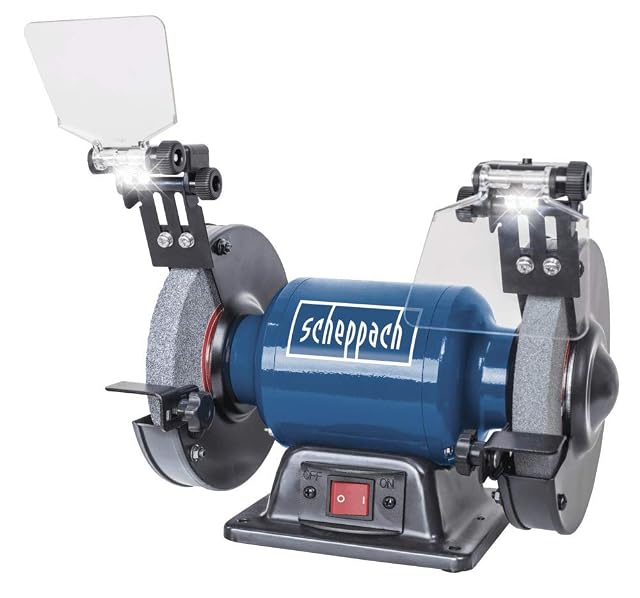
  1. Scheppach SM150L

    400 W · cast iron base · LED work lights · €72

    A grey cast iron base and lights over both wheels — mass and visibility, which is most of what a bench grinder needs.

    Best for: A permanent bench installation, bolted down and used for both shaping and sharpening

    6.9/10

    ≈ $190

The questions welders ask

Why replace the wheels on a new grinder?

Because the grey wheels supplied with almost every bench grinder are hard and coarse. They glaze rather than breaking down to expose fresh abrasive, and a glazed wheel rubs instead of cutting — which means heat, which means a blue edge. A softer aluminum oxide wheel costs a fraction of the machine.

Is a wet grinder necessary?

Not necessary, and it removes the risk entirely. A wheel running through water cannot reach tempering temperature, so you can hold a chisel against it continuously without anxiety. It is slower, which is precisely why it is safe — and a dry wheel for shaping plus a wet one for the edge is the complete arrangement.

What grit should a sharpening wheel be?

A medium grit for reshaping, a fine one for sharpening. Two wheels on the same grinder cover both, and avoid the compromise of a single wheel that does both badly.

How do I know a wheel is cracked?

Hung and tapped gently, a sound wheel rings clear; a cracked one answers dull. The check takes ten seconds and is done before fitting, especially after a drop.

Can saw blades be sharpened on a bench grinder?

Not properly: tooth geometry needs precise guidance a bench grinder cannot give. That belongs to dedicated sharpeners, or to replacing the blade.

Should I dip the tool in water while dry grinding?

It limits heating but creates thermal shock in hard steels. Better to ease the pressure and let it cool in air: what burns an edge is continuous pressure, not elapsed time.

Does a belt sander replace a bench grinder?

For reshaping and deburring, yes, and often better. For fine, repeatable sharpening against a rigid rest, a grinder with a proper tool rest keeps the advantage.

What is a dressing diamond for?

To make the wheel round again and reopen its grit. A dressed wheel cuts instead of rubbing, so it heats less. It is the accessory that improves a sharpening station most for the least money.

Each welder, and the metal it is meant for

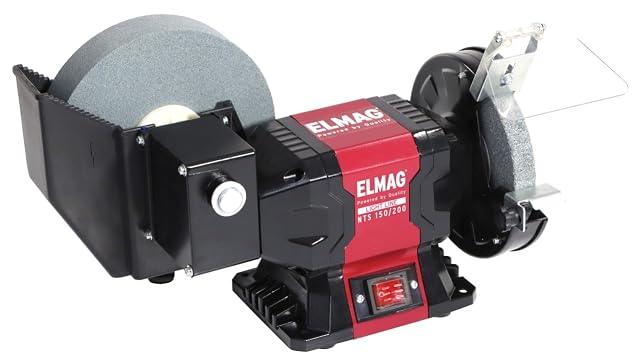
ELMAG NTS 150/200

For work that: Sharpening chisels, plane irons, turning tools and knives without blueing them
Where it is best: The wet wheel removes the risk of drawing the temper — the failure that ruins tools

Where it is worst: Not sold on the American or Spanish stores at the time of checking

Read the full review →

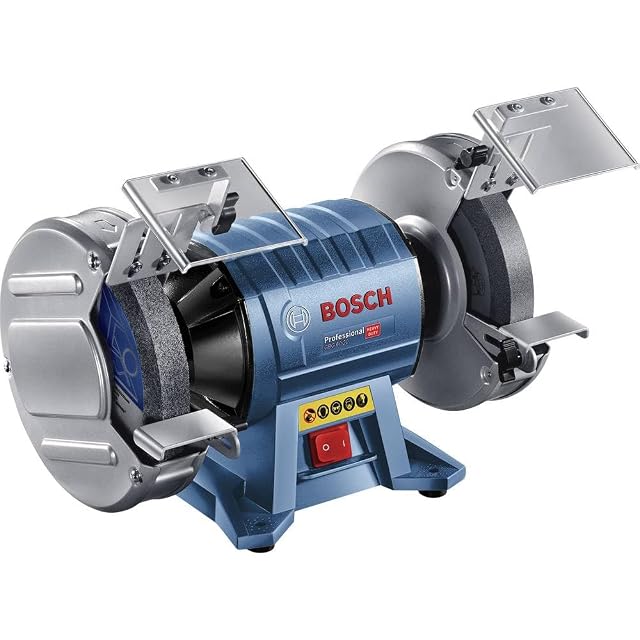
Bosch Professional GBG 60-20

For work that: Daily workshop use, where the machine runs every day and nobody wants to think about it

Where it is best: An induction motor: quieter, no brushes to wear, and it holds its speed

Where it is worst: €208 — twice the 200 mm (7.87 in) machines above it

Read the full review →

Scheppach SM150L · $190

For work that: A permanent bench installation, bolted down and used for both shaping and sharpening

Where it is best: Cast iron base: mass is what stops a bench grinder walking and chattering

Where it is worst: 400 W, so still an intermittent-duty machine

Read the full review →

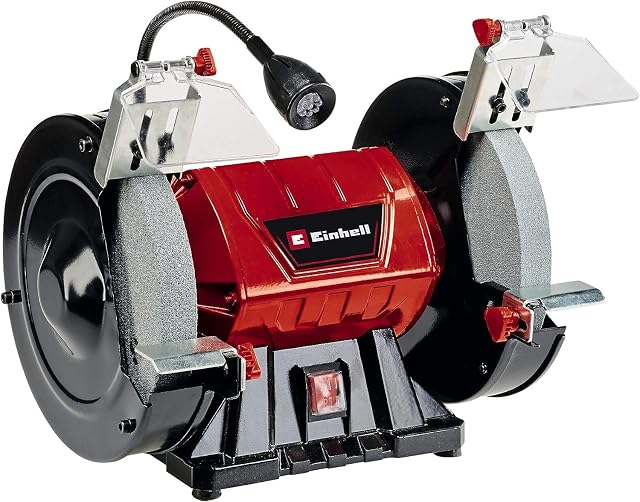
Einhell TC-BG 200 L · $300

For work that: Sharpening and shaping where a flat, cool grind matters more than portability

Where it is best: 200 mm (7.87 in) wheels: a flatter contact face and more thermal mass

Where it is worst: « 400 W temporary maximum » is a peak figure, not a continuous rating

Read the full review →

What it will consume

Tips, nozzles, wire and gas from the same aisle, at the price we read. Confirm they suit the machine you choose before ordering: it turns on the torch and the part number, which the product page gives.

The call, in one line

What this selection rests on

The welders here are taken from the catalog of this site. Specifications come from the maker and from the Amazon product page; prices are what Keepa reported for the date shown, and both move. The order rests on declared specifications, on stated strengths against stated limits, and on price. No machine here has struck an arc in our hands, and nothing on this page pretends it has.

Last checked on

Prices quoted in these summaries are dated readings. The live price is shown next to each product.

The tool we use ourselves

Chosen your machine? Now buy it at the right price.

Welders and plasma cutters swing by a hundred dollars or more across the year, and the biggest "discounts" often land at prices the same model sold for six weeks earlier. UniverTrack tracks the real price history across retailers, spots fake reductions, and alerts you when it is genuinely the moment to buy.

Real price historyBuy-now alertsAI buying assistant
Try free for 14 days →
No commitment · Cancel in one click · 5 languages