Skip to content

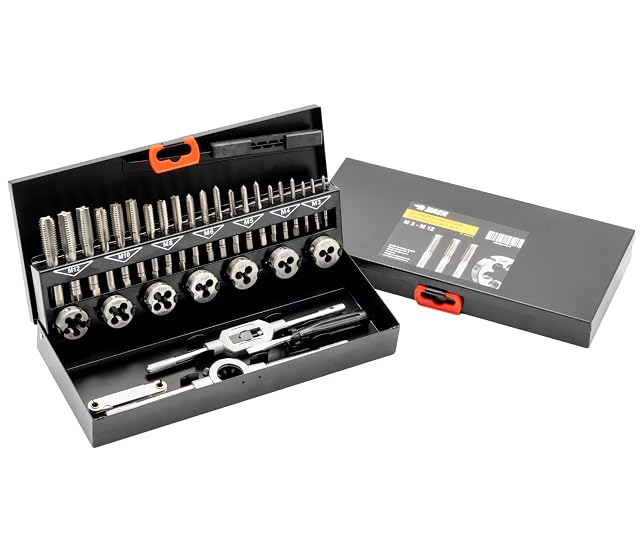
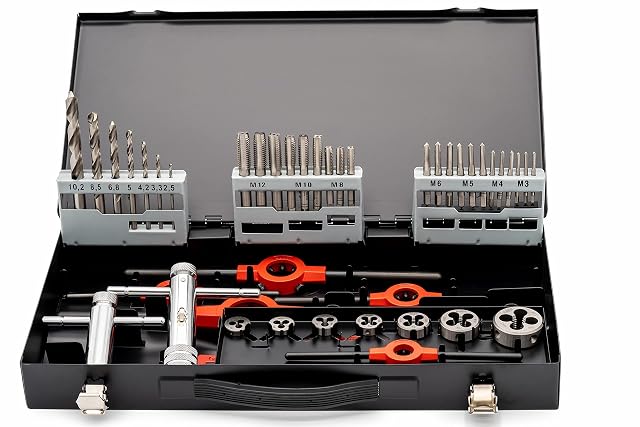
Baer Thread cutting set M3–M12, HSS-G

Taps and dies from M3 to M12, in ground HSS — the sizes that cover almost every workshop repair.

Baer Thread cutting set M3–M12, HSS-G, product photograph

Baer Thread cutting set M3–M12, HSS-G

Taps and dies from M3 to M12, in ground HSS — the sizes that cover almost every workshop repair.

Range
M3 to M12
Material
HSS-G (ground high-speed steel)
Covers
Internal threads (taps) and external threads (dies)
Amazon reference
B09Z25RGQH
EAN
4058462189814
  • HSS-G means ground rather than rolled flutes: sharper and more accurate
  • M3–M12 covers the vast majority of workshop fasteners
  • Not sold on the American store at the time of checking

Best for: Repairing stripped threads and making threaded holes properly
Search Amazon for this model

Specifications

Range
M3 to M12
Material
HSS-G (ground high-speed steel)
Covers
Internal threads (taps) and external threads (dies)
Amazon reference
B09Z25RGQH
EAN
4058462189814

HSS-G is the specification

Ground flutes rather than rolled ones mean a sharper cutting edge and a truer thread. On taps, that is the difference between a tool that cuts and one that pushes metal around.

Threads are repairs

Most workshop threading is fixing something: a stripped hole in an engine casing, a bracket that needs a new bolt size, a nut welded on badly. Having M3 to M12 to hand turns those from a trip to a supplier into ten minutes.

Sources

Every figure above comes from the manufacturer’s published specification for this reference. Fields the listing does not publish are left out rather than estimated. Market availability was verified per market on the EAN.

The questions welders ask

What tapping drill do I need?

A rough rule for metric coarse threads: drill diameter equals the thread diameter minus the pitch. M6 × 1.0 needs a 5.0 mm (0.20 in) hole; M8 × 1.25 needs 6.75 mm (0.27 in); M10 × 1.5 needs 8.5 mm (0.33 in). Undersize holes break taps and oversize ones give a weak thread — this is the one place to consult a chart rather than guess.

How do I avoid breaking a tap?

Cutting fluid, a quarter-turn back for every half-turn forward to break the chip, and a tap wrench that keeps the tap square to the hole. Most breakages happen because the tap is leaning or because a long chip has jammed in the flute. In blind holes, back the tap out and clear it.

Welders this fits

All drill bits & taps

Prices quoted in these summaries are dated readings. The live price is shown next to each product.